

Insights on Innovation, R&D, and IP
Perspectives on patents, scientific research, emerging technologies, and the strategies shaping modern R&D

Michael Devon, a retired Research Fellow who spent 34 years at Dow tested three AI systems against complex, known-answer R&D scenarios. The largest performance gap appeared where technical depth, IP interpretation and roadmap development mattered most.
General-purpose AI tools such as Microsoft Copilot and Claude Opus 5 are built primarily around frontier foundation models and broad-access knowledge. Cypris can use the same class of foundation models, but grounds them in focused scientific and intellectual property datasets connected through domain-specific ontologies.
This comparison was designed to test whether that additional intelligence layer materially changes the quality of technical research.
Michael Devon, a retired Research Fellow who spent 34 years at Dow, evaluated Cypris, Microsoft Copilot and Claude Opus 5 across two technical scenarios and four prompts. He deliberately chose areas he knew intimately, allowing him to distinguish a plausible summary from an analysis that captured the technical realities, historical context and commercial considerations required to build an R&D strategy.
The scenarios were representative of projects that historically required weeks of coordinated researcher effort. The objective was not simply to determine which tool could find relevant information. It was to determine which could transform that information into useful technical and strategic guidance rooted in real world context.
Evaluation design
The comparison covered two technology landscapes: hollow latex particle opacifiers and the use of hydroxypropyl methylcellulose, or HPMC, in osmotic drug-delivery systems. The outputs were evaluated based on result quality, strategic insight, accuracy and the ability to recognize the boundaries between related technologies.
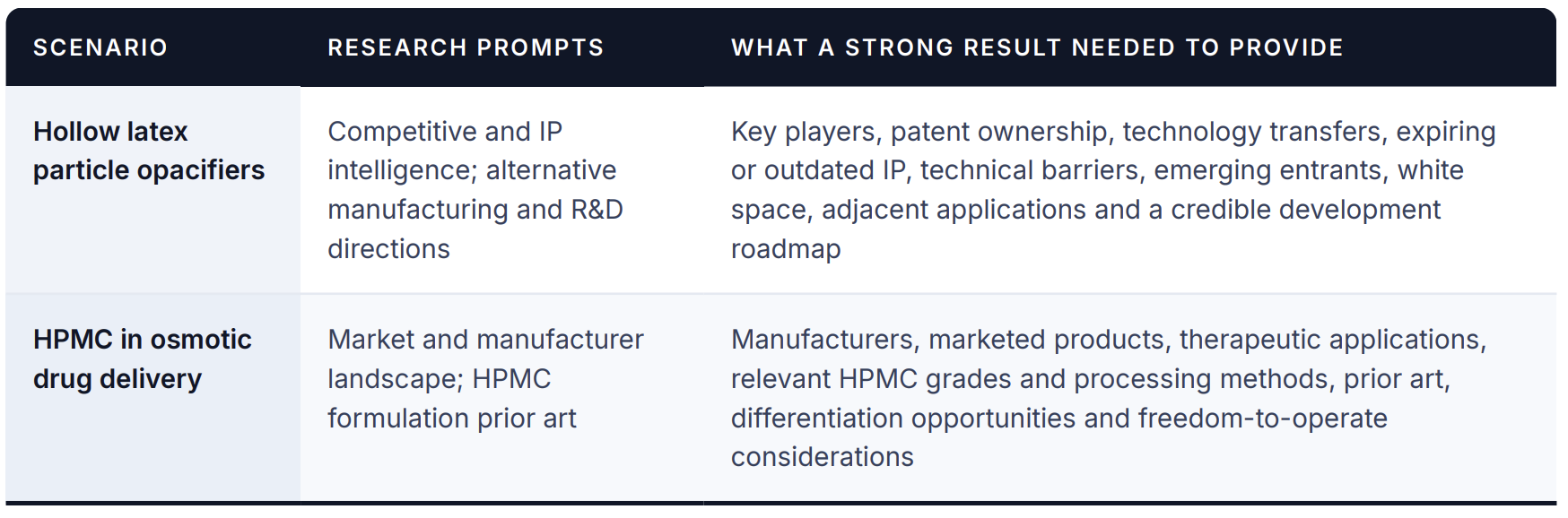
The hollow particle prompts asked the systems to map the competitive and IP landscape, identify emerging participants in Mexico and Asia, detect licensing or corporate activity and locate white space. They were then asked to recommend alternative materials, particle architectures and manufacturing mechanisms that could support a defensible product strategy.
The osmotic delivery prompts asked the systems to identify manufacturers and marketed products, followed by an analysis of HPMC grades, viscosity specifications, processing methods, prior art and potential formulation strategies.
Where the tools diverged
All three tools were capable of producing a credible general summary. The meaningful differences appeared as the work moved from describing the landscape to deciding what to do next.
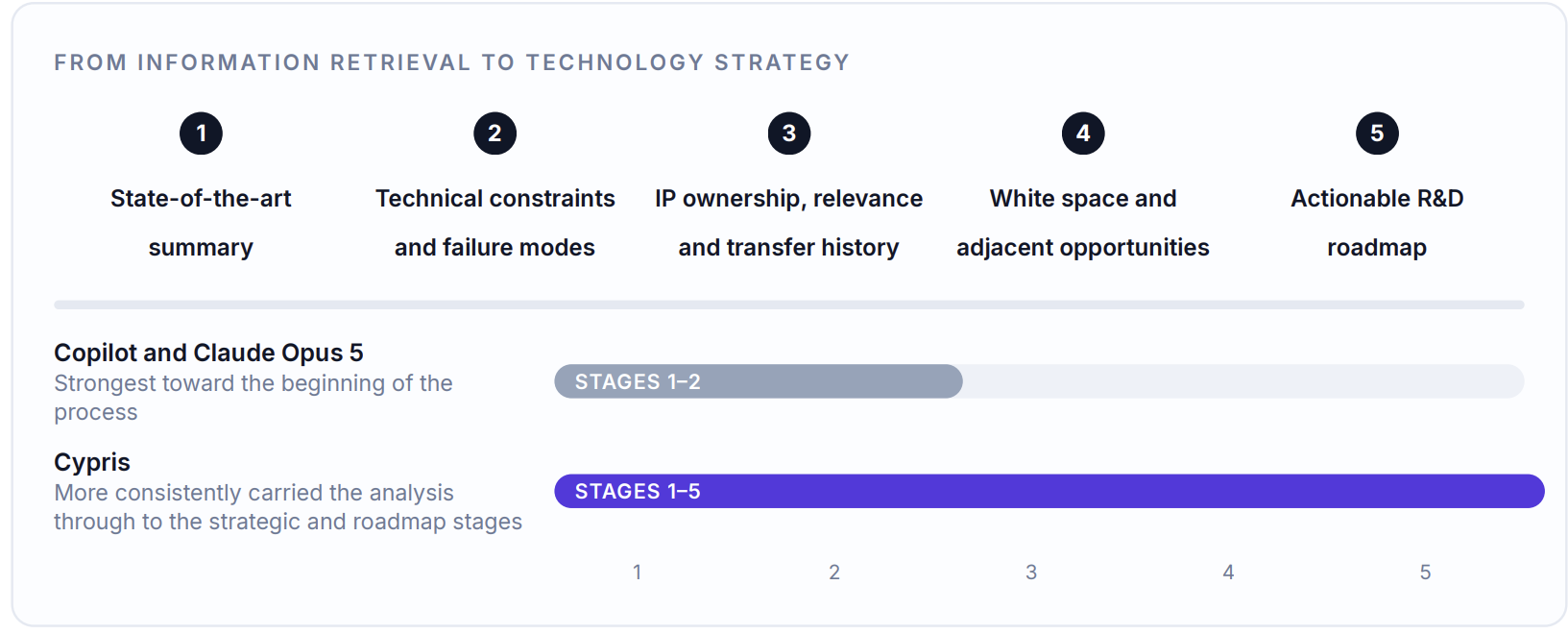
Devon found that Cypris produced the strongest overall result, with the clearest advantage in the more technically and strategically complex hollow particle scenario. Claude and Copilot generally summarized what had been published. Cypris more frequently identified the specific technical issues, changes in IP ownership, commercial signals and research directions that could influence an actual development program.
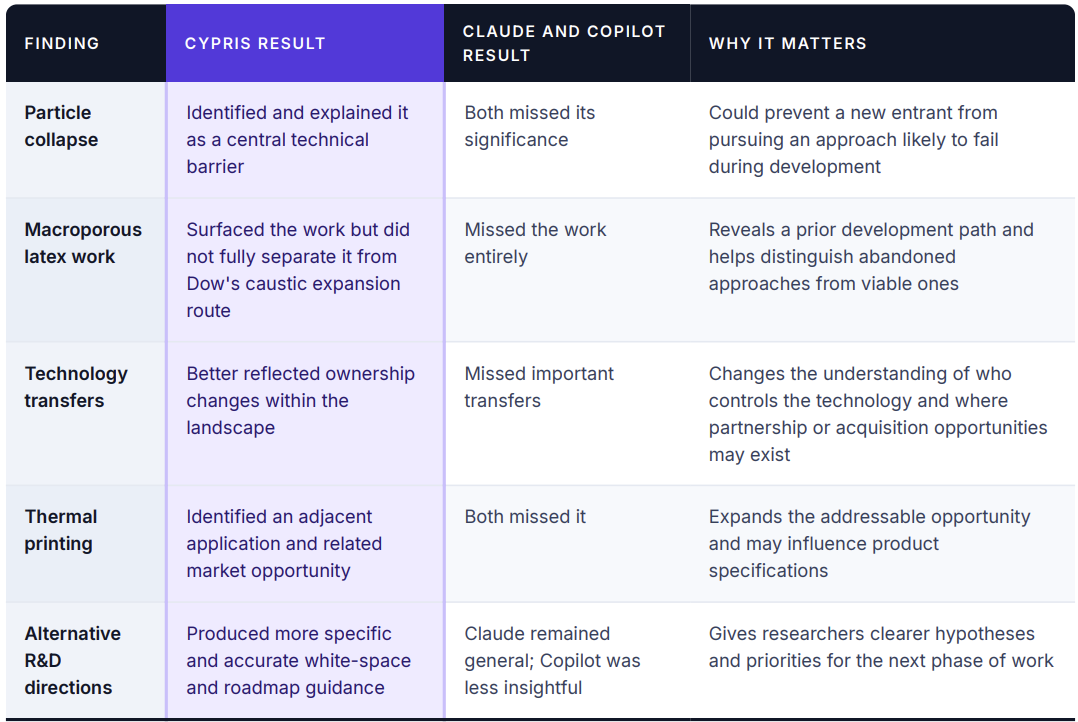
Comparative findings at a glance
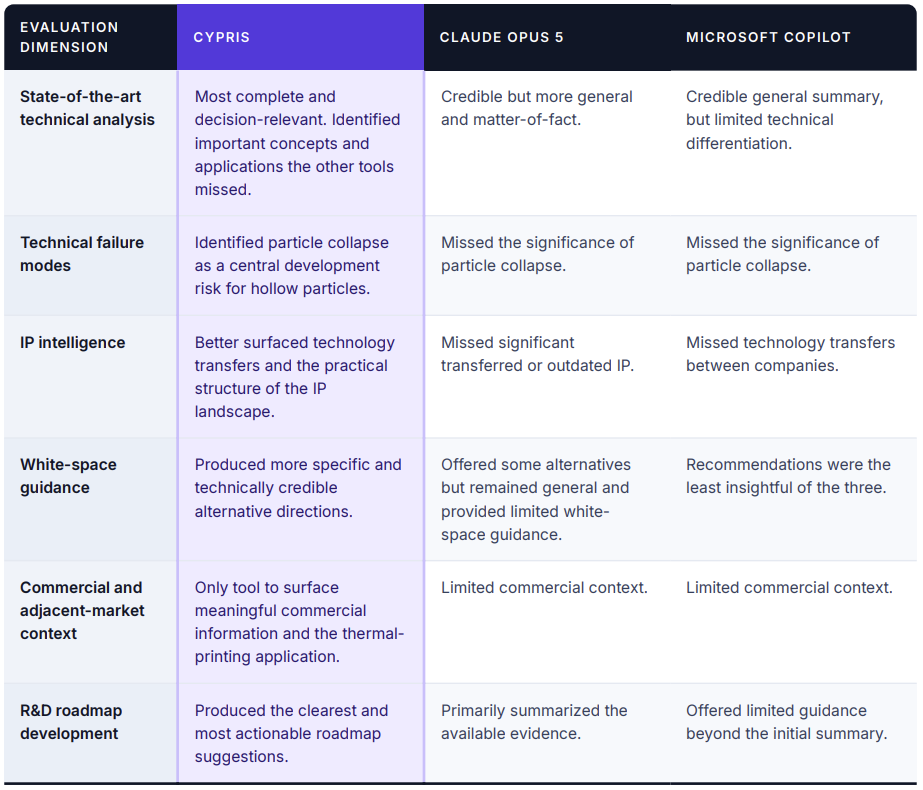
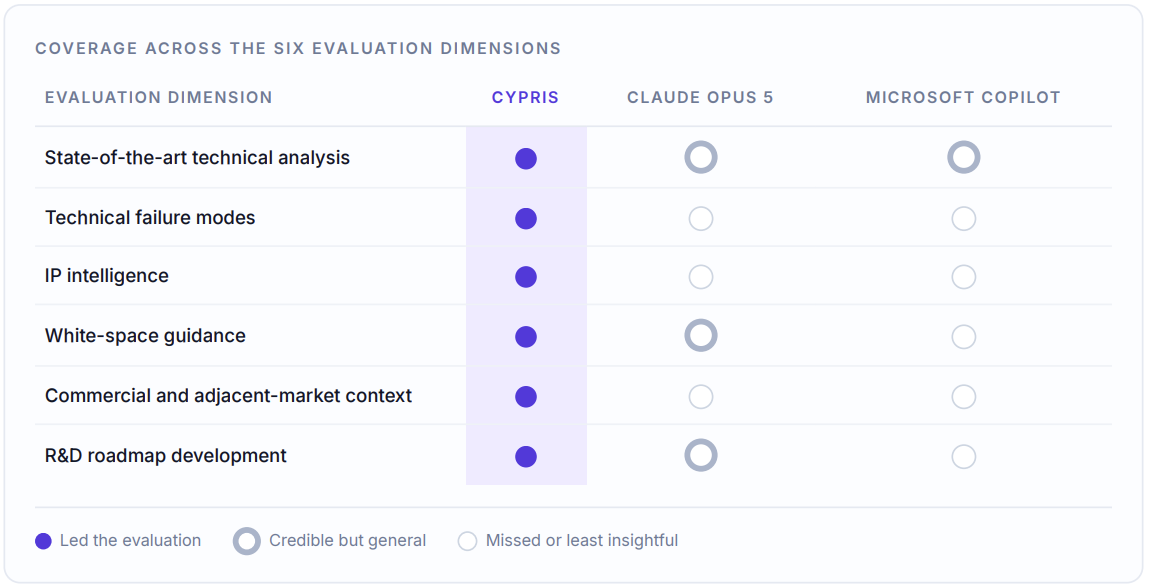
These distinctions were particularly visible in Devon's analysis of technical implementation, IP transfers, market context and research direction.
Scenario One: Hollow Latex Particle Opacifiers
All three tools passed the baseline test
Each system produced a reasonable summary of the general hollow particle landscape. Devon found no serious factual errors within the information each tool chose to present.
That baseline performance was important, but it did not determine the outcome. The systems differed substantially in the usefulness of their output for technical strategy development, with Cypris holding the clear advantage.
Cypris identified the technical issue most likely to derail a new entrant
One of the most consequential differences involved particle collapse.
Cypris recognized that maintaining particle structure was a central technical challenge and produced a useful explanation of the issue. Claude and Copilot did not identify its importance.
For a researcher, this was not a minor omission. A new entrant that fails to understand or overcome particle collapse could invest considerable time and capital in a manufacturing approach that does not perform under practical conditions. By surfacing the issue, Cypris provided information that could directly alter experimental priorities and development sequencing.
Cypris was not flawless. It did not fully distinguish between Dow's hollow latex work using caustic expansion and a separate abandoned macroporous latex approach. However, Claude and Copilot missed the macroporous work entirely.
The distinction illustrates the difference between partial technical interpretation and simple omission. Cypris found the relevant body of work but needed greater precision in separating the approaches. The general AI tools failed to surface the alternative development path at all.
Cypris produced a stronger picture of the IP landscape
Patent landscapes are often presented as lists of companies, filings and portfolio sizes. For technology strategy, that is rarely sufficient.
Researchers need to understand whether patents remain active and relevant, whether they have been transferred, whether the underlying technology is commercially practiced and whether a seemingly large portfolio contains meaningful gaps.
Claude and Copilot missed technology transfers between companies. Devon also found that Claude failed to recognize that significant portions of the IP landscape had changed hands or become outdated. These omissions can distort the competitive picture by assigning technology to the wrong owner or treating historically important patents as if they still define the current opportunity.
Cypris provided a more useful view of how the IP was structured and where potential white space existed. This helped move the analysis beyond a patent count and toward questions such as:
- Who currently controls the relevant technology?
- Which patents still create meaningful barriers?
- Where has ownership changed?
- Which approaches appear abandoned or underdeveloped?
- Where could a new entrant build, partner or acquire?
Devon noted that all three tools could be improved by incorporating deeper patent-office and file-wrapper information, maintenance status, litigation history and citation patterns. Those signals help determine whether a portfolio is genuinely defensible or simply appears strong based on volume.
Cypris surfaced technical and commercial concepts the others missed
Cypris was the only tool to identify the use of hollow particles in thermal printing. It also suggested additional markets and alternative applications.
That finding demonstrated a broader advantage in state-of-the-art analysis. Cypris did not restrict the output to the most obvious use of hollow particles as opacifiers. It connected the underlying technology to another commercially relevant application that Claude and Copilot failed to identify.
The distinction matters because technical strategy requires answering two different questions:
- Can the organization develop the technology?
- Is the opportunity commercially worth pursuing?
Claude and Copilot largely addressed the first question through general technical summaries. Cypris brought in more of the information required to begin addressing the second.
Some commercial outputs still required scrutiny. Devon considered Cypris' estimated 10 percent compound annual growth rate for the broader hollow particle market questionable, although its approximately 5 percent estimate for the thermal-printing segment appeared reasonable. The advantage was not that every market figure was definitive. It was that Cypris recognized adjacent commercial applications and incorporated them into the strategic analysis at all.
Cypris produced more useful white-space and roadmap recommendations
Both Cypris and Claude suggested alternatives to conventional latex-based particle systems. Copilot's recommendations were less insightful.
The quality of the alternatives, however, was different. Claude's output was more general and matter-of-fact. It identified possible approaches but did not translate them into strong white-space guidance.
Cypris proposed more technically credible alternatives and connected them more directly to a differentiated development strategy. Its roadmap recommendations were clearer about which directions merited further investigation and how the research could be sequenced.
The alternatives included non-latex and ceramic-based particle systems. The evaluation did not establish that every proposed direction was commercially viable, but Devon knew that some ceramic particles had progressed at least as far as commercial trials. Cypris therefore surfaced technically relevant research leads rather than merely generating hypothetical possibilities.
Specific findings that changed the strategic value of the output
Scenario Two: HPMC in Osmotic Drug Delivery
The baseline outputs were more similar
The osmotic drug-delivery scenario produced less separation between the three systems.
All three generated credible summaries of osmotic pump technology and identified, to varying degrees, the grades and functions of HPMC in the existing landscape. Devon found relatively little to distinguish the tools on the initial market, manufacturer and prior-art questions.
The systems also converged on a similar roadmap recommendation: use a Design of Experiments process to optimize HPMC for the different roles it plays in the formulation.
While technically valid, Devon considered that recommendation underwhelming. It represented a standard development methodology rather than a differentiated technical insight.
Cypris generated the most promising next research direction
The difference appeared when Cypris suggested a possible connection between osmotic delivery and the challenge of formulating poorly soluble drugs.
Many active pharmaceutical ingredients have limited aqueous solubility, creating substantial formulation and absorption challenges. Cypris' analysis pointed toward a possible connection with hydroxypropyl methylcellulose acetate succinate, or HPMCAS, a material used in approaches for poorly soluble drugs.
HPMCAS is distinct from the HPMC traditionally used in osmotic systems, and Cypris did not present the connection as a validated solution. Instead, it surfaced a cross-domain clue that an experienced researcher could recognize and investigate further.
Devon viewed this as a meaningful example of how technical research often progresses. The first search does not always deliver the final answer. A strong research system should also reveal the next productive question.
Cypris did that more effectively. It connected information from an adjacent technical area to the osmotic formulation problem, creating the basis for a more differentiated next prompt and potential research direction.
The Core Finding: Technical Intelligence Begins Where the Summary Ends
The comparison showed that general-purpose AI tools can produce useful technical summaries. Both Claude Opus 5 and Microsoft Copilot identified relevant companies, scientific concepts and prior art across the two scenarios.
Cypris separated itself in the work that followed:
- Recognizing a technical failure mode that could derail a development program
- Identifying ownership changes and outdated IP that altered the competitive landscape
- Finding adjacent applications such as thermal printing
- Producing more specific white-space guidance
- Connecting evidence to a clearer R&D roadmap
- Generating cross-domain clues that informed the next research question
This distinction reflects the role of the intelligence layer surrounding the foundation model. A general-purpose model is optimized to explain the available information coherently. A technical intelligence system must also organize patents, scientific literature, companies, materials and market signals into a structure that supports decisions.
Final assessment
Across the four prompts, Cypris produced the strongest overall performance.
The advantage was clearest in the hollow particle scenario, where Cypris demonstrated superior technical analysis, stronger IP intelligence, more credible white-space identification and more actionable roadmap recommendations. Claude Opus 5 was capable of producing credible summaries and some alternative ideas, but remained more general and missed important IP changes and white-space implications. Microsoft Copilot met the baseline requirement for landscape summarization but provided the least differentiated strategic guidance.
The osmotic delivery scenario was more competitive, but Cypris still produced the most promising next research direction by connecting the problem to an adjacent material and formulation challenge.
The conclusion was not simply that Cypris found more information. It more consistently identified the information that mattered.
For an experienced technical leader, that is the difference between receiving a summary of the landscape and receiving the raw material required to build a technology strategy.
Former Dow Research Fellow Compares Cypris, Copilot & Claude for Chemical Intelligence
All Blogs

Patent portfolio management is an essential part of the research and development process for many companies. It involves creating a strategy to protect your intellectual property rights by filing patents, tracking existing patents, and managing potential infringement cases. The challenge lies in effectively navigating this complex landscape while staying ahead of competitors and ensuring that valuable inventions are adequately protected.
To help with these tasks, organizations can leverage tools such as Cypris’ patent portfolio platform which provide access to data sources needed for efficient patent analysis and management.
In this blog post, we’ll explore what patent portfolio management is all about and how to create a successful IP strategy.
Table of Contents
What is Patent Portfolio Management?
Benefits of Patent Portfolio Management
Creating a Patent Portfolio Strategy
Identifying Your Goals and Objectives
Analyzing Your Market and Competitors
Developing a Plan for Filing Patents
Challenges of Patent Portfolio Management
Keep Track of Deadlines and Fees
Stay Up To Date With Changes In Technology
How Can Cypris Help With Patent Portfolio Management?
FAQs About Patent Portfolio Management
What is patent portfolio analysis?
How do you create a patent portfolio?
How does the company benefit from a patent portfolio?
What is Patent Portfolio Management?
Patent portfolio management is the process of managing a company’s intellectual property (IP) assets, including patents, trademarks, copyrights, and trade secrets. It involves creating strategies to protect IP from infringement or unauthorized use by competitors and other third parties. The goal of patent portfolio management is to maximize the value of a company’s IP while minimizing risks associated with its ownership.
Benefits of Patent Portfolio Management
By effectively managing their patent portfolios, companies can increase their competitive advantage in the marketplace through protection against potential infringers. They can also create revenue streams through licensing agreements with others who wish to use their patented technologies.
Additionally, having a well-managed patent portfolio allows organizations to better understand what areas they should focus on for future innovation efforts and how best to monetize those inventions.
There are three main types of patents.
Utility patents cover inventions that have practical applications. Design patents cover new ornamental designs for products. Plant patents cover newly developed varieties of plants created through human intervention.
Utility patents provide exclusive rights over an invention for up to 20 years after the filing date, while design patents last 14 years. Plant patents last 17 years from the issue date.
Each type provides different levels of protection depending on the nature of the invention but all are important components in any comprehensive patent strategy.
Now let’s look at how to create a patent portfolio strategy.
Key Takeaway: Patent portfolio management is an essential tool for R&D and innovation teams to maximize the value of their intellectual property. With the right strategy, you can ensure your patents are well-maintained and protected while also providing a competitive advantage.
Creating a Patent Portfolio Strategy
Creating a patent portfolio strategy is an important step for any R&D or innovation team. A successful patent portfolio should be tailored to the specific needs of the organization and take into account its goals, objectives, market conditions, competitors, and legal landscape.
Identifying Your Goals and Objectives
The first step in creating a patent portfolio strategy is to identify your organization’s goals and objectives. This includes understanding what type of patents you need, how many patents you want to file each year, where you plan on filing them, and how much money you are willing to spend on filing fees.
You should also consider whether your goal is simply protection from infringement or if it’s more focused on monetization through licensing opportunities.
Analyzing Your Market and Competitors
Once your goals have been identified, it’s time to analyze the market conditions as well as your competitors’ existing portfolios. This will help inform decisions about which technologies may not yet be covered by existing IP rights held by others in the industry.
It can also provide valuable information about potential licensing opportunities with other companies in the space who might benefit from access to certain technology owned by your company but is not currently being used commercially.
Developing a Plan for Filing Patents
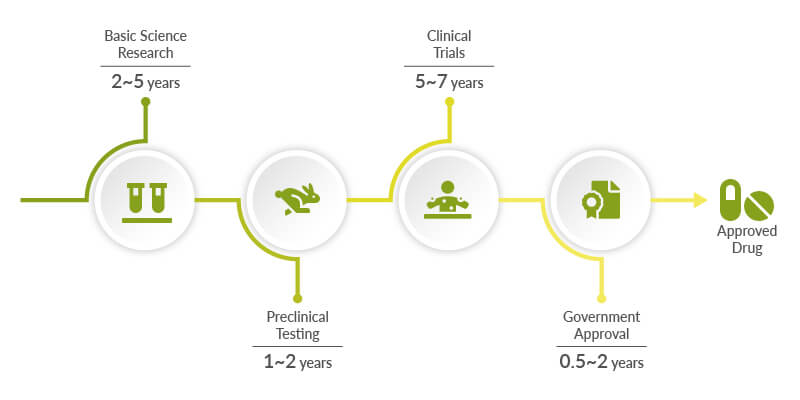
After identifying goals and analyzing the market conditions, it’s time to develop a plan for filing new patents. This includes deciding when applications should be filed as well as determining which countries/regions they should be filed in.
Additionally, this phase involves researching prior art so that claims can accurately reflect what has already been done before while still providing sufficient novelty over existing solutions.
(Source)
Challenges of Patent Portfolio Management
Managing a patent portfolio can be a complex and time-consuming task. Keeping track of deadlines and fees, understanding the legal landscape, and staying up to date with changes in technology are all challenges that need to be addressed.
Keep Track of Deadlines and Fees
Patent portfolios require constant monitoring for compliance with filing requirements such as deadlines for payment of maintenance fees or renewal dates. Missing these important dates can lead to costly consequences including loss of rights or invalidation of patents. To ensure timely payments are made, automated tracking systems should be used to monitor patent status and alert users when action is required.
Study the Legal Landscape
Patents involve intricate legal processes which vary from country to country, that’s why it is essential to study the relevant laws governing intellectual property rights. Online research platforms provide access to detailed information on international patent law so teams can stay informed about current regulations and trends affecting their patents.
Stay Up To Date With Changes In Technology
Technology advances quickly, therefore it’s important for R&D teams to keep abreast of new developments in their field that could impact existing patents or future applications. Artificial intelligence (AI) solutions allow companies to quickly identify potential threats posed by emerging technologies while also uncovering opportunities for innovation within their own industry space.
Key Takeaway: Managing a patent portfolio requires staying on top of deadlines, understanding legal processes, and keeping up with changes in technology.
How Can Cypris Help With Patent Portfolio Management?
Cypris allows users to easily access all relevant information in one place. This includes patent filings, competitor analysis, legal documents, and more. By having everything in one location, teams can quickly identify trends and opportunities for growth without wasting time searching through multiple databases or applications.
Additionally, this helps reduce errors that could lead to costly mistakes down the line.
With Cypris’s intuitive search capabilities and automated tracking systems, teams can save valuable time when researching new ideas or conducting competitive analysis on existing patents. The platform also provides a variety of tools such as AI-powered analytics which allow users to quickly assess potential risks associated with a particular patent application before it is filed – saving both time and money!
Patent portfolios are often managed by multiple departments within an organization including research and development, product development, and commercialization engineering teams. With Cypris’s collaboration features such as real-time chatrooms and document-sharing capabilities, these different groups can work together seamlessly from anywhere in the world!
Overall, using Cypris for managing your patent portfolio will help you stay organized while maximizing efficiency across all areas of your business operations.
FAQs About Patent Portfolio Management
What is patent portfolio analysis?
A patent portfolio analysis identifies all the patented inventions of a company or a competitor. The analyzed portfolios include both published and granted U.S. patents.
Companies or entities may compare their portfolio of intellectual property with that of their competitors.
How do you create a patent portfolio?
- Identify your business goals.
- Set a budget.
- Complete an IDR for each valuable idea.
- Sort the IDRs according to priority.
- Identify any filing deadlines.
- Estimate your filing costs.
- Create a filing calendar.
How does the company benefit from a patent portfolio?
Maintaining a patent portfolio is important for staying ahead of the competition. By keeping track of your patent holdings and coordinating them with your business strategies, you can increase your company’s profits.
Conclusion
Cypris provides a comprehensive platform for patent portfolio management that helps teams quickly access data sources, create strategies, and stay up-to-date on trends in the industry. By leveraging this powerful tool, teams can ensure they are making informed decisions about their patent portfolios and maximizing their return on investment.
Are you struggling to effectively manage your patent portfolio? Cypris is the perfect solution for R&D and innovation teams looking to gain time-to-insights.
Our platform centralizes all data sources into one user-friendly interface, allowing users to quickly understand their portfolios and make informed decisions. Try Cypris today – streamline your research process and take control of your patents!

Are you looking to further your research and development? Finding the right information is key in any innovation process, but it’s not always easy. Learning how to search for a research paper that is apt for your current project is an essential skill that R&D leaders should possess.
In this article, we look at how to find reliable sources, tips on finding relevant papers, and utilizing resources so you can make your review of related literature more efficient. Let’s learn together how to search for a research paper.
Table of Contents
Narrowing Down Your Topic for Literature Review
Defining Your Research Question
Search Techniques in Reviewing Related Literature
Start With Broad Research Databases
Look Into Specialized Research Databases
Additional Tips for Finding Research Papers
Conclusion: How to Search for a Research Paper
Narrowing Down Your Topic for Literature Review
When it comes to learning how to search for a research paper, the important first step is narrowing down your topic. It can be difficult to find relevant research papers if you don’t have a specific focus. Narrowing down your topic helps ensure that you are seeing the most accurate and up-to-date information available.
Defining Your Research Question
The first step in narrowing down your topic is defining your research question. This should be as specific as possible so that you can easily identify relevant sources of information.
Begin by asking yourself broad questions about the topic of interest. This can be done through brainstorming, reading literature, or talking with experts in the field. Consider what topics need further exploration and how your study could contribute to existing knowledge on the subject.
Once you have identified an area of interest, narrow down your focus by considering what specific information would be most beneficial to answer this broader question. Think about who or what might benefit from having this information and why it is important to investigate now rather than later.
After narrowing down your focus, create a more specific research question that will guide your investigation into the issue at hand. Make sure that it is measurable so that results can easily be interpreted and analyzed upon completion of the study.
Additionally, consider whether there are ethical implications associated with collecting certain types of data or conducting certain experiments before finalizing your questions.
Identifying Keywords
Once you have defined your research question, it’s time to start identifying keywords related to it. These will help you search more effectively when looking for sources of information.
By using relevant and specific keywords, you can narrow down your search results and find more targeted information quickly.
The essential step in identifying keywords is brainstorming ideas related to your research question. Think about all of the different terms that could be used to describe what you’re looking for and write them down on a piece of paper or in a document on your computer.
It might help to think of synonyms as well as related topics or concepts that could be associated with what you’re researching.
Narrowing down your topic is essential in improving how to search for a research paper. Once you have a more specific field of research, you can easily brainstorm keywords that will serve as your search terms when looking at search engines.
Search Techniques in Reviewing Related Literature
Once you have narrowed down your topic and identified keywords, it’s time to look for related research articles. Using your identified keywords as search terms, you can now begin compiling different journal articles.
Start With Broad Research Databases
To start your journal article hunt, begin by searching broad research databases such as JSTOR or Google Scholar. These will provide you with a wide range of results that you can then narrow down further.
Searching on JSTOR can be done in two ways – by keyword or by subject area. To search by keyword simply enter your query into the search box at the top of any page on the site. If you’re looking for something specific then it’s best to use quotation marks around your keywords so that only exact matches are returned in your results list.
Alternatively, you can browse through different subject areas using the Browse tab located at the top right corner of every page on JSTOR. This will give you a list of all available subjects which can then be further refined with additional filters such as language or publication date range.
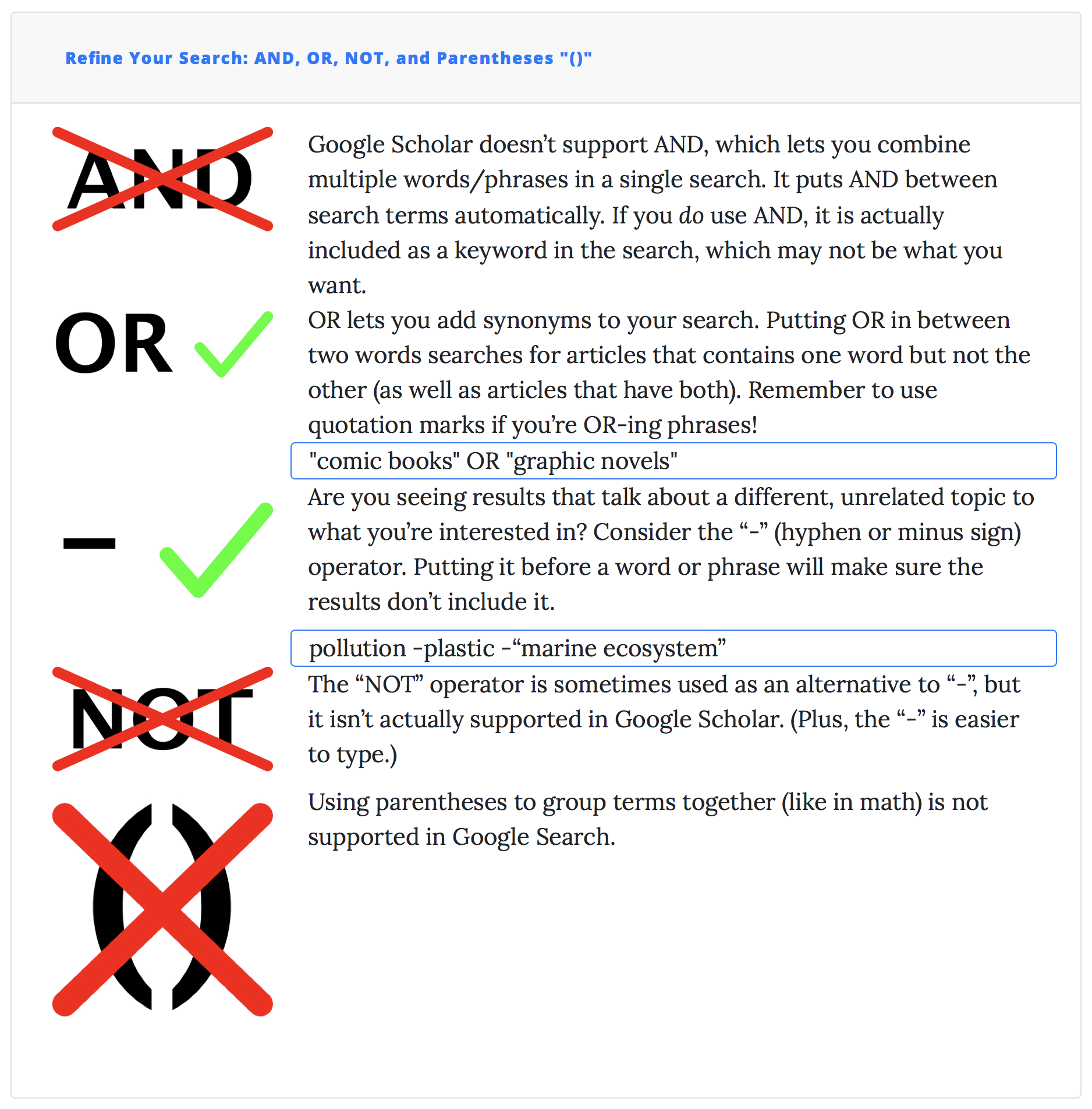
Meanwhile, using Google Scholar effectively requires understanding how it works and knowing what kind of information you are looking for. To get the most out of your searches on Google Scholar start by using keywords that are specific to your topic or question.
Additionally, use advanced search techniques like using options for author name or journal title to narrow down results even further. You can also filter by date range if you’re looking for recent publications in your field.
Lastly, don’t forget about related articles which appear at the bottom of each article page. These can be great resources when exploring new topics!
(Source)
Look Into Specialized Research Databases
Once you have identified some relevant articles from these general searches, consider looking into more specialized databases that cater to specific niches. For example, if you are researching a topic related to psychology or neuroscience, PsycINFO may offer more targeted results than other search engines.
Open-access journals are also helpful when conducting literature reviews since they allow free access to all content without requiring payment or subscription fees.
This is especially useful for those who may not otherwise have access to paywalled articles due to financial constraints or other reasons.
Additional Tips for Finding Research Papers
Using search engines, databases, and open-access journals is the start of finding relevant research. Building on preliminary research and being organized is essential. Here are some more tips on finding research papers.
- Keep track of what you have searched and the keywords used. This will help you keep up with what has been done so far and save time in the long run.
- Organize the papers using dates, author names, or keywords. This will make it easier to locate specific documents when needed. Reference managers often have ‘tagging’ tools which can be useful here too!
- Identify connecting papers. Start with recent research as this will point to older work on that topic and may also identify key authors for your search. This can help you find more research articles that will point to more journal articles in their references as well.
- Read the abstracts first. These provide a quick overview of each paper’s content, allowing you to determine whether they are relevant before reading further into them or not.
Conclusion: How to Search for a Research Paper
In conclusion, learning how to search for a research paper might be intimidating in the beginning. However, with the right strategies and resources in place, you can make the process much easier.
Start by narrowing down your topic and identifying key phrases. Use these key phrases in your search query, so academic search engines can give you better research articles as a result. Finally, build on your preliminary research by looking at connected research.
By doing these steps, you will find researching related literature is easier and less frustrating.
Are you a research and development or innovation team looking for an easy way to find the data sources needed to power your project? Look no further than Cypris, the ultimate platform for R&D and innovation teams. With our simple search engine, you can quickly locate relevant research papers without spending hours scouring through articles. Streamline your workflow with Cypris today!

When it comes to protecting the intellectual property of your business, licensing a patent is an essential step. Licensing your patent gives you exclusive rights and allows others to use or manufacture products based on that invention. It is therefore essential to learn how to license your patent.
In this article, we will explore how to license your patent and the common pitfalls when attempting to do so. Let’s dive in together as we learn more about why licensing your patent matters for R&D teams and businesses.
Table of Contents
Why Do You Need To License Your Patent?
Identifying Potential Licensees
Considerations When Licensing Your Patent
Determining the Value of Your Patent
Protecting Your Intellectual Property Rights During Negotiations
Understanding Tax Implications for Licensing Agreements
Common Pitfalls to Avoid When Licensing Your Patent
Not Researching Potential Licensees Thoroughly
Not Knowing What You Want Out of The Deal
Basics of Patent Licensing
A patent is an exclusive right granted by the government to inventors for their inventions. It gives them the ability to prevent others from making, using, or selling their invention without permission.
Patents are usually granted for a limited period (usually 20 years) and can be renewed after that period has expired.
What Is Patent Licensing?
Patent licensing is a legal agreement between two parties that allows one party to use the intellectual property of another. It grants permission for the licensee (the person receiving the license agreements) to make, use, or sell products and services covered by the patent. In exchange, the licensor (the owner of the patent) receives compensation from royalties or other forms of payment.
Types Of Licenses
There are three main types of license agreements: exclusive, non-exclusive, and sole licenses.
An exclusive license gives only one party access to an invention while a non-exclusive license can be given to a third party or multiple parties at once. A sole license gives only one party full control over an invention with no sharing allowed.

(Source)
Why Do You Need To License Your Patent?
Licensing your patent allows you to control how your invention is used and distributed in the marketplace. By undergoing patent licensing, you can receive royalties from companies that use it in their products or services.
This provides an additional source of income while protecting your intellectual property rights. Additionally, licensing agreements often include provisions that allow you to maintain control over how the technology is used and marketed by other parties.
Benefits of Patent Licensing
One of the primary benefits of patent licenses is that it can help protect an invention from being copied by competitors. By allowing only certain parties access to a patented technology, companies can ensure their products remain unique and competitive in the marketplace.
Additionally, patent licenses can provide financial rewards for inventors who have invested time and money into developing new technologies or products. Through royalty payments, inventors can recoup some of their costs while also potentially profiting from their innovations.
Another benefit of patent licensing is that it enables companies to gain access to innovative technologies without having to invest resources into researching and developing them themselves. This makes it easier for businesses—especially smaller ones—to stay competitive with larger firms that may have more resources available for research and development (R&D).
Furthermore, since patents generally last 20 years after they are filed with the USPTO (United States Patent & Trademark Office), licensees can be assured that they will not need to renegotiate agreements every few years as long as they comply with all terms outlined in the original agreement between both parties involved in a particular transaction.
Finally, patent licenses often include provisions regarding how much control each party has over any modifications made during production or distribution processes. This helps reduce potential conflicts between two entities down the line if changes were made without prior approval from either side.
How to License Your Patent
Licensing your patent is an important step in protecting and monetizing your intellectual property. It can be a complex process, but understanding the basics of how to license your patent will help you get started.
Identifying Potential Licensees
Before you can begin negotiating a licensing agreement, you need to identify potential licensees who may be interested in using or commercializing your invention. Start by researching companies that are already active in the field and have the resources necessary to develop and market products based on your invention. You should also consider any existing relationships with industry partners that could potentially lead to a licensing agreement.
Negotiate Terms for Licensing
Once you’ve identified potential licensees, it is time to start negotiating terms for a licensing agreement. This includes deciding what rights each party has over the use of the patented technology, such as exclusive or non-exclusive rights; determining royalty rates; setting timelines for development and marketing milestones; and establishing ownership of any improvements made during development or commercialization processes.
Draft an Agreement
Once both parties have agreed on all terms of the licensing agreement, it must be drafted into a legally binding document outlining all points from negotiations. The document should include details about royalty payments, usage restrictions, dispute resolution procedures, termination clauses, and more.
Make sure everything is clearly outlined before signing off on it. Once both parties sign off on it then they are legally bound by its terms until one party terminates their involvement according to pre-determined conditions outlined in the contract itself.
Key Takeaway: Learning how to license your patent is an important step to protecting and monetizing intellectual property. To do this, potential licensees must be identified and a legally binding agreement drafted that outlines all points from negotiations.
Considerations When Licensing Your Patent
When it comes to learning how to license your patent, several important considerations must be taken into account.
Determining the Value of Your Patent
Before you can license your patent, you need to determine its value. This involves assessing the market potential for the invention and determining how much money it could generate if licensed or sold.
It also requires an understanding of what other patents exist in the same field and how they may affect yours. Additionally, you should consider any associated costs such as legal fees or manufacturing expenses when calculating the overall value of your patent.
Protecting Your Intellectual Property Rights During Negotiations
When negotiating a licensing agreement with another party, it is essential to protect your intellectual property rights and patent rights by ensuring that all terms are clearly defined and agreed upon before signing any documents.
You should also ensure that all confidential information remains protected throughout negotiations and after signing a contract so that no one else can use or benefit from it without permission from you or your company.
Understanding Tax Implications for Licensing Agreements
Depending on where you live, there may be certain tax implications associated with patent licensing agreements which must be taken into consideration before signing any contracts.
For example, some countries require royalties earned through licensing agreements to be taxed at different rates than income earned through other means such as wages or investments. Therefore, it is important to understand these regulations before entering into any agreement so that you do not end up paying more taxes than necessary in the long run.
It is important to take the time to consider all aspects of licensing your patent, including determining its value, protecting your intellectual property rights, and understanding the tax implications. Now let’s look at common pitfalls to avoid when licensing your patent.
Key Takeaway: Licensing your patent requires careful consideration and planning. To ensure a successful licensing agreement, it is important to understand the value of your patent, protect your intellectual property rights during negotiations, and be aware of any tax implications associated with the agreement.
Common Pitfalls to Avoid When Licensing Your Patent
When learning how to license your patent, it is important to be aware of the common pitfalls that can arise. Here are some of the mistakes that can cost you in the long run.
Not Researching Potential Licensees Thoroughly
Before entering into a licensing agreement with another party, it is essential to do due diligence on them. Make sure they have a good track record and financial stability.
Research their past performance when dealing with similar agreements as yours. Doing this will help ensure that you get the best possible terms from them and avoid any surprises down the line.
Not Knowing What You Want Out of The Deal
It’s important to know exactly what you want out of a licensing agreement before signing one. Do some research on comparable deals so you have an idea of how much money or other considerations should be expected from each side for it to be fair and beneficial for both parties involved.
Knowing these details ahead of time will help make sure that everyone gets something out of the deal in return for their investment or contribution towards making it happen.
No Clear Protection of Rights
When entering into a licensing agreement, it is important to ensure that there are clear provisions outlining who owns which rights associated with your invention or product being licensed – such as trademarks, copyrights, and patents. This way, if there are any disputes down the line regarding ownership or use rights related to your IP then these issues can be resolved without costly legal battles later on.
It is essential to do your due diligence when licensing a patent, as failing to do so can lead to costly mistakes. To ensure that you have the best chance of success, it’s important to take advantage of the resources available for learning more about patents and licensing agreements.
Key Takeaway: When licensing your patent, it is important to do the following: research potential licensees thoroughly, know what you want out of the deal, and secure adequate protection for your intellectual property rights.
Conclusion
Learning how to license your patent can be a great way to monetize your invention and bring it to the market. It is important, however, that you understand all of the considerations involved in licensing your patent before taking any action.
Researching the process thoroughly and consulting with an experienced attorney are essential steps for ensuring that you make informed decisions when licensing your patent. With careful consideration and planning, you can successfully license your patent and benefit from its commercialization.
Are you looking for a way to quickly and easily license your patent? Cypris is the perfect platform for R&D and innovation teams that need fast, reliable insights. Our centralized data sources provide easy access to information on how to license patents with just a few clicks. Join us today and take advantage of our powerful research tools – streamline your licensing process so you can get back to innovating!

It’s important for R&D and innovation teams to understand the patent expiration date of their inventions. Knowing how to calculate patent expiration dates is essential in order to plan research and development activities accordingly. It is essential in protecting your product or invention from being copied by competitors.
This blog post will discuss how to calculate patent expiration date, its benefits, challenges that arise with accuracy, and solutions on how best to approach it.
Table of Contents
What is a Patent Expiration Date?
Types of Patents and Their Expiration Dates
How Does An Expired Patent Affect Its Holder?
How to Calculate Patent Expiration Date
Learn the Patent Factors in Your Country
Steps to Calculate the Expiration Date of a Patent
Benefits of Knowing Your Patent’s Expiration Date
Understanding Your Rights as an Inventor or Innovator
Preparing for Renewal or Extension Options
What Is a Patent Expiration Date?
A patent expiration date is when a patent ceases to be in effect and no longer provides protection for an invention or innovation. The length of time that a patent remains in effect depends on the type of patent, with utility patents lasting up to 20 years from the filing date and design patents lasting up to 14 years from the issue date.
Why Do Patents Expire?
Patent expiration serves two main purposes. Firstly it encourages innovation by allowing others access after some time has passed since patent applications. This incentivizes people in creating new inventions as well as encouraging competition within industries where monopolies could be created if there were no expiry dates set on patents.
Secondly, it ensures that information about inventions remains available in the public domain. This is done so that further research can be done based on the existing knowledge base rather than starting afresh every single time.
Types of Patents and Their Expiration Dates
The length of protection offered by different types of patents varies depending on what country they were issued in as well as other factors such as whether any extensions were applied for before expiry dates approached (for example some drug companies will apply for additional years if needed).
Generally speaking, utility patents last 20 years while design patents last 14-15 years with no possibility for extension beyond these limits.
How Does An Expired Patent Affect Its Holder?
Once a patent expires, its holder loses all exclusive rights over it. This means anyone can make use of it freely without having to pay royalties or seek permission first. Although there may still be other legal restrictions involved depending on what exactly was patented (e.g., copyright law might still apply).
Additionally, even if someone does decide to use your invention after it has been released into the public domain, you cannot sue them since you no longer own any exclusive rights over it anymore.

(Source)
How to Calculate Patent Expiration Date
Learning how to calculate patent expiration date is an important step for any R&D and innovation team. Knowing when a patent will expire can help teams plan ahead for future product development and commercialization strategies, as well as understand their rights as inventors or innovators.
Learn the Patent Factors in Your Country
The length of protection offered by a patent depends on several factors such as type of invention (utility patents vs design patents), filing date, priority claims (if applicable), and maintenance fees (which must be paid at certain intervals to keep the patent in force). Additionally, laws and regulations governing intellectual property may change over time which could also affect the duration of protection offered by a given patent.
Steps to Calculate the Expiration Date of a Patent
To calculate the expiration date for your particular patent you need to consider all relevant factors mentioned above such as type of invention, filing date, priority claims, and maintenance fees.
You can then use these parameters to determine how long your particular patent will remain in effect. This process can be complex due to changing laws and regulations so it’s important to stay up-to-date with changes that might impact your calculations.
Fortunately, there are automated software solutions available that make calculating your own expiration dates easier. Professional services providers who specialize in intellectual property law can also provide assistance with accurately calculating expiration dates. Additionally, there are online resources available where you can stay up-to-date on changes in laws or regulations that might affect your calculation results, so you always know exactly when each one expires.
Key Takeaway: Calculating the expiration date of a patent can be complex and require consideration of several factors such as type of invention, filing date, priority claims, patent maintenance fees, and more.
Benefits of Knowing Your Patent’s Expiration Date
Understanding the length of protection and when it will expire can help you plan ahead for future product development and commercialization strategies. It also allows you to prepare for renewal or extension options before the deadline so that you don’t miss out on potential opportunities.
Understanding Your Rights as an Inventor or Innovator
Knowing your patent’s expiration date gives you a better understanding of your rights as an inventor or innovator. This includes knowing how long your invention is protected from being copied by competitors, which could lead to lost profits if they are able to produce a similar product without having to pay royalties.
Additionally, knowing when the patent expires allows inventors and innovators to be aware of their right to renew their patents before it expires in order to maintain exclusive rights over their inventions.
Preparing for Renewal or Extension Options
Knowing when a patent will expire can help inventors and innovators plan ahead by preparing for renewal or extension options before the deadline passes. By doing this, they can ensure that they have sufficient time to make any necessary changes in order to extend their protection period beyond its original expiration date if needed.
This also helps them avoid potential legal issues related to copyright infringement should someone else attempt to copy their invention after its original expiration date has passed without proper authorization from them first.
Key Takeaway: Knowing your patent’s expiration date is essential for any inventor or innovator in order to protect their invention and maintain exclusive rights over it. Preparing for renewal or extension options before the deadline passes is key to ensuring that you have sufficient time to make any necessary changes in order to extend your protection period beyond its original expiration date if needed.
Conclusion
In conclusion, learning how to calculate patent expiration date is an important step in managing your intellectual property. Knowing the expiration date of your patents can help you plan for renewal or other strategies to maximize the value of your inventions.
However, it can be challenging to accurately calculate this date due to the complexities of different jurisdictions and regulations. Fortunately, there are solutions available that can help you quickly and accurately calculate patent expiration dates so that you can make informed decisions about protecting and leveraging your IP assets. By taking advantage of these tools, you will be able to easily calculate patent expiration dates and ensure that your intellectual property remains secure.
Are you an R&D or innovation team looking for a way to quickly and accurately calculate patent expiration dates? Look no further than Cypris! Our research platform is specifically designed to provide teams with rapid time-to-insights, centralizing all of the data sources that are necessary in one place. With our powerful analytics tools and easy-to-use interface, your team can be sure that it’s getting accurate calculations on its patents’ expiration date – so you don’t have to worry about any surprises down the line. Sign up now and see what Cypris can do for your business!

Researching and protecting your ideas can be an expensive endeavor. One of the most important steps to take is a patent search, which allows you to identify potential risks or conflicts with existing intellectual property (IP). But how much does it cost to do a patent search?
Knowing this information upfront will help inform decisions on whether pursuing a patent is right for your business.
In this blog post, we’ll explore how much does it cost to do a patent search and where you can find resources for conducting one.
We’ll also look at some key considerations before starting out on your own IP journey so that you make sure all bases are covered when doing a patent search.
Table of Contents
How Much Does it Cost to Do a Patent Search?
Factors That Affect The Cost Of A Patent Search
Average Cost For Different Types of Searches
Hiring Professional Help for Patent Search
Online Resources for Patent Search
Can I Do My Own Patent Search?
FAQs About How Much Does it Cost to Do a Patent Search
How long does a patent search take?
Can I do a patent search myself?
What is a Patent Search?
A patent search is an investigation into the existing patents, prior art, and other related documents to determine whether an invention has already been patented or not. It also helps identify potential infringement risks and allows innovators to develop their inventions with confidence.
The main benefit of conducting a patent search is that it can save you time and money by helping you avoid investing in something that’s already been done before.
Additionally, it can provide valuable insight into the competitive landscape so that you can better position yourself in the market with unique products or services.
Lastly, conducting a thorough patent search will help protect your intellectual property from infringement claims since any potential infringers will have ample notice of your rights due to your diligent research efforts.
It is important to understand the cost associated with conducting such a search in order to make informed decisions when it comes to protecting your innovation. The next section will discuss how much does it cost to do a patent search.
Key Takeaway: A patent search is a process used to uncover existing intellectual property rights that may affect the development of an invention.
How Much Does it Cost to Do a Patent Search?
The cost of a patent search can vary depending on the type and complexity of the search. Factors that affect the cost include the scope of research, the number of countries searched, and the type of prior art searched.
Factors That Affect The Cost Of A Patent Search
When conducting a patent search, there are several factors that can influence its cost. These include the scope or breadth of research required to find relevant prior art, whether multiple countries need to be searched, and what types of prior art must be examined (e.g., patents, non-patent literature).
Additionally, if an attorney is hired to conduct a more comprehensive review, this will add to the costs associated with searching for prior art.
Average Cost For Different Types of Searches
The average cost for a basic patent search typically ranges from $500 to $2,000 depending on the complexity and scope involved in researching existing inventions or ideas.
More complex searches may require additional fees due to their increased time commitment as well as the expertise needed to properly assess all relevant documents. This could range anywhere from $3,000 to $10,000.
Now let’s explore where to find professional help with your patent search.
Key Takeaway: Conducting a patent search can be expensive, but you can cut costs by focusing on specific countries relevant to your invention, narrowing down the scope of research, and utilizing free online resources such as Google Patents and the USPTO Patent Full Text Database.
Hiring Professional Help for Patent Search
When it comes to conducting a patent search, having the help of an expert can be invaluable. An expert searcher has specialized knowledge and experience that can save you time and money.
Here are some qualifications to look for when hiring an expert searcher.
What to Look For
When looking for professional help with your patent search, it is important to consider the qualifications of potential experts you may hire. Ideally, they should have:
- A degree or certification in intellectual property law or related fields such as engineering or science.
- Several years of experience conducting patent searches.
- Familiarity with both domestic and international laws regarding patents.
They should also be able to explain complex legal concepts in plain language so that you understand them clearly before making decisions about your project.
Where to Find Them
The best way to find qualified experts is through referrals from trusted colleagues or industry contacts who have used their services before. You can also use online resources such as LinkedIn or Google Scholar to research potential candidates’ backgrounds and credentials more thoroughly.
Once you have identified someone who meets all of your criteria, ask them to sign a non-disclosure agreement (NDA) so that confidential information remains secure throughout the process.
Now let’s look at what resources are available to help with your own patent search.

(Source)
Online Resources for Patent Search
There are many online resources that can be used for free or at a low cost to assist in your research. Additionally, there are paid services that can provide more comprehensive assistance if needed.
The internet provides a wealth of information when it comes to patents and intellectual property rights. Free online databases such as Google Patents, USPTO’s Patent Full-Text Database, and Espacenet offer access to millions of patent documents from around the world. These databases allow users to conduct keyword searches and browse through existing patents in order to find relevant prior art or related inventions.
In addition to searching through existing patent documents, there are also several tools available that can help streamline the research process. For example, PatSeer is an AI-powered tool designed specifically for patent searching which offers features such as automated document analysis and classification.
Other useful tools include IP Checkups’ Prior Art Finder (which helps identify similar patents) and Juristat’s Infringement Analysis Tool (which helps determine whether a proposed invention might infringe upon existing patents).
Key Takeaway: When conducting a patent search, there are many online resources available to help you with the process. Free databases such as Google Patents and USPTO’s Patent Full-Text Database provide access to millions of patent documents from around the world.
Can I Do My Own Patent Search?
It’s important to understand the risks of conducting your own research. Patent searches are complex processes that require knowledge and experience. Therefore, it’s essential that those conducting their own research take extra care when doing so and consider seeking professional assistance if needed.
Before starting a patent search, it is important to prepare yourself and your team for the process. This includes researching the relevant laws and regulations in order to understand what type of invention or product you are trying to protect.
Additionally, it is important to have an understanding of how patents work and the different types of searches that can be conducted.
A thorough patent search requires knowledge of legal terminology, familiarity with databases, and experience in interpreting results correctly. Without this expertise, mistakes can be made which could lead to costly consequences down the line if someone else has already patented a similar invention or product.
Finally, it is essential to know when professional assistance should be sought out for a patent search. If you do not feel confident enough about conducting your own research or need help navigating through complex legal language, then hiring an expert searcher may be necessary.
Expert searchers will have access to more detailed information than what can typically be found online as well as specialized tools that make searching easier than doing it on your own.
Don’t get caught up in the patent search process without being prepared! Assemble your team, understand the legal aspects of patents, and know the risks involved. Don’t forget to call in a professional if needed – it’s worth every penny! #PatentSearch Click to Tweet
FAQs About How Much Does it Cost to Do a Patent Search
Is a patent search worth it?
Before you move forward with protecting an idea or an invention, it is advised to perform a prior art patent search. The preparation of a patent application is very expensive, and the search is some assurance before you spend that money.
How long does a patent search take?
A patent search takes 1 to 2 weeks to complete after receiving drawings and a written explanation of your invention.
Can I do a patent search myself?
An inventor or entrepreneur can save a lot of money by conducting their own search for patents. In fact, there are even some free resources available online. On the other hand, if you have the money, hiring a professional or investing in a good software program will give you more thorough results.
Conclusion
A patent search is an important part of the research and development process. It can help you protect your ideas, products, and services from infringement by other companies or individuals. Knowing how much does it cost to do a patent search will help you plan a budget for securing your intellectual property rights.
Professional assistance with a patent search can also be invaluable in ensuring that all relevant information is identified and evaluated properly. There are many resources available to help guide you through the process of conducting a successful patent search, so make sure to take advantage of them before starting your own project.
Ultimately, understanding how much does it cost to do a patent search will give you peace of mind knowing that your hard work is protected from potential infringers.
Are you looking for a cost-effective way to conduct patent searches? Look no further than Cypris. Our research platform provides rapid time to insights, making it easy and affordable for R&D and innovation teams to access the data sources they need in one place.
Sign up today with our free trial and see how much money you can save on your next patent search!

How long does it take to get a provisional patent? While the timeline for getting your application approved will vary, it typically takes around six months from start to finish. It’s important that you understand what goes into obtaining this type of patent so you can plan accordingly and get your idea protected.
This article looks at how long does it take to get a provisional patent, cost considerations when filing for one, tips on preparing and submitting your application, and common mistakes that should be avoided during the process.
Let’s get started by defining what is a provisional patent.
Table of Contents
Definition of a Provisional Patent
Benefits of a Provisional Patent
How to Apply for a Provisional Patent
How Long Does it Take to Get a Provisional Patent?
The Cost of Obtaining a Provisional Patent
Common Mistakes to Avoid When Applying for a Provisional Patent
FAQs About “How Long Does it Take to Get a Provisional Patent?”
Are provisional patents worth it?
Can a provisional patent get rejected?
How much do provisional patents cost?
What happens after filing a provisional patent?
What is a Provisional Patent?
A provisional patent is a legal document that allows inventors to protect their ideas and inventions for up to one year. It provides the inventor with “patent pending” status, which can be used as evidence of ownership when filing for a full patent later on. A provisional patent does not grant any rights or privileges, but it does provide protection from others who may try to copy or use the invention without permission.
Definition of a Provisional Patent
A provisional patent is an application filed with the United States Patent and Trademark Office (USPTO) that establishes an early filing date for an invention. This type of application does not require claims or drawings but it must include enough information about the invention so that someone skilled in the art could make and use it without undue experimentation.
Benefits of a Provisional Patent
Provisional patent applications provide inventors with an array of benefits.
Firstly, they offer protection against others stealing their work. By filing a provisional application, the inventor has 12 months to file a legally-binding patent before anyone else can use their idea or invention. This provides them with peace of mind that their hard work is safe and secure from potential competitors.
In addition to protecting ideas and inventions, provisional patents also allow inventors to gain recognition for their work without having to go through the lengthy process of filing a full patent application right away. The provisional application acts as proof that the inventor was first in line when it comes to developing an idea or invention – even if they don’t end up filing a full patent down the road.
Furthermore, provisional patents are relatively inexpensive compared to other forms of intellectual property protection such as trademarks and copyrights. This makes them ideal for those who may not have access to large amounts of capital but still want some form of legal protection for their ideas or inventions while they continue working on them.
Finally, by filing a provisional patent application, inventors can take advantage of “patent pending” status which gives them exclusive rights during the 12-month period before they must file a full patent application. During this period, any infringement upon these exclusive rights could result in legal action being taken against those responsible parties – giving inventors additional leverage should someone attempt to steal their work.
Overall, there are many advantages associated with filing a provisional patent application – making it an invaluable tool for any inventor looking to protect their work from theft while also gaining recognition during the development stages.
How to Apply for a Provisional Patent
In order to file for a provisional patent, applicants must submit detailed descriptions about how they plan on making and using their invention – all within 1 page per claim plus 10 pages total maximum length limit set by USPTO guidelines.
Applicants should include any prior art references related to their invention since these will help demonstrate novelty when applying for subsequent patents.
Key Takeaway: A provisional patent is an application filed with the USPTO that establishes an early filing date for an invention. It provides protection from others who may try to copy or use the invention without permission and gives inventors 12 months to further develop their idea before having to file a full non-provisional patent.
How Long Does it Take to Get a Provisional Patent?
Obtaining a provisional patent can be a lengthy process, but it is necessary for protecting your invention. Here are some of the steps involved in the process and what factors can impact the time frame.
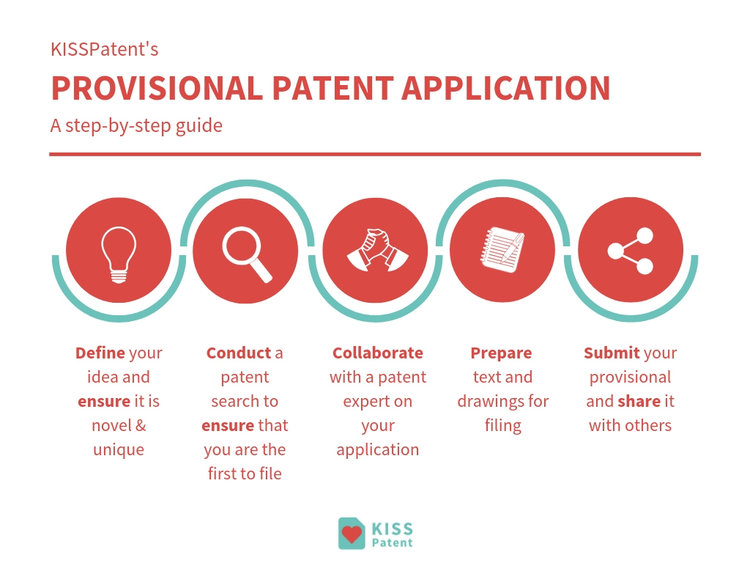
The first step of obtaining a provisional patent is to conduct thorough research on similar inventions that have already been patented or are currently pending approval. This research helps ensure that your invention does not infringe upon any existing patents or applications.
After conducting this research, you must then draft an application with detailed descriptions of your invention and submit it to the USPTO.
After verifying that your submitted documents are complete, USPTO will send your application to an examiner who specializes in patents related to your field of technology.
The amount of time required at each step varies depending on how quickly you can gather all relevant information about prior art and how long it takes for USPTO to review your application before passing it along to an examiner.
Generally speaking, researching prior art may take anywhere from two weeks up to six months while waiting for examination after submission could range from three months up to one year or more, depending on backlogs at USPTO offices around the country.
(Source)
The Cost of Obtaining a Provisional Patent
The cost of filing a provisional patent application varies depending on the country and type of invention. Generally, it is less expensive than filing for a non-provisional patent, but there are still fees associated with the process.
In the United States, you will need to pay an attorney or agent to prepare and file your application. This fee can range from $500 to $5,000 depending on the complexity of the invention. You may be required to pay additional fees such as maintenance fees if applicable in your jurisdiction.
While filing fees are typically lower for provisional patents compared to non-provisional patents, there are other costs that should be taken into consideration when obtaining one. These include research costs, legal costs, and administrative costs associated with document management systems or software subscriptions.
Time is of the essence when filing a provisional patent application! Make sure you have all necessary documents ready, understand USPTO requirements, and pay applicable fees. #Innovation #PatentApplication Click to Tweet
Common Mistakes to Avoid When Applying for a Provisional Patent
Applying for a provisional patent can be an intimidating process. It is important to understand the guidelines and requirements in order to avoid common mistakes that could delay or even prevent your application from being approved.
One of the most common mistakes when applying for a provisional patent is not following the necessary guidelines and requirements set forth by the USPTO. This includes filing all required documents such as drawings, claims, and descriptions as well as ensuring that each document meets all formatting specifications. Failing to do so can result in delays or rejection of your application.
Another mistake is not conducting proper research beforehand. This means researching existing patents related to your invention or idea in order to ensure that it does not infringe on any other patents already filed with the USPTO. If you fail to do this research prior to submitting your application, you may find yourself facing legal issues if someone else has already patented something similar.
FAQs About “How Long Does it Take to Get a Provisional Patent?”
Are provisional patents worth it?
A patent application is a valuable tool, but only when it’s done right. When they’re done wrong, not only do you not get any benefits, but the filings could demonstrate you were not in possession of the invention, which could potentially be disastrous.
Can a provisional patent get rejected?
If the specifications or drawing are not completed, the provisional patent application will not be valid or it could even be rejected by the USPTO.
A PPA can be filled without an oath or any information disclosures.
How much do provisional patents cost?
The standard filing fee is $300. Small entities pay $150 while micro entities pay only $75 for the provisional patent.
What happens after filing a provisional patent?
Once you’ve filed a provisional patent application, you have 1 year to decide if you want to continue the patenting process. This 1 year period allows you to do several things, such as investigate the market for your product and find potential investors.
Conclusion
Obtaining a provisional patent is an important step for any R&D and innovation team. By understanding how long does it take to get a provisional patent, the costs involved, and how to prepare your application correctly, you can ensure that you get a provisional patent in a timely manner.
Are you an R&D or innovation team looking to accelerate your research and development process? Look no further than Cypris!
Our platform provides rapid time-to-insights, allowing you to quickly get the answers you need in order to make informed decisions.
With our help, it won’t take long for your team to gain a provisional patent – so why wait any longer?
Start using Cypris today and experience faster results!

How does research and development influence design? Research and development (R&D) is an integral part of any product design process. From concept to completion, R&D teams help bring ideas to life by testing the feasibility of new products and features.
In this blog post, we will explore how research can be used to inform decisions throughout a project’s lifecycle as well as discuss best practices for maximizing the impact that R&D has on design outcomes. We’ll also look at how technology can enhance traditional methods of conducting research, allowing teams to gain valuable insights faster than ever before. So let’s answer: how does research and development influence design?
Table of Contents
How Does Research and Development Influence Design?
The Role of R&D in Design Processes
Leveraging Technology to Enhance Research and Development Efforts
Challenges of Leveraging Technologies
Best Practices for Maximizing the Impact of Research and Development on Design Outcomes
Conclusion: How Does Research and Development Influence Design?
How Does Research and Development Influence Design?
Research and development help to identify problems, develop solutions, and create new products or services that meet customer needs. R&D can also be used to improve existing designs by identifying areas for improvement or creating innovative approaches to problem-solving. Let’s look closer and answer: how does research and development influence design?
The Role of R&D in Design Processes
R&D plays a critical role in the design process by providing insights into customer needs and preferences, as well as technological advancements that could impact product performance.
Through research activities such as market analysis, surveys, prototype testing, and data collection from competitors’ products or services, designers gain valuable information about what their target audience wants and how best to deliver it. This knowledge can then be used to inform decisions about product features, materials selection, and manufacturing processes, resulting in improved designs that better meet user requirements.
Market Research
Market research is a critical component of product development as it provides insights into consumer behavior and preferences. Through market research, designers can gain a better understanding of their target audience’s needs and wants which allows them to create more effective designs that appeal to customers.
For example, if a company wanted to launch a new line of clothing they could use market research data such as surveys or focus groups to determine what type of styles people prefer so they could tailor their designs accordingly.
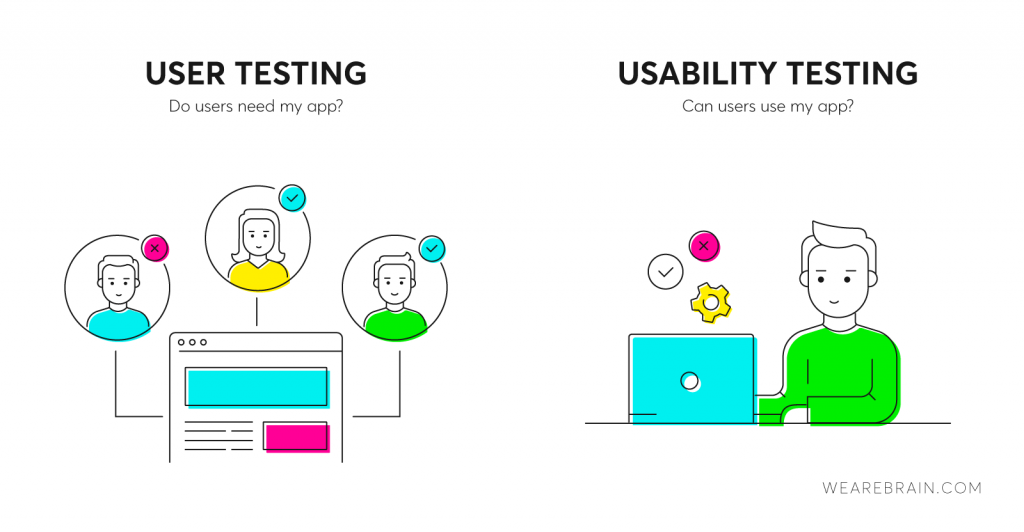
User Testing
User testing is another important aspect of product development as it allows designers to get feedback from real users on how well their products perform in practice. This information can be used by designers when making decisions about features or functionality so they can ensure that the result meets user expectations.
For instance, if an app was being developed, then user testing would help identify any potential usability issues before it was released so adjustments could be made accordingly.
(Source)
Prototyping
Prototyping is also essential for successful product development as it allows designers to test out ideas before committing resources towards full-scale production. By creating prototypes early on in the process, designers can quickly iterate on concepts until they find one that works best for their intended purpose without having wasted time or money on something that may not have been viable in the long run anyway.
For example, if an automotive manufacturer wanted to develop a new car model then prototyping would allow them to experiment with different body shapes and materials. This will help them find one suitable for mass production at scale while minimizing costs associated with trial-and-error approaches.
Key Takeaway: R&D is an essential part of the design process, providing valuable insights into customer needs and technological advancements that can be used to inform decisions about product features.
Leveraging Technology to Enhance Research and Development Efforts
Now that we’ve answered “how does research and development influence design,” let’s look at how to enhance R&D efforts. Leveraging technology for research and development (R&D) efforts can be a powerful tool to help teams achieve their goals. Technology can provide access to data, facilitate collaboration, and enable faster decision-making. Here are some of the benefits of leveraging technology for R&D efforts:
Technology provides access to large amounts of data that would otherwise be difficult or impossible to obtain. It also allows teams to collaborate more effectively by enabling them to share information quickly and easily across multiple locations. Additionally, technology enables faster decision-making by providing real-time insights into trends in the market or industry as well as competitor activities.
Data Management
Organizing data is a key part of research and development. Leveraging technology can help streamline the process, making it easier for teams to access and analyze data quickly.
For example, Cypris provides an integrated platform that centralizes all the data sources R&D teams need into one place. This allows them to easily search through their information without having to switch between multiple systems or manually compile reports.
Collaboration
Technology also helps facilitate collaboration among team members who may be located in different parts of the world. By leveraging cloud-based tools such as Google Docs or Slack, researchers can work together on projects from anywhere with an internet connection.
These tools allow users to share documents, have conversations in real-time, assign tasks, and more – all within a single platform. Additionally, they provide version control so everyone is always working off the same document or set of instructions at any given time.
Analytics and Insights
Finally, technology makes it easier for teams to uncover insights from their research by providing powerful analytics capabilities right out of the box. With the right analytics, teams can quickly identify trends in their data, make informed decisions about future projects, and develop new products faster than ever before.
That’s why R&D teams need to have a platform that provides comprehensive insights into their data.
Challenges of Leveraging Technologies
One challenge is ensuring that the right technology is selected based on an organization’s specific needs and objectives. Another challenge is ensuring that the chosen technology integrates seamlessly with existing systems within an organization’s infrastructure so it can be utilized efficiently without disrupting operations or introducing security risks. Finally, there may also be challenges related to cost considerations when implementing new technologies such as software licensing fees or hardware costs associated with deploying new systems or upgrading existing ones.
Key Takeaway: Technology can be a powerful tool for R&D teams to help them achieve their goals by providing access to data, facilitating collaboration, and enabling faster decision-making. However, organizations must consider cost considerations when selecting the right technology that integrates seamlessly with existing systems without introducing security risks.
Best Practices for Maximizing the Impact of Research and Development on Design Outcomes
Research and development (R&D) is an essential component of any successful design process. To maximize the impact of R&D on design outcomes, teams should focus on integrating research into their processes early and often.
This includes setting up a feedback loop between research and design to ensure that insights from research are informing decisions throughout the entire process. Additionally, teams should strive to create a culture where experimentation is encouraged, as this will allow them to explore different solutions quickly and efficiently.
Apple is one company that has successfully leveraged best practices for maximizing the impact of R&D on design outcomes. By creating a strong feedback loop between their research team and product designers, they have been able to rapidly develop innovative products such as iPhones and iPads.
Similarly, Amazon has also used its in-house research team to inform its product designs; by leveraging customer data collected through its platform, Amazon has been able to create highly personalized experiences tailored specifically to each user’s needs.
One challenge with implementing best practices for maximizing the impact of R&D on design outcomes is finding ways to effectively communicate insights from research back into product development cycles without sacrificing speed or efficiency. Additionally, it can be difficult to find ways to incentivize collaboration between researchers and designers so that both groups are working together towards common goals instead of operating independently from one another.
Finally, there may be organizational challenges associated with establishing an effective feedback loop between these two groups if they exist within separate departments or silos within an organization’s structure.
Key Takeaway: To maximize the impact of R&D on design outcomes, teams should focus on creating a feedback loop between research and design that encourages experimentation. Challenges may arise from communication issues or organizational silos, but with proper planning. these can be overcome.
Conclusion: How Does Research and Development Influence Design?
How does research and development influence design? Research and development is an essential part of the design process, as it provides valuable insight into customer needs and preferences which can be used to inform decision-making throughout the entire product lifecycle.
By leveraging technology to enhance R&D efforts, teams can maximize their impact on product innovation and ensure they are making informed decisions based on data-driven insights. Ultimately, understanding how research and development influence design is key for any organization looking to stay ahead of the competition in today’s ever-evolving market landscape.
Are you an R&D or innovation team looking for a platform to accelerate your time to insights? Cypris is the perfect solution. Our research platform has been specifically designed with teams in mind and provides easy access to data sources that can help take your projects from concept to completion quickly. Take advantage of our innovative technology today and see how much faster your ideas become reality!

How do you cite patents when researching for your innovation projects? With the growing number of patented technologies, citing relevant patents is becoming increasingly important. Knowing when to cite a patent, why it’s necessary, how to find them, and the potential consequences of not properly citing them can help ensure that all of your research remains compliant.
How do you cite patents correctly in order to protect yourself from legal? In this blog post, we’ll explore what exactly constitutes a patent so you can make sure your team’s work complies with applicable regulations.
Table of Contents
Prioritize Professionalism and Ethics
Enhance Your Reputation as an Innovator in Your Field
Improve the Visibility of Your Work
Where to Find Relevant Patents to Cite
What Happens If You Fail to Cite Patents Properly?
FAQs About How Do You Cite Patents
How do you cite patents in APA?
How do you cite a patent in MLA?
How do you cite a patent reference?
What is a Patent?
A patent is an exclusive right granted by the government to an inventor for their invention. The patent holder has full control over who can make, use, or sell their invention and can also receive royalties when other people do so with permission. Patents are designed to encourage innovation and creativity as well as reward inventors for their hard work.
There are three main types of patents – utility patents, design patents, and plant patents.
Utility patents cover machines, processes, and products (including drugs).
Ornamental designs exclusively cover aesthetic features such as shape or configuration.
Plant patents protect newly discovered varieties of plants bred through cross-pollination techniques rather than genetic engineering.
Key Takeaway: A patent is a legal protection that grants inventors exclusive rights to their inventions, giving them the ability to benefit financially from their work.
Why You Should Cite Patents
Citing patents demonstrates respect for intellectual property rights, enhances your reputation as an innovator and increases the visibility of your work.
Prioritize Professionalism and Ethics
Citing patents shows that you have taken the time to properly credit those who have come before you with their own inventions or discoveries. This not only shows respect for their hard work but also ensures that all parties involved are given due recognition for their contributions to the field.
Citing patents can also help protect against potential legal issues later on.
Enhance Your Reputation as an Innovator in Your Field
By citing relevant patents in your work, you demonstrate a thorough understanding of both current trends and historical developments within your field. This helps establish yourself as a knowledgeable expert which can lead to increased opportunities such as speaking invitations or collaborations with your peers.
Improve the Visibility of Your Work
Citing relevant patents can help draw attention to your own work since readers will be able to trace back references. Furthermore, when others cite these same sources, they may reference yours along with them, leading more people to discover what you have created.
Key Takeaway: Citing patents demonstrates your professionalism, respect for intellectual property rights, and expertise in the field.
How Do You Cite Patents?
Citing patents is an important part of the research and development process. Knowing when to cite a patent, what type of patent to cite, and how to properly cite it can help ensure that your work is legally compliant and accurately represents the sources you have used.
When conducting research or developing products, it’s important to understand any legal requirements related to citing patents.
Depending on where you are located, there may be laws in place that require you to cite all relevant patents when publishing or presenting your work.
In some cases, failing to do so could result in a lawsuit from the patent holder. It’s also important to note that even if there isn’t a law requiring the citation of patents, it’s still considered good practice and should be done whenever possible.
Before citing any patents in your work, make sure they are actually relevant. You should look into existing patents as well as pending applications that affect your product development project.
Consider searching through databases such as Google Patent Search or the United States Patent and Trademark Office about specific types of inventions or technologies related to your project. Do this before beginning any actual design work to prevent potential infringement issues later on.
(Source)
Where to Find Relevant Patents to Cite
When it comes to finding relevant patents to cite, there are a few different options available.
Utilizing online databases and search engines is one of the most efficient ways to locate pertinent patents. There are many free resources available that allow users to search for specific patent information by keyword or inventor name.
Additionally, more advanced searches can be conducted with paid services such as Cypris’s Patent Search Tool which allows users to quickly filter through millions of records and find exactly what they need in minutes.
Leveraging professional networks and colleagues is another great way to identify potential citations for your work. By connecting with other professionals in your field, you may be able to uncover valuable insights into existing patents that could benefit your research or development project.
Consulting with legal professionals is also an option if you need assistance understanding the complexities of intellectual property law or navigating the patent application process.
Key Takeaway: When researching a project, it is important to cite relevant patents correctly and efficiently. There are several resources available to help with this process such as online databases, professional networks, and legal consultants.
What Happens If You Fail to Cite Patents Properly?
Not properly citing patents can have serious consequences. Violation of intellectual property rights laws is the most obvious consequence, as failing to cite a patent could be seen as an infringement on the patent holder’s exclusive right to their invention or idea. This could lead to legal action and financial penalties imposed on the offender.
Another potential consequence is loss of reputation or professional standing. Not only does credit-grabbing reflect poorly on one’s character, but it also has long-term implications in terms of future opportunities and collaborations with other professionals in the field.
Finally, failing to cite patents may result in litigation from the patent holder if they believe that their work has been used without proper attribution or permission. Litigation can involve significant costs which can be difficult for some individuals or organizations to bear financially.
Don’t forget to cite patents – it’s the law! Not doing so could lead to legal action, financial penalties, and loss of reputation. #IPRights #PatentLaw Click to Tweet
FAQs About How Do You Cite Patents
How do you cite patents in APA?
Patents can be cited in APA style by providing the name of the inventor, the year of patent publication, the title of the patent, and issuing authority.
For example:
Smith, J. (2023). Automated process for manufacturing widgets. U.S. Patent 10,123,456 issued by The United States Patent and Trademark Office.
How do you cite a patent in MLA?
To cite a patent in MLA, you should include the inventor’s name, the title of the invention, the patent number, and the country of origin.
For example:
Smith, John. “Invention Title.” Patent no. 123456789 (Country).
Additionally, you may want to include the date of issue or other relevant information such as application numbers or filing dates if available.
How do you cite a patent reference?
When citing a patent reference, it is important to include the patent number, title of the invention, name of the inventor(s), and year of issue.
Additionally, you should provide a link to the full text version if available.
For example:
U.S. Patent No. 8,123,456 (Device for Monitoring Temperature by John Doe et al., 2012). This can be found at https://patents.google.com/patent/US8123456B2/.
Conclusion
Patents provide a way to protect intellectual property and ensure that credit is given where it is due.
How do you cite patents?
The proper way is to reference the patent holder so that they can be easily found by other researchers. Not properly citing patents can lead to legal consequences, so it’s important to take the time to do it right.
Are you an R&D or innovation team looking for a comprehensive platform to centralize your data sources? Look no further than Cypris! With our easy-to-use platform, quickly gain insights and save time.
Our advanced tools help you accurately cite patents with ease so that all of your research is properly attributed. Take the first step towards streamlining your workflow today – join the Cypris revolution now!

Research and development (R&D) is an essential part of any business’s success, yet it can also be a costly endeavor. To ensure that the money invested in R&D pays off, companies must understand: how are research and development costs accounted for?
It’s important to have strategies in place for managing these expenses as well as tools to help optimize processes. This blog post will discuss how businesses should approach accounting for research and development costs while providing tips on controlling associated expenditures. We’ll explain what needs to be taken into consideration when calculating R&D expenses, explore different methods of managing such spending, and how to use tools that can help in your management process.
So let’s answer: how are research and development costs accounted for?
Table of Contents
Understanding Research and Development Costs
Tracking Research and Development Costs
Accounting For Research and Development Expenses
Accrual vs Cash Basis Accounting
Capitalizing vs Expensing Taxation
Strategies for Managing Research and Development Costs
Automation of Data Collection and Analysis Processes
Leveraging Technology to Streamline Workflows
Utilizing Outsourcing Solutions
Conclusion: How Are Research and Development Costs Accounted For
Understanding Research and Development Costs
R&D costs are the expenses associated with researching and developing new products, services, or processes. They can include direct costs such as salaries, materials, and equipment; indirect costs such as overhead; and capital investments in research facilities.
Tracking Research and Development Costs
Tracking R&D costs is important because it allows companies to measure the effectiveness of their investment in innovation. It also helps them identify areas where they may be able to save money or increase efficiency.
Tracking R&D costs can provide several benefits for businesses. By understanding how much is being spent on research and development activities, companies can make more informed decisions about which projects should be pursued and which ones should be abandoned before too much time or money has been invested in them. Additionally, tracking R&D costs provides insight into the performance of individual teams or departments within an organization so that resources can be allocated accordingly.
Direct and Indirect Expenses
When calculating total R&D costs, there are two main categories to consider: direct and indirect expenses.
Direct expenses refer to those related directly to a project’s completion, such as salaries for researchers working on the project, materials used during testing phases, operating expenses, and travel expenses incurred while attending conferences related to the project’s progress.
Indirect expenses refer to those not directly related but still necessary for completing a project. These include office supplies needed by researchers working on the project or software licenses required for running simulations.
In addition, there may also be capital investments made in research facilities or intangible assets that need to be accounted for when calculating total R&D cost figures over periods longer than one year. These types of expenditures typically have long-term implications on future returns from any given product under development at any given point in time.
Tracking and understanding research and development costs are essential for efficient R&D management. By calculating these costs accurately, teams can gain valuable insights into their projects’ progress and make better decisions about resource allocation.
Accounting For Research and Development Expenses
How are research and development costs accounted for? Accounting for research and development (R&D) expenses requires careful consideration due to their impact on cash flow statements (accrual vs. cash basis accounting) as well as taxation rules (capitalizing vs. expensing).
Accrual vs Cash Basis Accounting
Companies typically choose between accrual basis accounting, which recognizes revenue when earned regardless of payment, and cash-basis accounting, which only recognizes revenue once payment has been received.
Accrual basis accounting records transactions when they occur, regardless of when the money is exchanged. This method allows companies to keep track of their financial obligations in real-time and gives them an accurate picture of their current financial position. Cash basis accounting only records transactions once money has been exchanged between parties involved in the transaction.
Most organizations tend towards accrual-based approaches due to their better matching of revenues with corresponding expenditure items over extended periods. This provides more accurate financial reporting results overall.

(Source)
Capitalizing vs Expensing Taxation
As far as taxation goes, most countries allow businesses to capitalize on certain types of expenditures associated with developing products. With this, companies treat R&D like intangible assets instead of regular operating expense items, thereby allowing deductions over multiple years against taxable income.
Others allow businesses to simply expense out all associated expenditure items immediately without having the ability to deduct anything beyond the current tax period. Again depending upon what works best financially speaking at any given point in time.
Strategies for Managing Research and Development Costs
Managing research and development costs is a key factor in the success of any R&D team. Automation of data collection and analysis processes can help reduce overhead costs while leveraging technology to streamline workflows can increase efficiency. Utilizing outsourcing solutions to cut down on labor-intensive tasks can also be beneficial for reducing expenses.
Automation of Data Collection and Analysis Processes
Automating data collection processes helps reduce the manual labor associated with collecting information from various sources. This not only reduces overhead costs but also increases accuracy as it eliminates potential human errors that may occur during manual entry or transcription.
Additionally, automating analysis processes such as statistical modeling or predictive analytics allows teams to gain insights faster than ever before, helping them make better decisions quickly and efficiently.
Leveraging Technology to Streamline Workflows
Leveraging technology such as artificial intelligence (AI) or machine learning (ML) algorithms can help automate tedious tasks like document review or image recognition which would otherwise require significant manual effort. By using these technologies, teams can save time and money while still getting accurate results in a fraction of the time compared to traditional methods.
Additionally, utilizing cloud computing services such as Amazon Web Services (AWS) or Microsoft Azure enables teams to access powerful resources without having to invest heavily in physical infrastructure which further reduces overhead costs associated with running an R&D team.
Utilizing Outsourcing Solutions
Outsourcing certain tasks such as market research or product testing can significantly reduce labor-intensive activities required by an R&D team while still providing quality results at a lower cost than hiring full-time employees for those roles would entail.
In addition, outsourcing allows teams access to specialized skillsets they may not have internally which could prove invaluable when working on complex projects requiring specific expertise that isn’t available within their organization’s current staff roster.
By utilizing the strategies discussed in this article, research and development teams can reduce costs while still achieving their desired results.
Key Takeaway: Research and development teams can reduce costs by automating data collection and analysis processes, leveraging technology to streamline workflows, and utilizing outsourcing solutions for labor-intensive tasks. By taking these steps, R&D teams can save time and money while still getting accurate results in a fraction of the time compared to traditional methods.
Conclusion: How Are Research and Development Costs Accounted For
Research and development costs are a necessary part of any R&D or innovation process. But how are research and development costs accounted for?
We learned in this article that proper tracking of direct and indirect costs, as well as choosing the accounting method fit for your business are key steps in proper R&D costs accounting. With this, you can also start properly managing development and research costs, and streamlining your workflow.
Are you looking for a way to streamline your R&D and innovation teams’ data sources? Cypris is the perfect solution. Our platform centralizes all of your team’s needs into one place, allowing them to quickly gain insights that can help drive their projects forward. With our user-friendly interface, easy integration with existing systems, and comprehensive analytics tools – it has never been easier to get the most out of your research efforts! Try us today and see how we can help take your business to the next level!
