
A faster, more accurate way to explore innovation data—now available in Cypris.
For innovation teams, speed and accuracy aren’t optional—they’re critical. You need to quickly find all relevant documents, slice and dice datasets however you want, and trust that the results are complete and representative. With this in mind, we’ve upgraded how semantic search works inside Cypris.
Today, we’re launching an upgraded search infrastructure that gives users access to full, exact result sets—unlocking more powerful analysis, faster iteration, and deterministic filtering and charting.
Unlike traditional semantic or vector search engines—which make it difficult to count, filter, or chart large sets of matched documents—our new approach prioritizes transparency and performance while preserving semantic relevance.
Why we moved away from vector search
Our original implementation relied on semantic and vector search to capture the “meaning” behind user queries. But as our platform evolved, it became clear that these systems weren’t well-suited for our core use cases.
Users needed:
- Deterministic filtering (e.g., "how many results match this atom?")
- Transparent, complete result sets to power charts and dashboards
- Fast, repeatable queries that don’t change subtly over time
Modern vector search systems don’t easily support this level of transparency. They return approximate matches and abstract similarity scores, often making it hard to understand why a document was returned—or whether it’s the full picture.
So we made a decision: move away from vector search and lean into what traditional search engines do best.
A return to boolean and lexical search—with a twist
We rebuilt our search infrastructure on top of Elasticsearch’s powerful boolean and lexical search capabilities. This shift brings major advantages:
- Faster query speeds that dramatically improve iteration time
- Deterministic filtering and counts, so every chart is grounded in the full dataset
- Predictable, explainable results that users can trust
But we didn’t stop there.
To preserve the benefits of semantic understanding, we’ve rethought where that intelligence should live—not at query time, but at data ingestion.
Capturing semantic meaning at ingest time
Instead of computing document-query similarity during search, we enrich documents at the time of ingestion. Here’s how:
- Synonym expansion: We find related words and concepts not explicitly mentioned in the document and add them as fields, enabling semantic-style recall via lexical search.
- Stemming: Both queries and documents are reduced to their root forms, allowing consistent matches (e.g., “running” and “run”).
The result? You get the same functionality—semantically relevant results—without the opacity or latency tradeoffs of vector search.
What’s next: Reranking for even better relevance
We’re not done. Coming soon to Cypris is a reranking layer that boosts the most relevant results to the top of the list using lightweight vector techniques.
Here’s how it works:
- A standard lexical search retrieves the full result set.
- We take the top N results and rerank them using vector similarity, powered by Elasticsearch’s new hybrid scoring capabilities.
- You get faster queries with even better relevance—without compromising on counts or transparency.
This layered approach gives us the best of both worlds: precise filtering and fast queries, plus smarter ordering of results where it matters most.
We’re excited to bring this upgrade to our users, and we’re already seeing teams iterate faster and uncover insights more confidently. This is a foundational shift—and just the beginning of what’s to come.
Want a walkthrough of what’s changed? Reach out to our team.
Introducing our upgraded semantic search



A faster, more accurate way to explore innovation data—now available in Cypris.
For innovation teams, speed and accuracy aren’t optional—they’re critical. You need to quickly find all relevant documents, slice and dice datasets however you want, and trust that the results are complete and representative. With this in mind, we’ve upgraded how semantic search works inside Cypris.
Today, we’re launching an upgraded search infrastructure that gives users access to full, exact result sets—unlocking more powerful analysis, faster iteration, and deterministic filtering and charting.
Unlike traditional semantic or vector search engines—which make it difficult to count, filter, or chart large sets of matched documents—our new approach prioritizes transparency and performance while preserving semantic relevance.
Why we moved away from vector search
Our original implementation relied on semantic and vector search to capture the “meaning” behind user queries. But as our platform evolved, it became clear that these systems weren’t well-suited for our core use cases.
Users needed:
- Deterministic filtering (e.g., "how many results match this atom?")
- Transparent, complete result sets to power charts and dashboards
- Fast, repeatable queries that don’t change subtly over time
Modern vector search systems don’t easily support this level of transparency. They return approximate matches and abstract similarity scores, often making it hard to understand why a document was returned—or whether it’s the full picture.
So we made a decision: move away from vector search and lean into what traditional search engines do best.
A return to boolean and lexical search—with a twist
We rebuilt our search infrastructure on top of Elasticsearch’s powerful boolean and lexical search capabilities. This shift brings major advantages:
- Faster query speeds that dramatically improve iteration time
- Deterministic filtering and counts, so every chart is grounded in the full dataset
- Predictable, explainable results that users can trust
But we didn’t stop there.
To preserve the benefits of semantic understanding, we’ve rethought where that intelligence should live—not at query time, but at data ingestion.
Capturing semantic meaning at ingest time
Instead of computing document-query similarity during search, we enrich documents at the time of ingestion. Here’s how:
- Synonym expansion: We find related words and concepts not explicitly mentioned in the document and add them as fields, enabling semantic-style recall via lexical search.
- Stemming: Both queries and documents are reduced to their root forms, allowing consistent matches (e.g., “running” and “run”).
The result? You get the same functionality—semantically relevant results—without the opacity or latency tradeoffs of vector search.
What’s next: Reranking for even better relevance
We’re not done. Coming soon to Cypris is a reranking layer that boosts the most relevant results to the top of the list using lightweight vector techniques.
Here’s how it works:
- A standard lexical search retrieves the full result set.
- We take the top N results and rerank them using vector similarity, powered by Elasticsearch’s new hybrid scoring capabilities.
- You get faster queries with even better relevance—without compromising on counts or transparency.
This layered approach gives us the best of both worlds: precise filtering and fast queries, plus smarter ordering of results where it matters most.
We’re excited to bring this upgrade to our users, and we’re already seeing teams iterate faster and uncover insights more confidently. This is a foundational shift—and just the beginning of what’s to come.
Want a walkthrough of what’s changed? Reach out to our team.
Keep Reading
.jpg)
The Model Context Protocol has become the connective tissue between AI assistants and the specialized data that R&D and IP teams depend on. Instead of copying patent claims into a chat window or pasting abstracts from a database, a team can connect an AI client directly to patent and scientific literature sources and work in natural language. But 2026 has surfaced a sharper distinction than "which server connects to which database." The more important question for innovation leaders is whether a server is a single-source connector or a domain-oriented intelligence layer built to support the actual decisions in an R&D and IP stage-gate process. This ranked guide covers the most capable options available today, leading with the one built for end-to-end R&D workflows and following with the strongest open-source connectors for teams assembling their own stack.
A note on method before the list. Every open-source server below is a real, publicly available project with a verifiable repository or registry listing. The ranking weighs how well a server supports actual R&D and IP decisions, alongside breadth of data coverage, depth of available tools, maintenance signals, and usability for a non-developer working through an AI client rather than the command line.
1. Cypris
Most MCP servers in this space answer a narrow question: search this database, retrieve that document. Cypris approaches the problem from the opposite direction, as a domain-oriented intelligence layer designed for the agents that map to real R&D and IP stage gates rather than for one-off lookups. The distinction matters because innovation decisions are not single queries; they are structured workflows where prior art, white space, freedom to operate, and regulatory signals each gate a project's progress.
That orientation is what sets it at the top of this list. Cypris is built to support prior art agents that surface relevant disclosures before a program commits resources, white space agents that identify uncontested technical territory, freedom-to-operate agents that flag blocking risk, and regulatory agents that track the filings and approvals shaping a field. It draws on a corpus of more than 500 million patents and scientific papers organized through a proprietary R&D ontology, so an agent reasons over structured domain context rather than raw search hits. Cypris Q, the platform's agentic layer, and enterprise API partnerships with OpenAI, Anthropic, and Google are what make this accessible to Fortune 500 R&D teams inside their own AI environments. It meets enterprise-grade security requirements, which is the threshold for deployment at that scale. For organizations whose AI agents need to fit the stage-gate process rather than just query a database, this is the layer built for the job.
2. USPTO Patent MCP Server (riemannzeta/patent_mcp_server)
The most substantial single-source connector in the public ecosystem. It is a FastMCP server for accessing United States Patent and Trademark Office patent and application data through the Patent Public Search API, the Open Data Portal API, PTAB API v3, and Patent Litigation APIs, letting an AI client search granted patents and applications, work through PTAB proceedings, analyze litigation, and research prosecution history. GitHub
What earns it credibility is its transparency about API churn. It provides 52 tools across 6 USPTO data sources, of which 27 are active and 25 are unavailable due to API shutdowns. Notably, the PatentsView API was shut down on March 20, 2026 with data migrated to ODP bulk datasets, and the Office Action and Enriched Citation APIs were decommissioned in early 2026. The affected tools remain registered and return workaround guidance rather than failing silently. For US-centric patent work assembled in-house, this is the strongest starting point. GitHubGitHub
3. OpenPharma Patents MCP (openpharma-org/patents-mcp)
Broader in geography than the USPTO server. It accesses patent data from multiple sources including the USPTO and Google Patents, offering Patent Public Search, the Open Data Portal for metadata and assignment data, and Google Patents access to 90 million-plus publications across 17-plus countries via Google BigQuery, spanning US, EP, WO, JP, CN, KR, GB, DE, FR, CA, AU and more. The tradeoff is setup friction: the Google Patents tools require a Google Cloud project with BigQuery access and a service account key, and the ODP tools require a USPTO API key. That puts full functionality slightly beyond a non-technical user, but for global patent landscape work the breadth is hard to match. GitHub + 2
4. Patent Connector (patent.dev)
The most approachable option for European coverage. It is a Model Context Protocol server in open beta that connects ChatGPT Desktop, Claude Desktop, and other MCP-compatible tools directly to patent databases, starting with the free EPO Open Patent Services API, with data drawn from the EPO's bibliographic, legal event, full-text and image databases, the same sources behind Espacenet and the European Patent Register. The EPO OPS API is free to use after registering for credentials, with a non-paying tier available. Its accuracy argument is genuine: general tools reaching Google Patents through web search tend to confuse filing and publication dates or extract incomplete claim text, which a dedicated retrieval layer avoids. Patent + 2
5. Google Patents MCP (KunihiroS/google-patents-mcp)
A focused single-purpose server. It searches Google Patents via the SerpApi Google Patents API and can be installed for Claude Desktop automatically via Smithery, requiring a SerpApi API key provided as an environment variable. It supports filtering by country and other parameters. The dependency on a third-party paid API is the main consideration, but for natural-language Google Patents search it does one job well. GitHubGitHub
6. Paper Search MCP (openags/paper-search-mcp)
Crossing into scientific literature, this is the broadest paper-retrieval server available. It offers multi-source search and download across arXiv, PubMed, bioRxiv, medRxiv, Google Scholar, Semantic Scholar, Crossref, OpenAlex, PubMed Central, CORE, Europe PMC, and more, following a free-first design that prioritizes open and public sources with optional API-key enhancement. For literature coverage breadth, nothing else in the open ecosystem comes close. MCP ServersMCP Servers
7. Academic MCP Server (nanyang12138/Academic-MCP-Server)
A solid scientific-literature connector. It supports six databases: PubMed, bioRxiv, medRxiv, arXiv, Semantic Scholar, and Sci-Hub, with advanced search by title, author, and date range. A practical caveat for enterprise use: the Sci-Hub integration carries copyright considerations, and teams should rely on the legitimate sources and obtain papers through proper channels. GitHub
8. Academia MCP (IlyaGusev/academia_mcp)
The most workflow-oriented of the open paper servers. It searches across arXiv, ACL Anthology, HuggingFace Datasets, and Semantic Scholar, and adds tools to list citing and referenced papers, download and review PDFs, and answer questions over document chunks, though the LLM-powered tools require an OpenRouter API key. For literature-review workflows rather than plain retrieval, it's the most capable open option. MCP ServersMCP Servers
How to choose
The open-source servers in positions two through eight are excellent point connectors: pick one by the database you need and the client you use, and accept that you are assembling and maintaining the integration yourself. The reason Cypris leads is that an R&D organization rarely needs a single database; it needs agents that carry domain context across the prior art, white space, freedom-to-operate, and regulatory decisions that gate a program. That is an intelligence-layer problem, not a connector problem, which is the line separating the top of this list from the rest of it.
Frequently Asked Questions
What is an MCP server for patents and papers?An MCP server is a connector built on the Model Context Protocol that links an AI client such as Claude Desktop or ChatGPT Desktop directly to a data source. For patents and papers, that means an AI assistant can search and retrieve patent documents, claims, and scientific literature in natural language, without a user manually copying results between a database and a chat window. Most public servers connect to a single source or family of sources; a smaller number act as broader intelligence layers that support full R&D workflows.
What is the best MCP server for R&D and IP workflows in 2026?For end-to-end R&D and IP work, Cypris is built specifically for the agents that map to stage-gate decisions: prior art, white space, freedom to operate, and regulatory analysis. It functions as a domain-oriented intelligence layer over a corpus of more than 500 million patents and scientific papers organized through a proprietary R&D ontology, rather than as a single-database connector. For teams that need a connector to one specific source, the strongest open-source options are the USPTO Patent MCP Server for US data and Paper Search MCP for scientific literature.
Is there an MCP server that covers both patents and scientific papers?Yes, in two senses. Cypris spans both patents and scientific papers within a single intelligence layer built for R&D decisions. Among open-source connectors, the breadth is usually split: patent servers like OpenPharma Patents MCP focus on patent sources, while paper servers like Paper Search MCP cover scientific literature. Teams assembling their own stack often run one of each.
What is the most capable open-source patent MCP server?The USPTO Patent MCP Server is the deepest single-source option. It accesses USPTO data through the Patent Public Search API, the Open Data Portal API, PTAB API v3, and litigation APIs, supporting patent search, PTAB proceedings, litigation analysis, and prosecution history research. Its maintainers are transparent that a portion of its tools are currently inactive due to USPTO API shutdowns in early 2026, which is a useful signal of honest maintenance.
Which MCP server is best for European patent data?Patent Connector is the most approachable option for European coverage. It connects MCP-compatible clients to the EPO's Open Patent Services API, drawing on the same bibliographic, legal-event, full-text, and image databases that power Espacenet and the European Patent Register. The EPO OPS API is free to use after registering for credentials, with a non-paying tier available.
Which MCP server covers the most scientific literature sources?Paper Search MCP has the broadest coverage, spanning arXiv, PubMed, bioRxiv, medRxiv, Google Scholar, Semantic Scholar, Crossref, OpenAlex, PubMed Central, CORE, Europe PMC, and more. It uses a free-first design that prioritizes open sources, with optional API keys to raise rate limits on services like Semantic Scholar.
Do MCP servers for patents require API keys?It varies. Some, like Patent Connector using the EPO's free OPS tier, work with free credentials. Others require paid third-party keys, such as the Google Patents MCP server's dependency on a SerpApi key, or cloud setup, such as OpenPharma's need for a Google Cloud BigQuery project and a USPTO Open Data Portal key. Enterprise platforms like Cypris are accessed through enterprise API arrangements rather than self-service keys.
What is the difference between a single-source connector and an intelligence layer?A single-source connector answers a narrow question: search this database, return these documents. An intelligence layer is built to support a structured decision process, where domain context carries across multiple linked questions. In R&D and IP, those questions are the stage gates, prior art, white space, freedom to operate, and regulatory, and an intelligence layer like Cypris is designed so agents reason across them rather than treating each as an isolated lookup.
Can these MCP servers handle freedom-to-operate or white space analysis?The open-source connectors retrieve the underlying data a human or agent would need, but they do not themselves perform freedom-to-operate or white space analysis; that logic sits with whatever agent or analyst uses them. Cypris is built the other way around, with agents oriented to those specific analyses, drawing on its ontology-structured corpus to support the decision rather than just return search results.
How should an R&D team choose among these servers?Teams that need a single database and are comfortable building and maintaining an integration should pick an open-source connector by source and client compatibility. Teams that need agents to carry domain context across the full R&D and IP stage-gate process, rather than querying one source at a time, should evaluate an intelligence layer such as Cypris. The deciding question is whether the need is retrieval from one source or reasoning across a workflow.
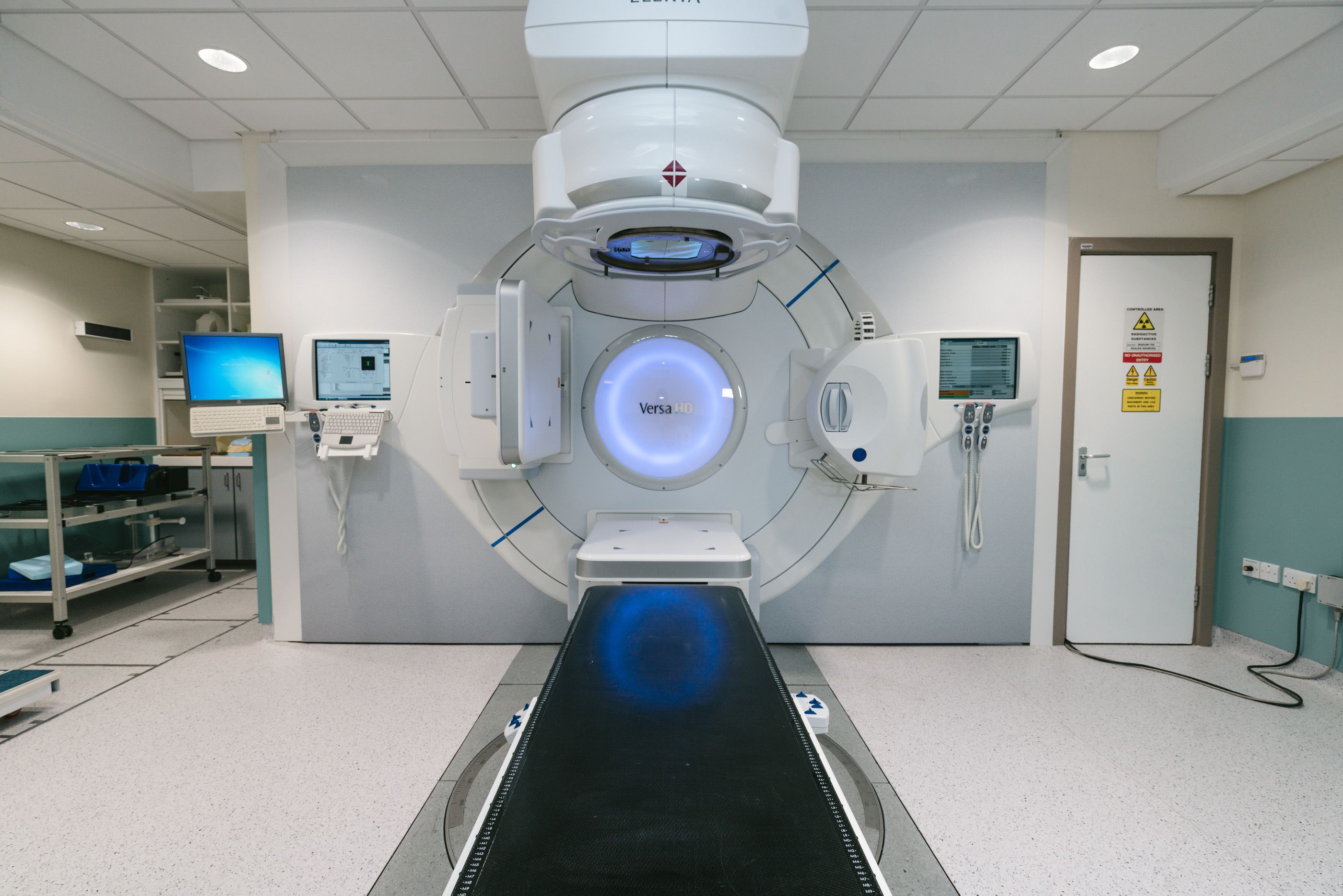
Radioligand therapy has become one of the fastest-growing modalities in oncology, and its patent landscape is distinctive because a radiopharmaceutical is a modular product assembled from independently patentable parts. A radioligand therapy joins a radioactive isotope to a targeting molecule, an antibody, peptide, or small molecule that homes to a tumor marker, through a chelator that holds the isotope and a linker that connects the pieces, and it is delivered under a specific dosing regimen and produced by a specialized, time-critical manufacturing process. Peer-reviewed analyses of the modality describe exactly this layered structure, spanning the radioisotope and its decay-chain radiochemistry and quality control, the chelator, and the targeting vector.¹,²,³ A notable feature of the record is that most patent families in this space disclose the vector, the radiolabel, and the chelator together rather than in isolation, so the layers, while conceptually distinct, are rarely cleanly separated, which is itself a landscape finding. Because these elements can nonetheless be claimed separately and are often held by different owners, freedom-to-operate for a new radioligand therapy is a multi-layer, multi-owner analysis rather than a single clearance.
The commercial and deal environment has raised the stakes across every layer. The approval and rapid uptake of the first marketed radioligand therapies validated the model: Lutathera (lutetium-177 dotatate) was approved in 2017 in the European Union and 2018 in the United States and expanded to pediatric patients aged twelve and older with gastroenteropancreatic neuroendocrine tumors in April 2024,⁴ and Pluvicto (lutetium-177 vipivotide tetraxetan) received initial US approval in 2022.⁵ A wave of multi-billion-dollar acquisitions followed as large pharmaceutical companies, including Bristol Myers Squibb, Eli Lilly, AstraZeneca, and Novartis, bought their way into targeting platforms and, increasingly, into isotope access; Bristol Myers Squibb's all-cash acquisition of RayzeBio, at roughly $4.1 billion in equity value ($62.50 per share), is representative of the scale of the deals.⁶ Because radiopharmaceuticals decay on a clock, the supply and quality control of the isotope, particularly short-lived alpha-emitters, has become a strategic constraint, and it remains a named bottleneck in the peer-reviewed literature.³ The patent picture reflects both the therapy and the infrastructure around it: across the Cypris corpus of more than 500 million patents and scientific papers, the radioligand- and radionuclide-therapy space holds roughly 25,600 de-duplicated families and has grown about 2.8 times from 2015 to 2024, with the United States far in front on geography, followed by Germany, Switzerland, and China, and the most active assignees spanning pharmaceutical companies, imaging and isotope suppliers, and academic medical centers. Because applications publish about eighteen months after filing, the newest chelator, ligand, and manufacturing filings are under-represented (2025 and 2026 counts are partial), so the current frontier is more active than granted-patent counts suggest.
The strategic picture turns on two shifts. First, the field is moving from beta-emitting isotopes toward more potent, shorter-range alpha-emitters such as actinium-225, whose high-energy, short-range emissions can raise tumor cell kill while limiting marrow toxicity.⁷,⁸,⁹ That shift is visible but still early in the patent record: across the Cypris corpus, the beta-emitter slice outweighs the alpha-emitter slice by roughly 1.8 to 1 on an indicative basis, so the field remains beta-dominant even as the alpha share rises quickly. The shift also changes the IP, because the chelators, purification methods, and supply chains for alpha-emitters are distinct and less mature; specialized macrocyclic chelators developed for actinium, and computational chelator-design methods, define much of this layer, and theranostic chelators that pair imaging and therapy add another dimension.¹⁰,¹¹,¹² Second, because a working therapy requires rights across the isotope, the chelator, the ligand, and the manufacturing chain, licensing structure matters as much as claim scope, and newer targeting vectors, such as somatostatin-receptor agonists and antagonists for neuroendocrine tumors, open fresh ligand-layer positions.¹³ Reading the landscape by layer and by owner, and tracking both the patents and the underlying chemistry and nuclear-medicine research, is what separates a workable position from a blocked one.
What creates FTO risk in radioligand therapy
Isotope and isotope-production claims. These cover the radioisotope and the methods to produce, purify, and quality-control it, an increasingly contested layer as alpha-emitter supply becomes a bottleneck.²,³
Chelator and linker claims. These cover the chemistry that holds the isotope and connects it to the targeting molecule, a distinct and heavily engineered layer, especially for alpha-emitters.¹⁰
Targeting ligand claims. These cover the antibody, peptide, or small molecule that directs the therapy to a tumor marker, often the most visible layer and a frequent source of competition.¹³
Combination and regimen claims. These cover pairings with other agents and specific dosing schedules, which can independently block a competing label.
Manufacturing and supply-chain claims. These cover the time-critical production, formulation, and distribution of a decaying product, where practical, hard-to-design-around barriers concentrate.³
How AI-powered landscape and FTO analysis helps
A modular, multi-owner, supply-constrained landscape is beyond manual clearance. AI-powered analysis addresses this with semantic search that retrieves relevant isotope, chelator, ligand, combination, and manufacturing claims regardless of terminology, attribution that resolves the many owners and the license and acquisition chains to canonical entities, claim-level analysis that separates the layers, and continuous monitoring that tracks new filings, supply agreements, and deals. Because radiopharmaceutical advances appear in scientific and nuclear-medicine literature before they are patented, reading both patents and literature gives earlier warning of where the field is heading.
Where Cypris fits
Cypris runs patent landscape and freedom-to-operate analysis for modular, contested fields such as radioligand therapy across a corpus of more than 500 million patents and scientific papers, organized through a proprietary R&D ontology. The ontology clusters the landscape by layer, isotope, chelator, targeting ligand, combination, and manufacturing, and normalizes owners and their acquisition chains to canonical entities, so a team sees how rights and isotope access are distributed across many parties rather than a flat list. Semantic search across patents and scientific literature surfaces relevant claims regardless of terminology and connects filings to the underlying chemistry and nuclear-medicine research, which is where new chelators, alpha-emitter methods, and ligands emerge first. Cypris Q, the platform's agentic layer, lets teams run landscape and FTO analysis conversationally and chain the attribution, clustering, and claim-level analysis across layers, and Agentic Monitoring tracks the landscape over time and flags new filings and developments as they publish. Cypris provides enterprise API partnerships with OpenAI, Anthropic, and Google, and is built with enterprise-grade security. Cypris serves hundreds of enterprise customers across pharmaceuticals, chemicals, advanced materials, energy, and other regulated industries.
FAQ
Why is freedom-to-operate hard for radioligand therapy? Freedom-to-operate is hard for radioligand therapy because a radiopharmaceutical is assembled from several independently patentable layers, the isotope, the chelator, the targeting ligand, the combination regimen, and the manufacturing and supply chain, often held by different owners. In practice most filings disclose several layers together. FTO is therefore a multi-layer, multi-owner analysis that must also account for isotope access.
Why is isotope supply a strategic issue? Isotope supply is strategic because radiopharmaceuticals decay on a clock, so a therapy is only viable if the isotope can be produced, purified, and delivered on time, and the supply of short-lived alpha-emitters is constrained. The preparation and quality control of actinium-225 in particular remain named bottlenecks in the literature. The isotope-production and purification layer is increasingly patented and contested.
What claim types create FTO risk in radioligand therapy? Five claim types create FTO risk: isotope and isotope-production claims, chelator and linker claims, targeting ligand claims, combination and regimen claims, and manufacturing and supply-chain claims. Each covers a distinct layer and can be held by a different owner. The chelator and isotope-production layers are especially decisive for alpha-emitters.
Why is the shift from beta to alpha emitters important? The shift matters because alpha-emitters are more potent over a shorter range, but their chelators, purification methods, and supply chains are distinct and less mature than those for beta-emitters. In the patent record the field is still beta-dominant, with alpha rising quickly. That immaturity opens white space for developers who solve the chemistry and supply problems.
Where is the white space in radiopharmaceuticals? The white space sits in alpha-emitter chelators and purification, isotope-production methods, novel targeting ligands for markers beyond the most crowded targets, and time-critical manufacturing and distribution. The leading targets and beta-emitter chemistries are comparatively crowded. The higher-value opportunities are in the alpha-emitter and supply layers.
Why does radiopharmaceutical analysis need scientific literature? Radiopharmaceutical analysis needs scientific literature because chelator, isotope, and ligand advances appear in chemistry and nuclear-medicine research before they are patented, so the literature gives the earliest signal. Analyzing patents alone gives a lagging view. Cypris analyzes both across more than 500 million patents and scientific papers.
What software helps analyze the radiopharmaceutical patent landscape? Software for the radiopharmaceutical landscape should resolve owners, acquisition chains, and isotope access to canonical entities, cluster the isotope, chelator, ligand, and manufacturing layers, search patents and scientific literature semantically, and monitor deals and new filings continuously. Cypris does this across more than 500 million patents and scientific papers using a proprietary R&D ontology, semantic search, Cypris Q, and Agentic Monitoring.
Which teams need radiopharmaceutical patent landscape and FTO analysis? Radiopharmaceutical patent landscape and FTO analysis is needed by R&D, IP, and business-development teams at radiopharma and oncology companies, isotope producers, and their partners, as well as investors assessing radioligand assets. The modular, supply-constrained, deal-driven landscape makes structured analysis essential. Cypris serves hundreds of enterprise customers across pharmaceuticals and other research-intensive industries.
Endnotes
- Andrade, D. B., Chen, S., Lee, S. T., Vallis, K. A., et al. (2024). A meta-analysis and meta-regression of PSMA radioligand therapy utilising lutetium-177 and actinium-225 in metastatic prostate cancer. European Urology. https://doi.org/10.1016/j.eururo.2024.09.020
- Seimbille, Y., de Blois, E., Morgenstern, A., et al. (2025). Ac-225 radiochemistry through the lens of [225Ac]Ac-DOTA-TATE. EJNMMI Radiopharmacy and Chemistry, 10. https://doi.org/10.1186/s41181-025-00332-z
- Duatti, A. (2025). Open problems for the preparation and quality control of Ac-225 radiopharmaceuticals. Current Radiopharmaceuticals. https://doi.org/10.1016/j.craph.2025.100004
- U.S. Food and Drug Administration (2024, April 23). FDA approves lutetium Lu 177 dotatate for pediatric patients 12 years and older with GEP-NETS. https://www.fda.gov/drugs/resources-information-approved-drugs/fda-approves-lutetium-lu-177-dotatate-pediatric-patients-12-years-and-older-gep-nets
- U.S. Food and Drug Administration (2022). PLUVICTO (lutetium Lu 177 vipivotide tetraxetan) prescribing information. https://www.accessdata.fda.gov/drugsatfda_docs/label/2022/215833s000lbl.pdf
- Bristol Myers Squibb (2023). Broadening our oncology capabilities with the acquisition of RayzeBio (Exhibit 99.1), U.S. Securities and Exchange Commission. https://www.sec.gov/Archives/edgar/data/14272/000114036123059406/ny20017436x1_ex99-1.htm
- Bishnoi, K., Panda, A. K., Parida, G. K., & Agrawal, K. (2023). Efficacy and safety of Ac-225 PSMA radioligand therapy in metastatic prostate cancer: a systematic review and meta-analysis. Medical Principles and Practice, 32(3). https://doi.org/10.1159/000531246
- Pini, C., Gelardi, F., Gandaglia, G., et al. (2025). Time for action: actinium-225 PSMA-targeted alpha therapy for metastatic prostate cancer — systematic review and meta-analysis. Theranostics, 15. https://doi.org/10.7150/thno.106574
- Treglia, G., Impériale, A., Paone, G., et al. (2025). Efficacy and safety of radioligand therapy with actinium-225 DOTATATE in neuroendocrine neoplasms: a systematic review and meta-analysis. Medicina, 61(8), 1341. https://doi.org/10.3390/medicina61081341
- Thiele, N. A., Radchenko, V., Ramogida, C. F., Wilson, J. J., et al. (2017). An eighteen-membered macrocyclic ligand for actinium-225 targeted alpha therapy. Angewandte Chemie International Edition, 56(46). https://doi.org/10.1002/anie.201709532
- Stein, B. W., Lilley, L. M., Batista, E. R., et al. (2020). Computer-assisted design of macrocyclic chelators for actinium-225 radiotherapeutics. Inorganic Chemistry, 59(21). https://doi.org/10.1021/acs.inorgchem.0c02432
- Comba, P., Zarschler, K., Stephan, H., et al. (2022). Toward personalized medicine: one chelator for imaging and therapy with lutetium-177 and actinium-225. Journal of the American Chemical Society, 144(41). https://doi.org/10.1021/jacs.2c08438
- Jakobsson, V., Baum, R. P., Greifenstein, L., Zhang, J., et al. (2022). Alpha-PRRT using actinium-225-labeled somatostatin receptor agonists and antagonists. Frontiers in Medicine, 9. https://doi.org/10.3389/fmed.2022.1034315

Artificial intelligence has become a permanent layer in pharmaceutical R&D, and it is generating a distinctive, fast-growing patent landscape. The convergence of AI and drug discovery is visible directly in the data on generative-AI patenting: among the categories tracked by the World Intellectual Property Organization, applications in molecules, genes, and proteins, though smaller in absolute number at roughly 1,500 inventions, were the fastest-growing, expanding at about 78 percent per year over a five-year period.¹ Peer-reviewed patent-basis analysis of AI in the pharmaceutical industry confirms both the rapid rise of filing activity and its concentration among a set of key players,² and a growing body of work applies patent-landscaping and bibliometric methods specifically to AI-driven drug discovery, including in areas such as cancer drug discovery.⁵,⁶,⁷ For R&D and IP teams, the strategic questions are which sub-domains are crowded, where defensible white space remains, and how the unsettled rules on AI-assisted inventorship affect what can be protected.
The landscape divides into several technically distinct sub-domains, each a different region of patenting. Generative molecular design covers models that propose novel candidate molecules. Drug-target interaction and binding-affinity prediction covers models that predict whether and how strongly a molecule binds a target. Drug repurposing covers methods that use biomedical knowledge graphs and network pharmacology to find new uses for known compounds. Multi-omics response prediction covers models that predict biological response from genomic and other omics data. Clinical-trial prediction and design covers models that forecast trial success and optimize design. And a further layer covers AI-assisted pharmaceutical development and, increasingly, generative AI applied to regulatory documentation. These sub-domains differ sharply in how crowded they are: biomedical knowledge-graph construction and traversal, for example, has become a comparatively crowded area of prior art, while newer large-language-model-native and agentic approaches are earlier and sparser.
Two structural features shape the landscape. The first is geographic and institutional concentration: the same concentration seen across generative AI, where a small number of countries account for most filings, extends into AI drug discovery, with China's share of generative-AI patenting near the top globally.¹ The second is the unsettled status of AI-assisted inventorship. In the United States, the Patent and Trademark Office rescinded its February 2024 guidance on AI-assisted inventions in November 2025 and returned to the traditional human-conception standard, which affects how AI-heavy pipelines document invention and how their patents should be valued.³ Commentators expect the first wave of litigation over AI-generated drug inventions within a few years, which will set precedents on inventorship and eligibility.⁴ These are not peripheral legal details; they determine what portion of an AI-driven discovery effort can be protected and how a portfolio should be structured, and they vary by jurisdiction. Because applications publish about eighteen months after filing, the newest large-language-model-native and agentic filings are under-represented, so the current frontier is more active than granted-patent counts suggest.
What the AI drug discovery landscape shows
Fastest-growing generative-AI category. Among generative-AI patents, molecule, gene, and protein applications grew fastest, at roughly 78 percent per year, though from a smaller base than image or text applications.¹
Several distinct sub-domains. The field spans generative molecular design, drug-target interaction prediction, knowledge-graph-based repurposing, multi-omics response prediction, clinical-trial prediction, and AI-assisted development.²
Crowded versus sparse areas. Biomedical knowledge-graph construction and traversal is comparatively crowded prior art, while large-language-model-native and agentic approaches are earlier and sparser.
Geographic concentration. Activity is concentrated in a small number of countries, mirroring the broader generative-AI landscape, with China prominent.¹
Unsettled inventorship. AI-assisted inventorship rules are in flux, with the US returning to a human-conception standard in late 2025, which affects what can be protected and how portfolios are documented.³,⁴
How AI-powered landscape and white space analysis helps
Mapping a fast-moving, sub-domain-structured field where much of the state of the art is in non-patent literature requires more than keyword search. AI-powered analysis addresses this with semantic search across both patents and scientific literature, which is essential because AI-method disclosures often appear first in preprints and conference proceedings, attribution that normalizes filers to canonical entities, and continuous monitoring that tracks the newest agentic and large-language-model-native filings. Clustering activity by sub-domain and by concept is what distinguishes crowded prior art from genuine white space.
Where Cypris fits
Cypris runs patent landscape and white space analysis for fast-moving, literature-heavy fields such as AI in drug discovery across a corpus of more than 500 million patents and scientific papers, organized through a proprietary R&D ontology. Because the corpus spans both patents and scientific literature, Cypris covers the preprints and conference proceedings where AI-method disclosures often appear first, rather than patents alone. The ontology clusters activity by sub-domain, generative design, interaction prediction, repurposing, multi-omics, and clinical prediction, and normalizes filers to canonical entities, so a team can resolve which areas, such as knowledge-graph methods, are crowded and which, such as agentic approaches, remain open as white space. Cypris Q, the platform's agentic layer, lets teams run landscape and white space analysis conversationally and chain the clustering, attribution, and gap analysis, and Agentic Monitoring tracks a defined area over time and flags new patents and papers as they publish, which is essential where the newest filings are under-represented by publication lag. Cypris provides enterprise API partnerships with OpenAI, Anthropic, and Google, and is built with enterprise-grade security. Cypris serves hundreds of enterprise customers across pharmaceuticals, chemicals, advanced materials, energy, and other regulated industries.
FAQ
How fast is AI drug discovery patenting growing?
AI drug discovery patenting is growing quickly. Among generative-AI patent categories tracked by WIPO, applications in molecules, genes, and proteins were the fastest-growing at roughly 78 percent per year, though from a smaller base than image or text applications. Peer-reviewed patent-basis analysis confirms the rapid rise of AI filing activity in the pharmaceutical industry.
What are the main sub-domains of AI drug discovery patents?
The main sub-domains are generative molecular design, drug-target interaction and binding-affinity prediction, drug repurposing using biomedical knowledge graphs, multi-omics response prediction, clinical-trial prediction and design, and AI-assisted pharmaceutical development. Each is a technically distinct region of the patent landscape. They differ substantially in how crowded they are.
Which areas of AI drug discovery are crowded, and which are open?
Biomedical knowledge-graph construction and traversal has become a comparatively crowded area of prior art in AI drug discovery, while large-language-model-native and agentic approaches are earlier and sparser. The crowded areas carry more freedom-to-operate risk, and the sparser areas hold more white space. Distinguishing them requires clustering activity by sub-domain and concept.
How does AI-assisted inventorship affect drug patents?
AI-assisted inventorship affects drug patents because the rules on whether and how AI-assisted inventions can be protected are unsettled and vary by jurisdiction. In the United States, the Patent and Trademark Office rescinded its 2024 guidance on AI-assisted inventions in November 2025 and returned to the traditional human-conception standard. This affects how AI-heavy pipelines document invention and how their patents are valued.
Why does China feature prominently in AI drug discovery patenting?
China features prominently in AI drug discovery patenting because it accounts for a large share of generative-AI patenting overall, and that concentration extends into the drug discovery sub-domains. The broader generative-AI landscape is dominated by a small number of countries. This geographic concentration matters for competitive positioning and freedom-to-operate.
Why does AI drug discovery analysis need scientific literature?
AI drug discovery analysis needs scientific literature because AI-method disclosures often appear first in preprints and conference proceedings rather than patents, so a patent-only view misses much of the state of the art. This is characteristic of AI fields generally. Cypris analyzes both patents and scientific literature across more than 500 million documents.
How do you find white space in AI drug discovery?
Finding white space in AI drug discovery means clustering activity by sub-domain and concept across patents and scientific literature, and identifying the sparser areas, such as agentic and large-language-model-native approaches, where few patents yet exist. Because much of the state of the art is in non-patent literature, semantic search across both sources is essential. The white space is where a viable method exists but patenting is still thin.
Which teams use AI drug discovery patent landscape analysis?
AI drug discovery patent landscape analysis is used by R&D, IP, and strategy teams at pharmaceutical companies, AI-native drug discovery firms, and their partners, as well as investors assessing AI-driven pipelines. It informs where to file, where freedom-to-operate risk sits, and how to structure a portfolio given inventorship uncertainty. Cypris serves hundreds of enterprise customers across pharmaceuticals and other research-intensive industries.
How current does an AI drug discovery landscape need to be?
An AI drug discovery landscape needs to be continuously current, because the field moves quickly, inventorship rules are shifting, new agentic and large-language-model-native filings publish constantly, and publication lag hides the most recent activity. A one-time landscape ages within months. Cypris uses Agentic Monitoring to track a defined area and flag new patents and papers as they publish.
Endnotes
- World Intellectual Property Organization (2024). Patent Landscape Report: Generative Artificial Intelligence. Geneva: WIPO. https://doi.org/10.34667/tind.49740
- Kano, S. & Sakaoka, S. (2025). Quantitative insights on artificial intelligence in the pharmaceutical industry: a patent-basis analysis of technological trends and key players. World Patent Information. https://www.sciencedirect.com/science/article/pii/S0172219025000481
- United States Patent and Trademark Office (2025). Revised Inventorship Guidance for AI-Assisted Inventions, Federal Register (published November 28, 2025; rescinding the February 2024 guidance and returning to the traditional human-conception standard). https://www.federalregister.gov/documents/2025/11/28/2025-21457/revised-inventorship-guidance-for-ai-assisted-inventions
- Goodwin (2026). AI Drug Discovery Tests the Limits of Patent Law. https://www.goodwinlaw.com/en/insights/publications/2025/12/insights-lifesciences-ip-ai-drug-discovery-tests-the-limits-of-patent-law
- Hofmann-Apitius, M., Gadiya, Y., Zaliani, A. & Gribbon, P. (2023). Pharmaceutical patent landscaping: a novel approach to understand patents from the drug discovery perspective. Artificial Intelligence in the Life Sciences. https://doi.org/10.1016/j.ailsci.2023.100061
- Abdulwahab, A. A. et al. (2024). Catalyzing innovation in cancer drug discovery through artificial intelligence, machine learning and patency. Pharmaceutical Patent Analyst.
- Jing, F. & Ma, Y. (2024). Bibliometric Analysis and Research Trends in Artificial Intelligence for Pharmaceutical Management and Drug Discovery.