
With the growing interest in space flight and deep space exploration, more research is focusing on how to make life outside of earth habitable for human beings, and at what cost. In this blog, we’ll look at the market landscape of space travel, recent innovation activity, and scientific literature to gain a full picture of where our understanding of life beyond earth is headed.
Market Overview:
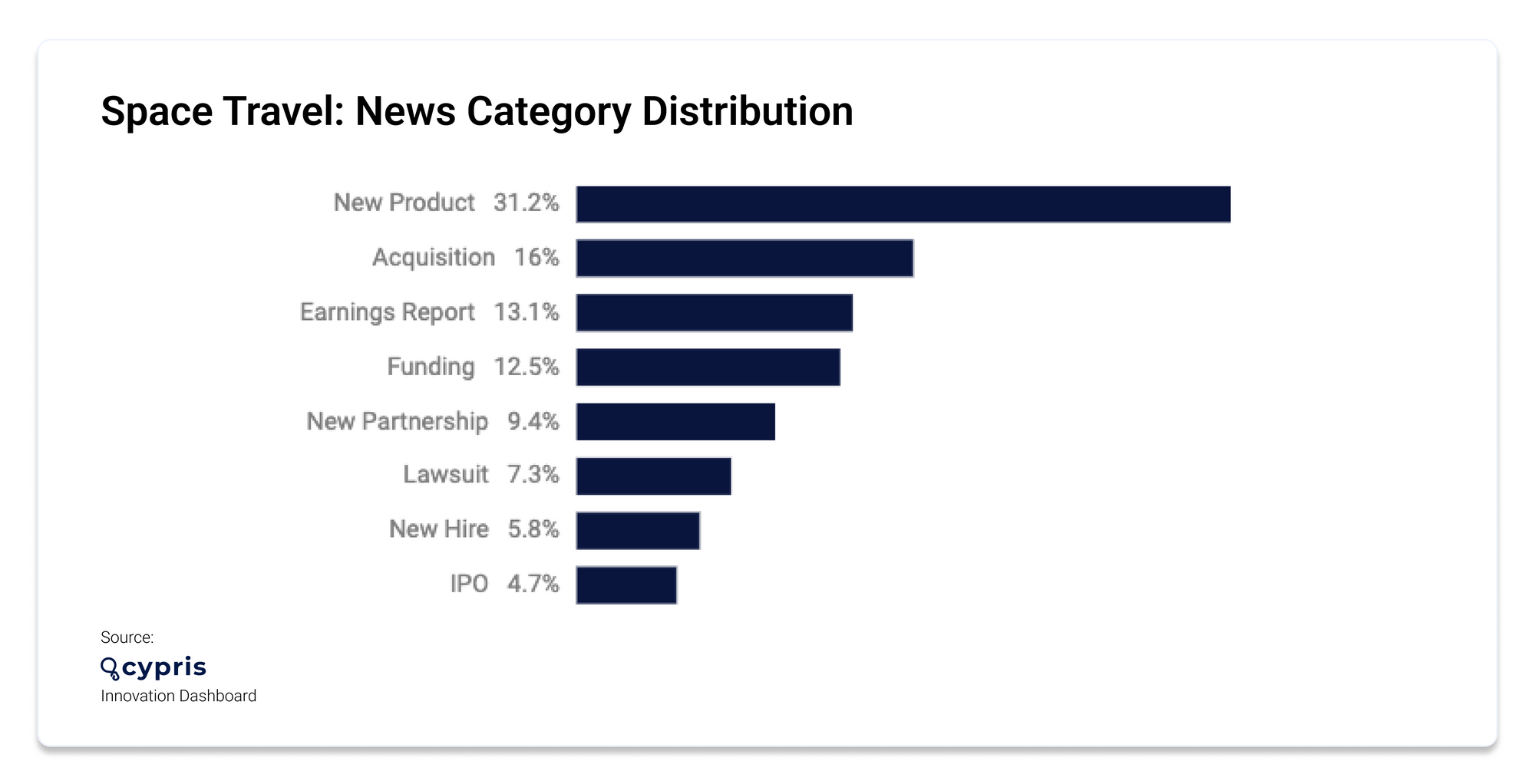
According to the Cypris Innovation Dashboard, over the past year alone, 15 new organizations entered the space travel industry (13 of which were startups) and the majority were based in USA. The past year also saw 406 new patents across 22 different countries, 10,549 new research papers, and 26,156 news articles published in the space. The majority of news articles focused on new products, and across the board media coverage was positive.
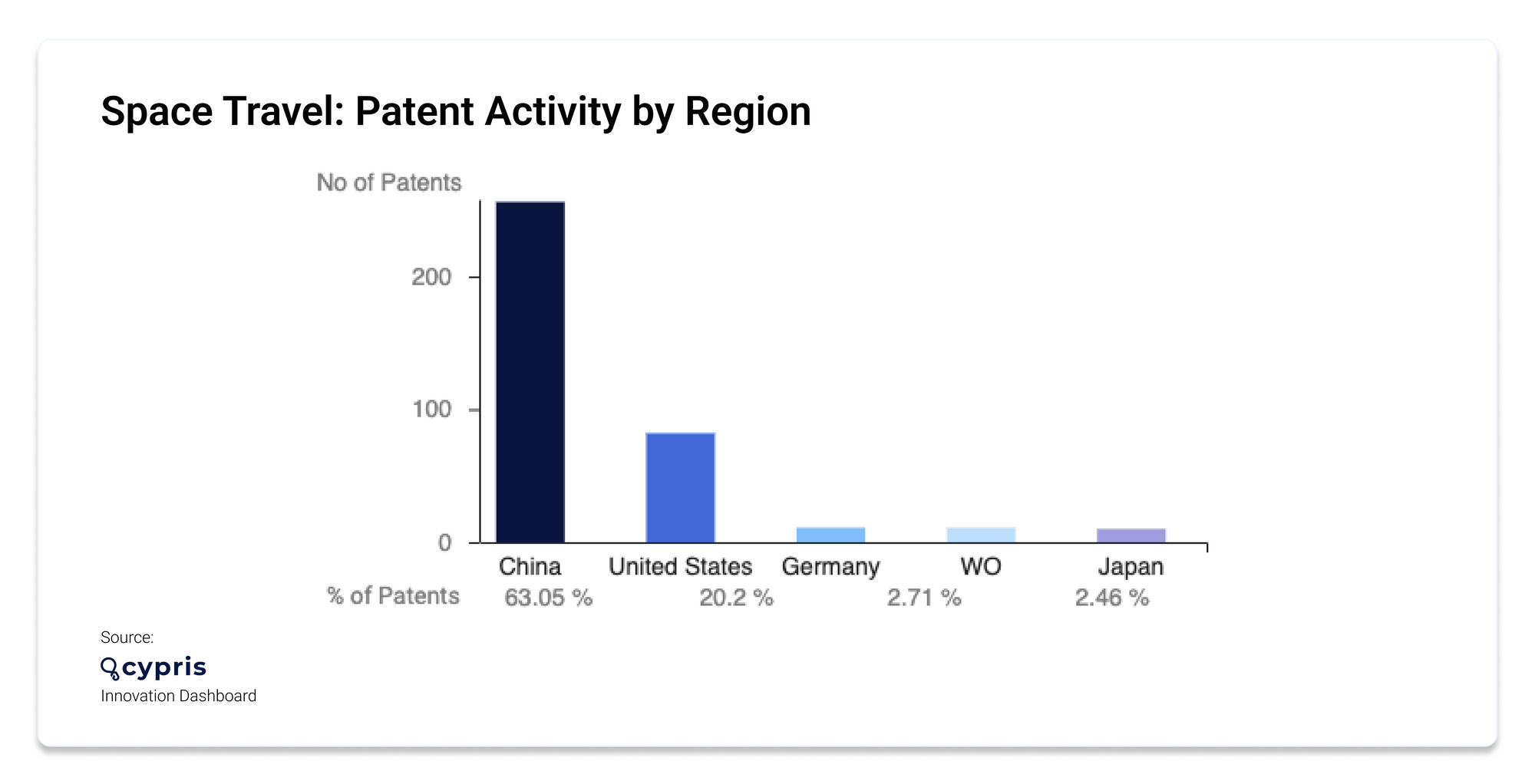
Of the patents published, 15.46% were created by the top 3 entities: NANJING SANLE GROUP CO LTD, ANHUI HUADONG PHOTOELEC TECH, and EMULATE INC. Below, you can see the breakdown of patent activity by region.
In the recent months, a number of new scientific studies have been released on efforts to make life in outer space habitable for human beings, and the impact of travel on the body and brain. Let's dive into a few of these findings.
Creating Oxygen in Space Using Magnets:

Researchers at the University of Warwick have invented a new way to make oxygen for astronauts using magnets. To provide oxygen in space, NASA currently uses centrifuges, which are large machines that require significant mass, power, and maintenance. As a result, scientists have been looking for a sustainable way to create air in space.
This study focused on the phenomenon of magnetically-induced buoyancy. The researchers engineered a procedure to detach gas bubbles from electrode surfaces in microgravity environments at the Bremen Drop Tower. The results revealed for the first time that gas bubbles can be ‘attracted to’ and ‘repelled from’ a neodymium magnet in microgravity within various solutions.
According to Dr. Katharina Brinkert of the University of Warwick Department of Chemistry Center for Applied Space Technology and Microgravity (ZARM), “Efficient phase separation in reduced gravitational environments is an obstacle for human space exploration and known since the first flights to space in the 1960s. This phenomenon is a particular challenge for the life support system onboard spacecraft and the International Space Station (ISS) as oxygen for the crew is produced in water electrolyzer systems and requires separation from the electrode and liquid electrolyte.”
The results of this study could help generate breathable atmospheres for future space travel to the moon and Mars.
Space Travel’s Impact on the Body's Bone Mass & Stem Cells:
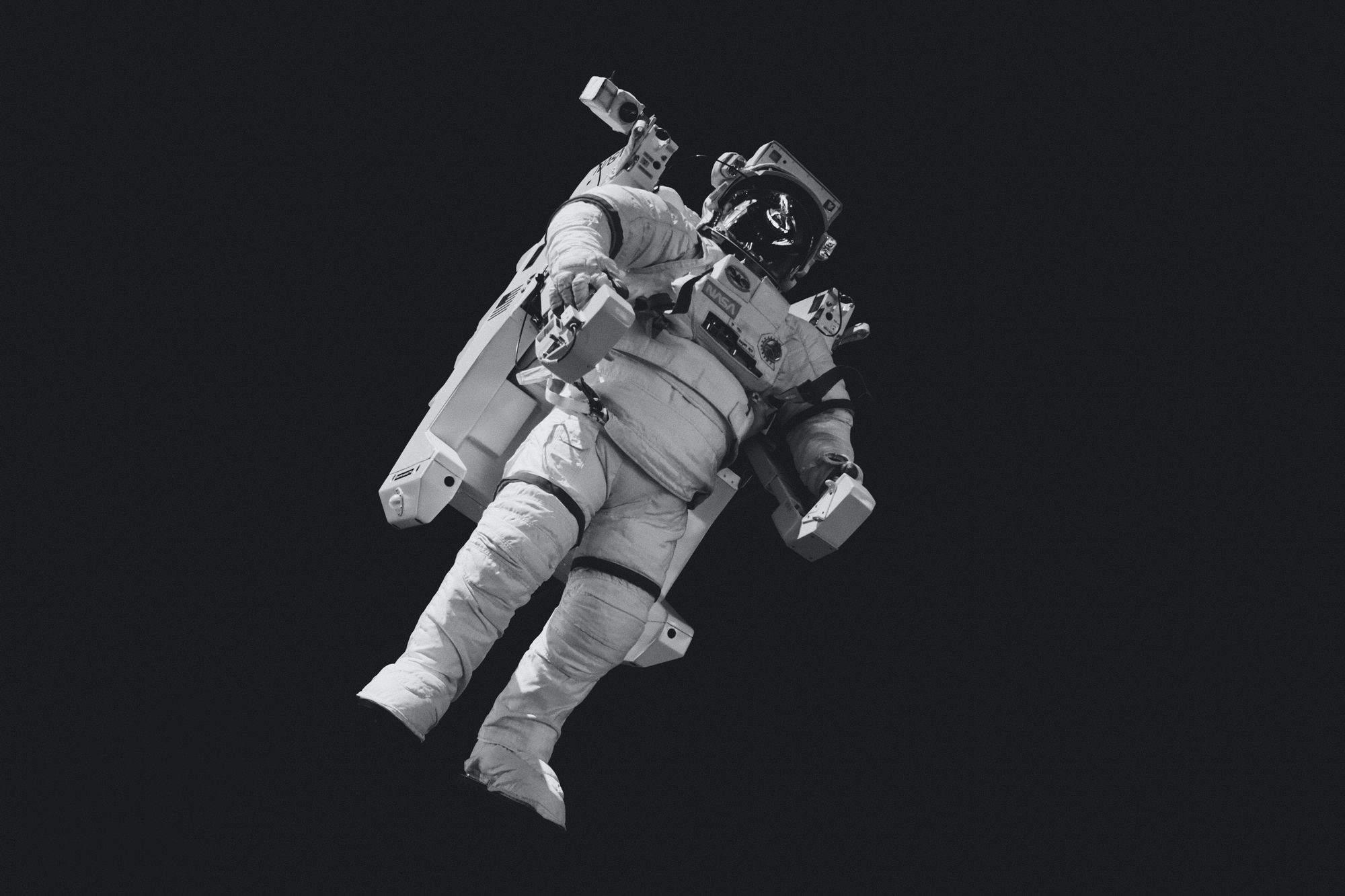
For those who stay in space for longer periods of time, the most prominent side effect is the loss of bone mass. New research now claims that living in space can also accelerate the process of bone aging, and irreparably damage bone structure.
The study assessed 14 male and three female astronauts, average age 47, whose missions ranged from four to seven months in space, with an average of about 5-1/2 months. The results showed that 1 year after their return from space, the astronauts on average exhibited 2.1% reduced bone mineral density at the tibia and 1.3% reduced bone strength. Nine of the 17 astronauts had not completely recovered a full year after returning from space.
"Astronauts experienced significant bone loss during six-month spaceflights - loss that we would expect to see in older adults over two decades on Earth, and they only recovered about half of that loss after one year back on Earth," Gabel said.
Additionally, another recent study focused on 14 astronauts from NASA’s space shuttle program whose white blood samples were stored for 20 years. Researchers found that the astronauts were more likely to have somatic mutations in their genes. The DNA mutations in blood-forming stem cells are at the root of several types of blood cancer.
Space Travel’s Impact on the Brain:
We know that space travel impacts the body, but what does it do to the brain? In this study, 12 cosmonauts who spent an average of six months aboard the International Space Station were scanned in an MRI scanner pre-flight, ten days after flight, and at a follow-up time point seven months after flight.
The results revealed "significant microstructural changes" in the white matter that manages communications within the brain, and to and from the rest of the body, as well as fluid shifts. In particular, the research team spotted changes in neural tracts related to sensory and motor functions, and believe this could have something to do with the cosmonauts' adaptation to life in microgravity while in outer space.
Whether through creating oxygen in outer space, or studying how travel impacts the brain and body, significant advances are being made in the space travel industry. For more data on patents and innovative research papers in the space travel field, visit cypris.ai and get started with access to the innovation dashboard.
If you’d like to explore recent patents filed, you can search through our global patent search engine for free here: https://cypris.ai/patents/allrecords
Sources:
Cypris innovation dashboard cypris.ai ; Query: space travel
https://www.precedenceresearch.com/space-tourism-market
https://interestingengineering.com/science/first-researchers-invent-oxygen-magnets-space-exploration
https://www.nature.com/articles/s41526-022-00212-9
https://www.sciencedaily.com/releases/2022/07/220729173222.htm
https://www.nature.com/articles/s41598-022-13461-1
https://www.slashgear.com/946243/scientists-discover-space-travel-accelerates-aging/
https://www.frontiersin.org/articles/10.3389/fncir.2022.815838/full
Recent Groundbreaking Research in Space Travel


With the growing interest in space flight and deep space exploration, more research is focusing on how to make life outside of earth habitable for human beings, and at what cost. In this blog, we’ll look at the market landscape of space travel, recent innovation activity, and scientific literature to gain a full picture of where our understanding of life beyond earth is headed.
Market Overview:
According to the Cypris Innovation Dashboard, over the past year alone, 15 new organizations entered the space travel industry (13 of which were startups) and the majority were based in USA. The past year also saw 406 new patents across 22 different countries, 10,549 new research papers, and 26,156 news articles published in the space. The majority of news articles focused on new products, and across the board media coverage was positive.
Of the patents published, 15.46% were created by the top 3 entities: NANJING SANLE GROUP CO LTD, ANHUI HUADONG PHOTOELEC TECH, and EMULATE INC. Below, you can see the breakdown of patent activity by region.
In the recent months, a number of new scientific studies have been released on efforts to make life in outer space habitable for human beings, and the impact of travel on the body and brain. Let's dive into a few of these findings.
Creating Oxygen in Space Using Magnets:
Researchers at the University of Warwick have invented a new way to make oxygen for astronauts using magnets. To provide oxygen in space, NASA currently uses centrifuges, which are large machines that require significant mass, power, and maintenance. As a result, scientists have been looking for a sustainable way to create air in space.
This study focused on the phenomenon of magnetically-induced buoyancy. The researchers engineered a procedure to detach gas bubbles from electrode surfaces in microgravity environments at the Bremen Drop Tower. The results revealed for the first time that gas bubbles can be ‘attracted to’ and ‘repelled from’ a neodymium magnet in microgravity within various solutions.
According to Dr. Katharina Brinkert of the University of Warwick Department of Chemistry Center for Applied Space Technology and Microgravity (ZARM), “Efficient phase separation in reduced gravitational environments is an obstacle for human space exploration and known since the first flights to space in the 1960s. This phenomenon is a particular challenge for the life support system onboard spacecraft and the International Space Station (ISS) as oxygen for the crew is produced in water electrolyzer systems and requires separation from the electrode and liquid electrolyte.”
The results of this study could help generate breathable atmospheres for future space travel to the moon and Mars.
Space Travel’s Impact on the Body's Bone Mass & Stem Cells:
For those who stay in space for longer periods of time, the most prominent side effect is the loss of bone mass. New research now claims that living in space can also accelerate the process of bone aging, and irreparably damage bone structure.
The study assessed 14 male and three female astronauts, average age 47, whose missions ranged from four to seven months in space, with an average of about 5-1/2 months. The results showed that 1 year after their return from space, the astronauts on average exhibited 2.1% reduced bone mineral density at the tibia and 1.3% reduced bone strength. Nine of the 17 astronauts had not completely recovered a full year after returning from space.
"Astronauts experienced significant bone loss during six-month spaceflights - loss that we would expect to see in older adults over two decades on Earth, and they only recovered about half of that loss after one year back on Earth," Gabel said.
Additionally, another recent study focused on 14 astronauts from NASA’s space shuttle program whose white blood samples were stored for 20 years. Researchers found that the astronauts were more likely to have somatic mutations in their genes. The DNA mutations in blood-forming stem cells are at the root of several types of blood cancer.
Space Travel’s Impact on the Brain:
We know that space travel impacts the body, but what does it do to the brain? In this study, 12 cosmonauts who spent an average of six months aboard the International Space Station were scanned in an MRI scanner pre-flight, ten days after flight, and at a follow-up time point seven months after flight.
The results revealed "significant microstructural changes" in the white matter that manages communications within the brain, and to and from the rest of the body, as well as fluid shifts. In particular, the research team spotted changes in neural tracts related to sensory and motor functions, and believe this could have something to do with the cosmonauts' adaptation to life in microgravity while in outer space.
Whether through creating oxygen in outer space, or studying how travel impacts the brain and body, significant advances are being made in the space travel industry. For more data on patents and innovative research papers in the space travel field, visit cypris.ai and get started with access to the innovation dashboard.
If you’d like to explore recent patents filed, you can search through our global patent search engine for free here: https://cypris.ai/patents/allrecords
Sources:
Cypris innovation dashboard cypris.ai ; Query: space travel
https://www.precedenceresearch.com/space-tourism-market
https://interestingengineering.com/science/first-researchers-invent-oxygen-magnets-space-exploration
https://www.nature.com/articles/s41526-022-00212-9
https://www.sciencedaily.com/releases/2022/07/220729173222.htm
https://www.nature.com/articles/s41598-022-13461-1
https://www.slashgear.com/946243/scientists-discover-space-travel-accelerates-aging/
https://www.frontiersin.org/articles/10.3389/fncir.2022.815838/full
Keep Reading
Fault-tolerant quantum computing has become the organizing goal of the entire quantum-hardware industry, and its patent landscape is distinctive because the central problem is not building more qubits but building qubits that stay correct while computing. Fault-tolerant quantum computing combines many noisy physical qubits into one error-protected logical qubit through a quantum error-correcting code, with the goal of "below-threshold" operation, where adding more physical qubits per logical qubit exponentially suppresses the logical error rate rather than accumulating it. Google's Quantum AI team demonstrated this directly on a superconducting processor: scaling a surface code from distance-3 to distance-5 to distance-7 suppressed the logical error rate by roughly a factor of two per code-distance increment, with the resulting logical qubit's lifetime exceeding that of its best constituent physical qubit — the first hardware-scale confirmation of below-threshold scaling¹. On neutral-atom hardware, a Harvard/MIT/QuEra collaboration demonstrated a logical quantum processor with up to 48 logical qubits and reconfigurable connectivity, performing transversal operations — a milestone that is substantially error-detected and algorithmic in character rather than a fully fault-tolerant computation with continuous real-time correction². Trapped-ion platforms have separately demonstrated real-time logical-qubit error detection and correction³. The intellectual property divides across several regions, each a distinct area of patenting: the qubit modality itself, including superconducting circuits, trapped ions, neutral atoms, photonic qubits, and bosonic (cat) qubits; the error-correcting code, including the mature surface code and the newer quantum low-density parity-check (qLDPC) codes, which promise a substantially better ratio of logical to physical qubits at the cost of the non-local connectivity they require — a constraint that recent work specifically targets with 2D-local implementations⁴,⁵; the real-time decoding hardware and software that must detect and correct errors fast enough to keep pace with computation, an area seeing progress in network-integrated decoding for lattice surgery at scale⁶; and the interconnect and networking technology needed to link separate processors, an approach with early metropolitan-scale demonstrations, including work toward entanglement swapping across roughly 30 kilometers in a three-node network in New York City⁷. Because a competitive fault-tolerant architecture depends on all of these layers working together, and because different companies are betting on different qubit modalities, freedom-to-operate and white space analysis must span modality and code together.
Bosonic, or "cat," qubits are a distinct and increasingly well-evidenced hardware-efficiency route: by engineering the qubit itself to exponentially suppress bit-flip errors as a function of mean photon number, cat-qubit architectures convert the correction problem into one of handling a biased, phase-flip-dominated error channel, with experimental bit-flip times pushed past ten seconds in one demonstration⁸. Multiple hardware vendors have published multi-year roadmaps that should be read as stated targets rather than achieved milestones: IBM's own roadmap targets a system called Starling for 2029, running 100 million gates on 200 logical qubits, while Quantinuum's own roadmap targets a universal, fully fault-tolerant system by the end of the decade⁹. Because applications publish about eighteen months after filing, the newest decoder, qLDPC-code, and interconnect filings are under-represented, so the current frontier is more active than granted-patent counts suggest.
The strategic question is which layer of the stack a given owner can actually defend, and the white space sits where engineering, not physics, is now the bottleneck. Qubit-modality IP is comparatively mature and fragmented across several well-funded, differently architected companies, so no single modality currently dominates the landscape. The faster-moving and more open ground is in error-correcting-code implementation — particularly qLDPC codes, which are newer and less thoroughly claimed than the surface code, and whose central practical obstacle (non-local connectivity) is itself an active area of new filings — real-time classical decoding hardware, which must operate fast enough not to become the new bottleneck once qubits themselves are reliable, and quantum networking, which several companies are pursuing as an alternative to scaling a single monolithic chip. Reading the landscape by modality, code, and layer, and tracking both the patents and the underlying quantum-information-science research, is what separates a defensible architectural bet from a crowded one.
Where the fault-tolerant quantum computing white space is
Quantum LDPC codes and their connectivity solutions. Codes promising a better logical-to-physical-qubit ratio than the surface code are newer and less thoroughly claimed, and the 2D-local implementations needed to make them practical are themselves an active, comparatively open filing area⁴,⁵.
Real-time decoding hardware and software. Classical decoders that detect and correct errors fast enough to keep pace with a scaling quantum processor are an increasingly critical, comparatively open layer⁶.
Bosonic and cat-qubit architectures. Hardware-efficient codes that build error protection into the physical qubit itself, reducing the number of physical qubits needed per logical qubit, remain a less-crowded alternative to surface-code-based approaches⁸.
Quantum networking and multi-node architectures. Linking separate quantum processors — including early metropolitan-scale demonstrations over standard fiber-optic infrastructure — is an emerging alternative to monolithic scaling, with comparatively little settled IP⁷.
Verified, primary-sourced roadmap claims. Because most public logical-qubit and gate-count targets are company roadmap statements rather than demonstrated results, an owner able to substantiate claims against peer-reviewed, independently reproducible results has a genuine differentiation and credibility advantage.
How AI-powered landscape and white space analysis helps
Resolving a landscape that spans five-plus qubit modalities, several competing error-correcting codes, and the classical and networking engineering needed to scale them requires more than keyword search. AI-powered analysis addresses this with semantic search that clusters activity by modality, code, and layer across varied and fast-evolving terminology, attribution that normalizes hardware-vendor, national-lab, and university filers to canonical entities, and continuous monitoring that keeps pace with a field where major technical milestones are being announced multiple times per year. Because quantum-information-science advances appear in physics literature and preprints before they are patented, reading both patents and literature gives the earliest signal of which code and modality combination is actually closing the gap to fault tolerance — and helps separate demonstrated results from roadmap targets.
The competitive landscape by the numbers
Cypris's corpus puts the quantum error correction / fault-tolerant quantum computing patent family set at roughly 11,928 documents, heavily concentrated in the United States (approximately 5,076 families), followed by China (approximately 1,655) and Canada (approximately 561) (Cypris corpus, indicative; 2025–26 partial). Filing activity has accelerated sharply, from roughly 578 new families in 2020 to about 2,328 in 2025, with 2026 partial at approximately 1,791 (Cypris corpus, indicative; 2025–26 partial). Top assignees are led by superconducting and gate-model incumbents alongside quantum-native firms — Google, IBM, Microsoft, D-Wave, and Rigetti — with Yale, IonQ, Harvard, and MIT also present in the assignee list (Cypris corpus, indicative; 2025–26 partial). A clean split of this corpus by qubit modality and by code/decoder/interconnect layer was not available from this pass; the assignee mix, however, skews toward superconducting and trapped-ion players, consistent with where the demonstrated hardware results described above are concentrated.
Where Cypris fits
Cypris runs patent landscape and white space analysis for fast-moving, deep-technical fields such as fault-tolerant quantum computing across a corpus of more than 500 million patents and scientific papers, organized through a proprietary R&D ontology. The ontology clusters activity by qubit modality, superconducting, trapped-ion, neutral-atom, photonic, and bosonic, and by layer, error-correcting code, decoding hardware, and interconnect, and normalizes hardware-vendor, national-lab, and university filers to canonical entities, so a team can resolve which modalities and layers are crowded and which remain open as white space. Semantic search across patents and scientific literature connects filings to the underlying quantum-information-science research, which is where fault-tolerance advances appear first, often well ahead of the patent record. Cypris Q, the platform's agentic layer, lets teams run landscape and white space analysis conversationally and chain the clustering, attribution, and gap analysis, and Agentic Monitoring tracks a defined modality or layer over time and flags new patents and papers as they publish. Cypris provides enterprise API partnerships with OpenAI, Anthropic, and Google, and is built with enterprise-grade security. Cypris serves hundreds of enterprise customers across pharmaceuticals, chemicals, advanced materials, energy, and other regulated industries.
FAQ
What is fault-tolerant quantum computing? Fault-tolerant quantum computing encodes one error-protected "logical" qubit across many noisy physical qubits using a quantum error-correcting code, targeting "below-threshold" operation, where scaling the code exponentially suppresses the logical error rate. Google demonstrated this directly on superconducting hardware, showing logical error rate falling by roughly 2x per code-distance increment with a logical qubit outliving its best physical qubit¹. It is the prerequisite for running large, reliable quantum programs.
What qubit modalities does the landscape cover? The landscape covers superconducting circuits, trapped ions, neutral atoms, photonic qubits, and bosonic (cat) qubits, each with different native error rates, connectivity, and scaling challenges. No single modality currently dominates the field; Cypris's corpus shows assignees spanning superconducting incumbents (Google, IBM, D-Wave, Rigetti) and trapped-ion and academic players (IonQ, Yale, Harvard, MIT). Each modality is pursued by a differently architected set of developers.
What is a logical qubit, and how many have actually been demonstrated? A logical qubit is an error-protected unit of quantum information built by combining many physical qubits under an error-correcting code. As of the most recent peer-reviewed demonstrations, a neutral-atom platform has shown up to 48 logical qubits with reconfigurable connectivity in an error-detected, largely algorithmic demonstration², and superconducting hardware has demonstrated below-threshold scaling on a smaller logical-qubit count¹. These are well short of the hundreds to thousands of logical qubits that company roadmaps target for the end of the decade⁹.
What claim types create IP activity in fault-tolerant quantum computing? Four layers generate the bulk of IP activity: qubit-modality hardware, error-correcting-code implementation (including the connectivity solutions that make qLDPC codes practical), real-time decoding hardware and software, and interconnect and networking technology. Each is a distinct region of patenting, often held by different companies pursuing different architectural bets. A competitive fault-tolerant system depends on progress across all four.
Where is the white space in fault-tolerant quantum computing? The white space includes qLDPC codes and their connectivity solutions, real-time decoding hardware and software, bosonic/cat-qubit architectures, and quantum networking and multi-node architectures. Qubit-modality IP is comparatively mature and fragmented. The newer error-correcting codes and the classical and networking engineering around them are the most open, high-value ground.
How reliable are company roadmap claims in this field? Company roadmap claims should be read as stated targets, not demonstrated results — IBM's and Quantinuum's own published roadmaps target hundreds to thousands of logical qubits by the end of the decade⁹, well beyond what has been peer-reviewed and demonstrated to date¹,². Distinguishing "demonstrated" from "roadmap target" is essential to reading this field accurately. Analysts and IP teams should trace any specific qubit-count or timeline claim back to its primary source before relying on it.
Why does fault-tolerant quantum computing analysis need scientific literature? Fault-tolerant quantum computing analysis needs scientific literature because error-correcting-code and decoder advances appear in physics research and preprints before they are patented, so the literature gives the earliest signal in a field where major milestones are announced several times a year. Analyzing patents alone gives a lagging view. Cypris analyzes both across more than 500 million patents and scientific papers.
Which teams use fault-tolerant quantum computing patent landscape analysis? Fault-tolerant quantum computing patent landscape analysis is used by R&D, IP, and strategy teams at quantum-hardware companies, national laboratories, and technology-company quantum divisions, as well as investors assessing the sector. Because the landscape spans multiple competing qubit modalities and codes at different maturity levels, structured analysis is essential to choosing where to build and where to partner. Cypris serves hundreds of enterprise customers across research-intensive and regulated industries.
Endnotes
- Bausch J, Malone FD, Martin LS, et al. Quantum error correction below the surface code threshold. Nature. DOI: 10.1038/s41586-024-08449-y.
- Geim AA, Bluvstein D, Gullans MJ, Kalinowski MW, Maskara N, et al. Logical quantum processor based on reconfigurable atom arrays. Nature. DOI: 10.1038/s41586-023-06927-3.
- Monroe C, Risinger A, Katz O, Bondurant B, Biswas D. Implementing Real-Time Logical Qubit Error Detection & Correction on a Trapped Ion Quantum Computer. DOI: 10.26226/m.6275705766d5dcf63a311383.
- Savin V, Vasić B, Raveendran N, Borah SK, Pacenti M. Quantum Low-Density Parity-Check Codes. arXiv. DOI: 10.48550/arxiv.2510.14090.
- Devulapalli D, Gorshkov AV, Gottesman D, Gullans MJ, Schoute E. Toward a 2D Local Implementation of Quantum Low-Density Parity-Check Codes. PRX Quantum. DOI: 10.1103/prxquantum.6.010306.
- Liyanage N, Wu Y, Zhong L, Houghton E. Network-Integrated Decoding System for Real-Time Quantum Error Correction with Lattice Surgery. DOI: 10.48550/arxiv.2504.11805.
- Bigagli N, Shabani J, Namazi M, Cowan TE, Craddock AN. Towards entanglement swapping over 30 km in a three-node metropolitan quantum network in New York City. DOI: 10.1364/quantum.2025.qw4a.7.
- Albertinale E, Cohen J, Lescanne R, Campagne-Ibarcq P, Sarlette A. Quantum control of a cat qubit with bit-flip times exceeding ten seconds. Nature. DOI: 10.1038/s41586-024-07294-3.
- IBM Quantum Roadmap (Starling, 2029) and Quantinuum's accelerated roadmap to universal, fully fault-tolerant quantum computing — company technical blogs and press releases.
- Cypris platform corpus analysis, quantum error correction / fault-tolerant quantum computing patent families. Indicative figures; 2025–2026 partial.
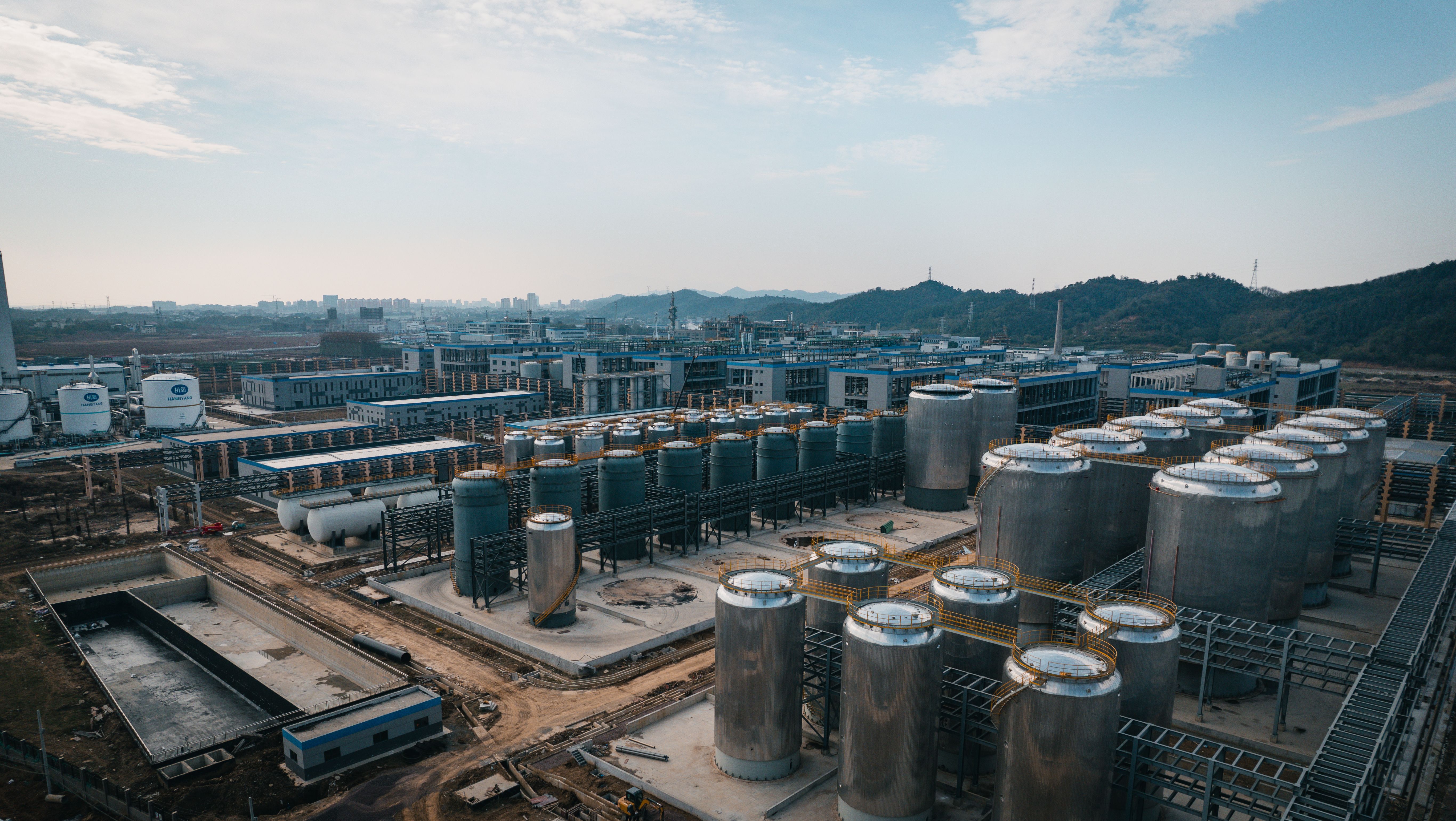
Electrolysis has become the center of gravity in hydrogen innovation, and the electrolyzer patent landscape is where the clean-hydrogen transition is being contested. A joint study of global patent data by the European Patent Office and the International Energy Agency found that technologies motivated by climate concerns accounted for nearly 80 percent of all hydrogen-production patents by 2020, with growth driven chiefly by a sharp increase in innovation in water electrolysis, and that climate-driven hydrogen technologies generated roughly twice as many international patent families as established, fossil-based methods.¹ The commercial backdrop is a projected expansion of electrolyzer manufacturing on the order of a 65-fold increase in market size over the decade, as countries scale low-emissions hydrogen for hard-to-abate sectors.²,³ For R&D and IP teams, the strategic questions are which electrolyzer technology route to back and where defensible IP positions remain, and both are patent-landscape questions.
The landscape divides across four electrolyzer technologies at different maturity levels, each a distinct region of patenting, and each characterized in the US Department of Energy's comparative assessment of solid-oxide, alkaline, and proton-exchange-membrane electrolyzers.⁴ Alkaline electrolysis is the most mature and lowest-cost route, using a liquid alkaline electrolyte and avoiding scarce precious metals, so its patenting concentrates on efficiency, dynamic operation to follow variable renewable power, and stack scale-up. Proton-exchange-membrane (PEM) electrolysis offers compact, responsive operation well suited to variable renewables but relies on scarce platinum-group catalysts and specialized membranes, so a large share of its patenting targets catalyst loading reduction, membrane durability, and cost.⁵ Solid-oxide electrolysis (SOEC) operates at high temperature with high electrical efficiency and can co-electrolyze to produce syngas, but durability and thermal cycling are the central challenges, so patenting concentrates there. Anion-exchange-membrane (AEM) electrolysis is the newest route, aiming to combine PEM-like performance without precious-metal dependence, and it is the least mature and least crowded, which makes it a notable area of white space; its membranes and non-precious-metal catalysts are an active peer-reviewed research frontier.⁶
Geography and institutional origin further shape the landscape. The EPO and IEA analysis found Europe gaining an edge as a location for electrolyzer innovation and manufacturing investment, while Japan led patenting in hydrogen end-use for the automotive sector, and it noted that momentum in other end-use applications, such as aviation, shipping, and power generation, had not yet matched the attention those sectors receive.¹ The European Commission's Joint Research Centre has separately tracked the status of water electrolysis and hydrogen technology in the European Union, corroborating the region's manufacturing push.⁷ It also found that emerging low-emissions hydrogen carriers, including liquid organic hydrogen carriers and ammonia cracking, grew (by about 12.5 percent and 7.8 percent in international patent families respectively) with roughly half of that activity originating in universities and public research, an early-stage signal of where future commercial IP may form.¹ Because applications publish about eighteen months after filing, the most recent activity, particularly in the newer AEM and SOEC routes, is under-represented, so the current frontier is more active than granted-patent counts suggest.
The four electrolyzer routes and where white space sits
Alkaline. The most mature and lowest-cost route, avoiding precious metals; patenting concentrates on efficiency, dynamic operation, and scale-up, so it is comparatively crowded on core design.
PEM. Compact and responsive but reliant on platinum-group catalysts and specialized membranes; white space centers on catalyst reduction, membrane durability, and cost.
SOEC. High-temperature and high-efficiency with co-electrolysis potential, but durability and thermal cycling are the open problems where patenting and white space concentrate.
AEM. The newest route, aiming for PEM-like performance without precious metals; the least mature and least crowded, and therefore a notable area of white space.²
Carriers and end-use. Liquid organic hydrogen carriers and ammonia cracking are early-stage and university-driven, and several end-use sectors beyond automotive remain comparatively under-patented.¹
How AI-powered landscape and white space analysis helps
Resolving four technology routes at different maturities, across geographies and institutions, requires more than keyword search. AI-powered analysis addresses this with semantic search that clusters activity by route and by the problem being solved across varied terminology, attribution that normalizes filers to canonical entities and distinguishes university from commercial activity, and continuous monitoring that tracks the newer routes where recent activity is under-represented. Because electrolyzer advances appear in scientific literature before they are patented, reading both patents and literature gives the earliest signal of where the frontier and the white space are moving.
Where Cypris fits
Cypris runs patent landscape and white space analysis for multi-route energy fields such as hydrogen electrolysis across a corpus of more than 500 million patents and scientific papers, organized through a proprietary R&D ontology. The ontology clusters activity by electrolyzer route, alkaline, PEM, SOEC, and AEM, and by the problem being solved, and normalizes filers to canonical entities, so a team can resolve which routes and problems are crowded and which, such as AEM and SOEC durability, remain open as white space. Semantic search across patents and scientific literature connects filings to the underlying materials and engineering research, which is where electrolyzer advances appear first, and distinguishes university from commercial activity. Cypris Q, the platform's agentic layer, lets teams run landscape and white space analysis conversationally and chain the clustering, attribution, and gap analysis, and Agentic Monitoring tracks a defined route over time and flags new patents and papers as they publish, which is essential where the newest routes are under-represented by publication lag. Cypris provides enterprise API partnerships with OpenAI, Anthropic, and Google, and is built with enterprise-grade security. Cypris serves hundreds of enterprise customers across pharmaceuticals, chemicals, advanced materials, energy, and other regulated industries.
FAQ
Why is electrolysis the focus of hydrogen patenting?
Electrolysis is the focus of hydrogen patenting because it can produce hydrogen with zero direct emissions when powered by renewable or nuclear electricity. A joint EPO and IEA study found that climate-motivated technologies accounted for nearly 80 percent of hydrogen-production patents by 2020, with growth driven chiefly by a surge in electrolysis. Climate-driven hydrogen technologies generated roughly twice the international patent families of established methods.
What are the main electrolyzer technologies?
The main electrolyzer technologies are alkaline, proton-exchange-membrane (PEM), solid-oxide (SOEC), and anion-exchange-membrane (AEM). They differ in maturity, cost, materials, and operating conditions, and each occupies a distinct region of the patent landscape. Alkaline is the most mature and AEM the newest.
Where is the white space in the electrolyzer patent landscape?
The white space in the electrolyzer patent landscape is concentrated in anion-exchange-membrane electrolysis, which is the newest and least crowded route, in solid-oxide durability and thermal cycling, in reducing precious-metal catalyst use and improving membrane durability in PEM, and in early-stage hydrogen carriers such as liquid organic carriers and ammonia cracking. Core alkaline design is comparatively crowded. The higher-value opportunities are in the newer routes and unsolved durability problems.
How do the electrolyzer routes trade off?
The electrolyzer routes trade off maturity, cost, and materials. Alkaline is mature and low-cost but less dynamic; PEM is responsive but relies on scarce platinum-group metals; SOEC is highly efficient but faces durability challenges; and AEM aims to combine PEM-like performance without precious metals but is the least mature. Each route's patenting concentrates on its specific weakness.
How fast is the electrolyzer market expected to grow?
The electrolyzer market is expected to grow rapidly, with the IEA projecting an expansion on the order of a 65-fold increase in market size over the decade as countries scale low-emissions hydrogen. This growth is the commercial driver behind the surge in electrolysis patenting. It also raises the value of securing defensible IP positions early.
Which regions lead electrolyzer innovation?
The EPO and IEA analysis found Europe gaining an edge as a location for electrolyzer innovation and manufacturing investment, while Japan led hydrogen end-use patenting in the automotive sector. Momentum in several other end-use sectors had not yet matched the attention they receive. The geographic distribution differs by technology route and end-use.
Why does electrolyzer analysis need scientific literature?
Electrolyzer analysis needs scientific literature because materials and engineering advances, particularly in catalysts, membranes, and the newer routes, appear in research before they are patented, so the literature gives the earliest signal. Analyzing patents alone gives a lagging view, and much early activity is university-driven. Cypris analyzes both across more than 500 million patents and scientific papers.
Which teams use electrolyzer patent landscape analysis?
Electrolyzer patent landscape analysis is used by R&D, innovation, IP, and strategy teams at electrolyzer and equipment makers, energy and industrial-gas companies, materials developers, and their partners, as well as investors. It informs which route to back, where to file, and where competitors are concentrated. Cypris serves hundreds of enterprise customers across energy, advanced materials, chemicals, and other regulated industries.
How do you keep an electrolyzer landscape current?
Keeping an electrolyzer landscape current requires continuous monitoring, because the field moves quickly, the newer routes are advancing, and publication lag under-represents the most recent activity. A one-time landscape ages quickly. Cypris uses Agentic Monitoring to track a defined route and flag new patents and papers as they publish.
Endnotes
- European Patent Office & International Energy Agency (2023). Hydrogen patents for a clean energy future: A global trend analysis of innovation along hydrogen value chains. https://www.iea.org/reports/hydrogen-patents-for-a-clean-energy-future
- International Energy Agency, reported via World Economic Forum (2023). Hydrogen patent filings: Europe and Japan lead on innovation (projected ~65-fold electrolyzer market growth this decade). https://www.weforum.org/stories/2023/03/hydrogen-innovation-patents-technology/
- International Energy Agency. Global Hydrogen Review (annual series). https://www.iea.org/reports/global-hydrogen-review-2024
- Kelly, J. C., Elgowainy, A. & Iyer, R. (2022). Electrolyzers for Hydrogen Production: Solid Oxide, Alkaline, and Proton Exchange Membrane. US Department of Energy (OSTI). https://www.osti.gov/
- US Department of Energy (2024). Hydrogen Shot: Water Electrolysis Technology Assessment. https://www.energy.gov/
- Zhang, M. et al. (2024). Advanced development of anion-exchange membrane electrolyzers for hydrogen production: from anion-exchange membranes to membrane electrode assemblies. Chemical Communications. https://doi.org/10.1039/D3CC05904A
- European Commission Joint Research Centre (2023). Water electrolysis and hydrogen in the European Union: Status Report on Technology Development, Trends, Value Chains and Markets. https://publications.jrc.ec.europa.eu/
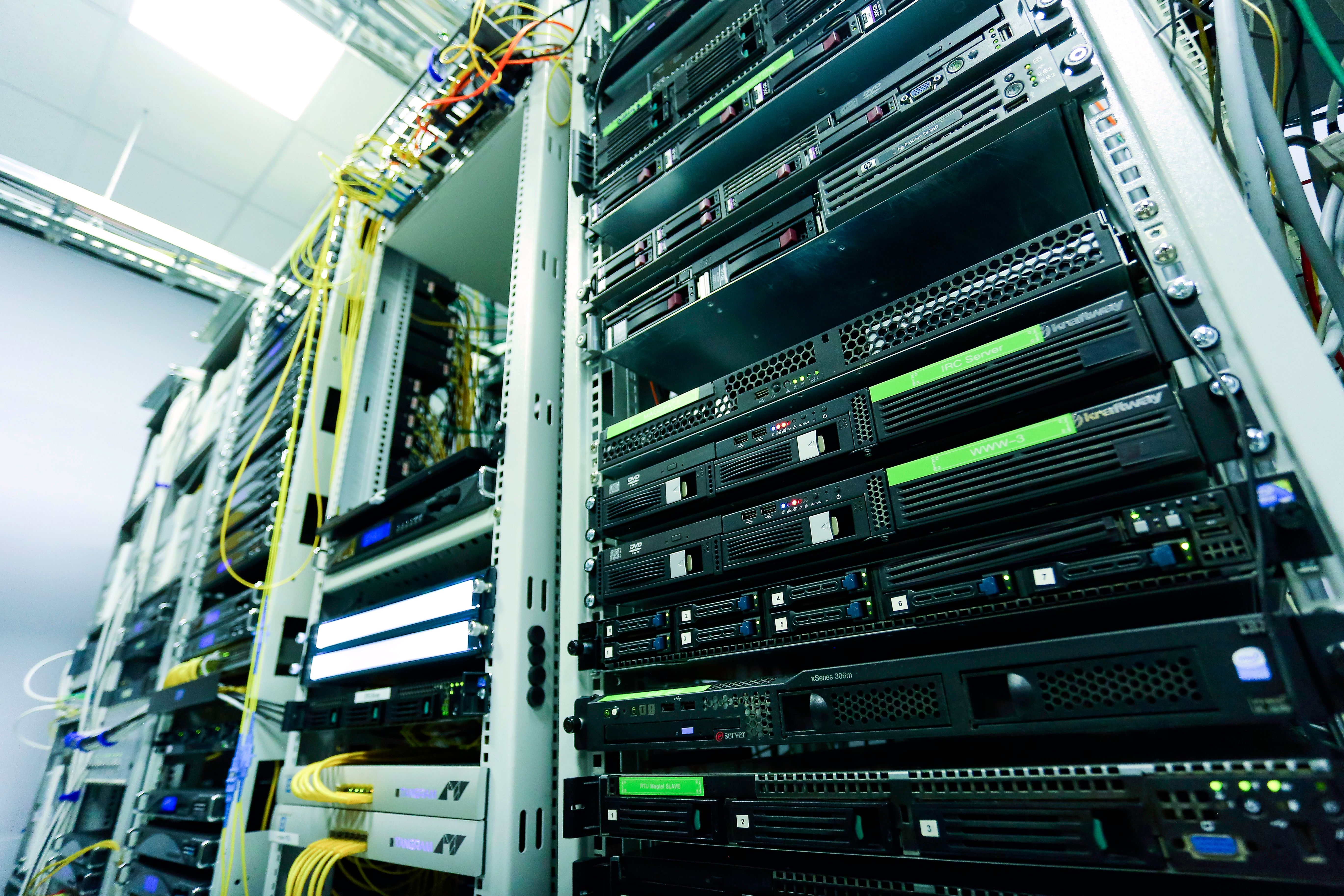
Energy storage is one of the fastest-growing domains of patenting. A joint analysis by the International Energy Agency and the European Patent Office found that patenting in batteries and electricity storage grew at an average of 14 percent per year between 2005 and 2018, roughly four times faster than the all-technology average, across more than 65,000 international patent families, with batteries accounting for the large majority of electricity-storage patenting.¹ More recent IEA analysis reports that batteries have come to dominate the energy patent landscape.² The drivers are structural: the electrification of transport, the decarbonization of the grid, and the need for long-duration storage to balance intermittent renewable generation. These forces have pushed research and filing activity up sharply across several distinct storage technologies at once, and much of the technology that will define the market at the end of the decade is entering the patent record now.
The energy-storage landscape is not a single field but a set of competing technology routes at different technology-readiness levels, and a rigorous landscape has to segment them. Lithium-ion remains the incumbent, with filing activity concentrated on energy density, fast charging, safety, and cell-to-pack manufacturing. Solid-state batteries have seen filing activity grow several-fold since the late 2010s, and the locus of innovation has shifted from electrolyte materials discovery toward interfacial engineering and scalable manufacturing, a transition documented across recent reviews of all-solid-state commercialization.³,⁴ Within that route, the principal electrolyte classes, sulfide, oxide, polymer, and composite, present different trade-offs: sulfide solid electrolytes reach room-temperature ionic conductivities on the order of 10 to the minus three siemens per centimeter, comparable to conventional liquid electrolytes, but the dominant technical barriers are interfacial resistance, electrochemical stability at the electrode interfaces, dendrite suppression, and scalable synthesis of the electrolyte.³,⁴,⁵ Hydrogen storage, particularly solid-state routes using metal hydrides, has surged as fuel-cell and stationary applications advance, with claim activity concentrated on intermetallic alloy families and multi-phase crystal-structure engineering to balance gravimetric capacity against kinetics and operating pressure. Long-duration and grid-scale storage is an active emerging area, where vanadium redox and other flow batteries, compressed-air storage, iron-air chemistries, and thermal and gravity approaches compete, and a large share of the relevant patents are still pending.
That segmentation is the value of patent landscape and white space analysis for the energy transition. A landscape maps where filing activity concentrates, which routes and sub-classes are crowded, and which organizations are most active; a white space analysis maps where activity is sparse, revealing directions where a defensible position is still available. In a field advancing this quickly, where the architectures that will define the 2030 market are being filed today, the ability to resolve both the dense and the sparse regions, at the level of specific technology routes and sub-classes, and to track how they shift, is what converts patent data into strategic positioning.
Why energy patenting is surging
Transport electrification. The transition to electric vehicles drives intense filing in battery chemistries, energy density, fast charging, safety, and manufacturing.
Grid decarbonization. Balancing intermittent renewables requires storage, which drives filing in grid-scale and long-duration technologies.
Long-duration storage demand. Storing energy over many hours or seasonally has pushed activity into flow, compressed-air, iron-air, thermal, and hydrogen routes at differing readiness levels.
Materials and interface innovation. Much of the activity is in materials and interfaces, from solid electrolytes and metal hydrides to electrode-electrolyte engineering, where the underlying research is published before it is patented.
Publication lag. The most recent filings are under-represented because applications publish about eighteen months after their priority date, so current activity is larger than the latest figures show.
How to run an energy patent landscape and white space analysis
Scope the technology space with classification codes, selecting the relevant Cooperative Patent Classification and International Patent Classification categories for the storage routes and sub-classes in view, so the boundary is standardized and reproducible.
Aggregate to the patent-family level, so international coverage of a single invention is not double-counted and volume reflects distinct R&D.
Segment by technology route, separating lithium-ion, solid-state and its electrolyte classes, metal-hydride hydrogen storage, and the long-duration routes, since each is at a different readiness level and must be assessed on its own terms.
Cluster activity by concept using semantic analysis over classification and text, so related work groups together across the varied terminology of materials, chemistries, and architectures.
Map the dense and sparse regions and attribute activity to canonical organizations, identifying crowded sub-classes and open white space and resolving assignee variants to single entities.
Correct for publication lag and monitor continuously, discounting the most recent windows and tracking the landscape over time, because a static snapshot ages quickly in a fast-moving field.
Where Cypris fits
Cypris runs patent landscape and white space analysis for fast-moving fields such as the energy transition across a corpus of more than 500 million patents and scientific papers, organized through a proprietary R&D ontology. That structure lets Cypris segment energy-storage activity by technology route and cluster it by concept across the varied terminology of materials, chemistries, and architectures, so a team can resolve which routes and sub-classes are crowded and which remain open as white space. Dense semantic search across patents and scientific literature connects filings to the underlying materials and interface research, which matters in energy storage because the earliest signals appear in the literature before patents. Cypris Q, the platform's agentic layer, lets teams run landscape and white space analysis conversationally and chain the classification, clustering, attribution, and gap analysis. Agentic Monitoring tracks a defined storage route over time and flags new patents and papers as they publish, which is essential where recent activity is under-represented by publication lag. Cypris provides enterprise API partnerships with OpenAI, Anthropic, and Google, and is built with enterprise-grade security. Cypris serves hundreds of enterprise customers across pharmaceuticals, chemicals, advanced materials, energy, and other regulated industries.
FAQ
Why is energy storage one of the fastest-growing patent areas?
Energy storage is one of the fastest-growing patent areas because of transport electrification, grid decarbonization, and the need for long-duration storage. A joint IEA and EPO analysis found battery and electricity-storage patenting grew about 14 percent per year from 2005 to 2018, roughly four times the all-technology average, across more than 65,000 international patent families. More recent IEA analysis reports that batteries now dominate the energy patent landscape.
What technology routes does the energy-storage patent landscape cover?
The energy-storage patent landscape covers several competing routes at different readiness levels, including lithium-ion, solid-state batteries with sulfide, oxide, polymer, and composite electrolytes, metal-hydride hydrogen storage, and long-duration routes such as flow, compressed-air, iron-air, thermal, and gravity storage. Each is a distinct route with its own activity level and technical barriers. A landscape analysis segments these rather than treating storage as one field.
What is a patent landscape analysis for the energy transition?
A patent landscape analysis for the energy transition maps where filing activity concentrates across energy-storage routes, which sub-classes are crowded, and which organizations are most active, scoped by classification codes and aggregated to the patent-family level. It gives R&D and IP teams a structured, reproducible view of a fast-moving field. Paired with white space analysis, it also identifies the sparse regions where a defensible position is still available.
How do you find white space in energy-storage patents?
Finding white space in energy-storage patents means mapping patents and scientific literature across the routes, clustering activity by concept, and identifying the sparse sub-classes where few patents exist. Because materials and interface research is published before it is patented, literature coverage reveals white space earlier. The sparse regions indicate directions where a team can still build a novel, defensible position.
Why use classification codes and patent families in an energy landscape?
Classification codes scope the technology space in a standardized, reproducible way independent of applicant terminology, and patent-family aggregation avoids double-counting the multiple international applications a single invention generates. Together they make the landscape accurate and comparable across competitors. Keyword-only scoping and document-level counting distort both boundary and volume.
What are the main technical barriers in solid-state batteries?
The main technical barriers in solid-state batteries are interfacial resistance and stability at the electrode-electrolyte interfaces, dendrite suppression, and scalable synthesis and manufacturing of the solid electrolyte. Sulfide electrolytes reach ionic conductivities comparable to liquid electrolytes, so the current focus has shifted from materials discovery toward interface engineering and manufacturing. Patent activity reflects this shift.
Why does publication lag matter in energy patent landscapes? Publication lag matters because applications publish about eighteen months after their priority date, so the most recent filing activity is under-represented in current data. In a fast-moving field like energy storage, apparent softness in the latest window is usually an artifact of lag rather than a real slowdown. Longer-window trends and continuous monitoring are more reliable than the latest figures alone.
Why does energy patent analysis need scientific literature?
Energy patent analysis needs scientific literature because much of the innovation is in materials and interfaces, which are typically published in research before they are patented. Analyzing patents alone gives a lagging view, while adding literature reveals emerging activity earlier. Cypris analyzes both across more than 500 million patents and scientific papers.
How do you keep an energy patent landscape current?
Keeping an energy patent landscape current requires continuous monitoring, because the field moves quickly, new filings and research publish constantly, and publication lag hides the most recent activity. A one-time landscape ages fast. Cypris uses Agentic Monitoring to track a defined storage route over time and flag new patents and papers as they publish.
Who uses patent landscape analysis for the energy transition?
Patent landscape analysis for the energy transition is used by R&D, innovation, IP, and strategy teams at battery makers, automotive and energy companies, materials developers, and their partners. It informs where to invest, where to file, and where competitors are concentrating. Cypris serves hundreds of enterprise customers across energy, advanced materials, chemicals, and other regulated industries.
Works Cited
- International Energy Agency & European Patent Office (2020). Innovation in Batteries and Electricity Storage: A Global Analysis Based on Patent Data. https://www.iea.org/reports/innovation-in-batteries-and-electricity-storage
- International Energy Agency (2026). The State of Energy Innovation 2026. https://www.iea.org/reports/the-state-of-energy-innovation-2026
- Kim, J.-J. et al. (2026). Key Challenges and Strategies for Commercialization of All-Solid-State Batteries: Materials, Interface Engineering, and Manufacturing Processes. International Journal of Energy Research. https://doi.org/10.1155/er/8704807
- Liu, Q. et al. (2023). Interfacial Modification, Electrode/Solid-Electrolyte Engineering, and Monolithic Construction of Solid-State Batteries. Electrochemical Energy Reviews. https://doi.org/10.1007/s41918-022-00167-1
- Gamo, H., Nagai, A. & Matsuda, A. (2023). Toward Scalable Liquid-Phase Synthesis of Sulfide Solid Electrolytes for All-Solid-State Batteries. Batteries. https://doi.org/10.3390/batteries9070355