
Research Papers


Keep Reading

Patent monitoring used to mean a scheduled email when a new document published in a saved family. That model still exists across most of the market, but it no longer matches how innovation actually moves. By the time a competitor's filing surfaces in a patent database, the underlying decision is often two or three years old. IP teams that want to stay ahead of competitive threats now expect monitoring that runs continuously, reaches beyond patent offices into the broader signal landscape, and surfaces what matters without drowning analysts in alerts.
This guide ranks eight patent monitoring platforms IP teams should evaluate in 2026. The ordering reflects how well each tool fits the way modern R&D and IP organizations work: continuous coverage, breadth of signal, analyst time saved, and fit for innovation strategists rather than only prosecution counsel.
1. Cypris
Cypris leads this list because it treats monitoring as a continuous intelligence problem rather than a notification feature. Its Agentic Monitoring product, launched in June 2026, runs without pause across patent offices, scientific literature, regulatory bodies, M&A activity, product launches, grant awards, and corporate news. Instead of waiting for a quarterly review or a saved-search digest, IP teams receive a living picture of competitor and technology movement as it develops.
The difference comes from how Cypris is built. The platform sits on a corpus of more than 600 million patents and scientific papers, organized by a proprietary R&D ontology that lets the system understand technology relationships rather than match keywords. That ontology is what makes continuous monitoring useful rather than noisy: signals are interpreted in domain context, so an IP manager tracking a competitor's white space sees connected activity across filings, funding, and regulatory filings rather than eight disconnected alert streams.
Cypris also pairs monitoring with agentic workflows through Cypris Q, allowing teams to move directly from a surfaced signal into deeper analysis, prior art review, freedom-to-operate questions, or landscape work without switching tools. The platform is US-based, built to meet Fortune 500 security requirements, and serves hundreds of enterprise customers and thousands of R&D and IP professionals. Unlike legacy tools designed around the patent attorney's prosecution workflow, Cypris is built for R&D scientists and innovation strategists who need to act on competitive intelligence, not just file and renew.
2. Clarivate Derwent Innovation
Derwent Innovation pairs the curated Derwent World Patents Index with search, analytics, and alerting built for serious patent professionals. Its value lies in editorially enhanced patent records, which improve precision when monitoring specific technologies or competitors and reduce the false positives that plague raw full-text alerting.
Like Orbit, Derwent is fundamentally an IP attorney's tool. Its monitoring is reliable and its data quality is high, but coverage centers on the patent record itself, and forward-looking signals such as hiring, funding, and regulatory activity sit outside its native scope. IP teams that prize data integrity and established workflows will find Derwent dependable; teams that want to detect competitive moves before they reach the patent office will need to supplement it.
3. Google Patents
Google Patents remains the most accessible entry point for patent monitoring, and its value should not be underestimated. Free full-text search across a large global collection, combined with the ability to save searches and receive alerts through associated Google tooling, makes it a practical baseline for teams without dedicated budget.
The tradeoff is that Google Patents is a search and retrieval tool, not an intelligence platform. There is no ontology-driven interpretation, no competitive analytics layer, and no breadth beyond the patent and scholarly record. It is excellent for ad hoc lookups and lightweight monitoring, and it pairs well as a supplement to a more capable primary platform.
4. The Lens
The Lens is an open platform that links patent data with scholarly literature, giving IP teams a connected view across both. Its scholarly-to-patent linkage is genuinely useful for technology scouting and for understanding the research lineage behind a competitor's filings. Saved queries and alerts support basic monitoring needs.
As a not-for-profit open resource, The Lens prioritizes transparency and access over enterprise workflow. Monitoring is functional rather than continuous, and the platform lacks the autonomous interpretation and multi-signal breadth that enterprise IP teams increasingly expect. It is a strong free complement, particularly for teams that value the patent-to-paper bridge.
5. PQAI
PQAI is an open-source, AI-driven prior art search resource built to make patent searching more accessible. Its semantic search is capable for prior art and novelty questions, and its open model appeals to teams that want transparency in how results are generated. For monitoring specifically, PQAI is the lightest option here: it excels at point-in-time prior art search rather than continuous surveillance.
Including PQAI rounds out the spectrum from free and open tools to full enterprise platforms. Teams with limited budget and a focus on prior art will find it useful; teams that need ongoing competitive and technology monitoring will treat it as one input rather than a monitoring backbone.
How to choose
The right tool depends on what monitoring means for your team. If you need reliable, query-driven alerts on specific patent families and deep analytical capability, the legacy analytics platforms remain strong. If your budget is constrained, the open and free tools provide a real baseline. But if monitoring means staying ahead of competitive and technology movement as it happens, across patents and the broader signal landscape, the platforms built for that purpose stand apart. Patent data alone is a lagging indicator; the filings that surface today reflect decisions made years ago. Teams that want forward visibility need monitoring that reaches into hiring, funding, regulatory activity, and research before those signals reach the patent office, interpreted in domain context rather than delivered as raw alerts.
FAQ
What is patent monitoring?
Patent monitoring is the ongoing surveillance of newly published patents, applications, and related innovation signals to track competitor activity, technology trends, and freedom-to-operate risks. Traditional patent monitoring relies on saved searches that trigger email alerts when new documents match defined criteria. Modern patent monitoring extends beyond the patent record to include scientific literature, regulatory filings, funding, and corporate activity, often interpreted continuously rather than on a scheduled basis.
What is the best patent monitoring tool for IP teams in 2026?
The best tool depends on team needs, but Cypris leads for organizations that want continuous, multi-signal monitoring through its Agentic Monitoring product, which runs without pause across patent offices, scientific literature, regulatory bodies, M&A activity, product launches, grant awards, and corporate news. Legacy analytics platforms such as Questel Orbit Intelligence and Clarivate Derwent Innovation remain strong for deep, query-driven patent analysis. Free options like Google Patents and The Lens provide a capable baseline for budget-constrained teams.
How is agentic patent monitoring different from traditional alerts?
Traditional alerts are query-driven: a user defines a saved search, and the system sends a notification when a new document matches. Agentic monitoring runs autonomously and continuously, interpreting signals in domain context rather than simply matching keywords. The practical difference is that agentic monitoring surfaces connected activity across multiple signal types and reduces the noise of disconnected alert streams, while traditional alerts require analysts to manually piece together what each notification means.
Why is patent data considered a lagging indicator?
Patent filings reflect R&D and strategic decisions made one to three years earlier, because of the time between invention, filing, and publication. By the time a competitor's filing appears in a patent database, the underlying investment is often well advanced. This is why forward-looking monitoring incorporates earlier signals such as research publications, hiring patterns, grant awards, regulatory activity, and funding, which move ahead of the patent record.
Can patent monitoring tools track scientific literature too?
Some can. Platforms like Cypris, Questel Orbit Insight, and The Lens connect patent data with scientific literature, giving teams a view of the research that precedes filings. Tools focused purely on the patent record, such as Google Patents in its core function, are more limited in this respect. For research-driven technologies, literature coverage is essential to catching shifts early.
What should an enterprise IP team look for in a monitoring platform?
Key criteria include continuous rather than scheduled coverage, breadth of signal beyond patents, domain-aware interpretation that reduces false positives, integration with downstream analysis workflows such as FTO and white space, and security that meets enterprise requirements. Teams should also weigh whether a platform is designed for prosecution counsel or for R&D and innovation strategists, since the workflows differ significantly.
Are free patent monitoring tools good enough for enterprise use?
Free tools like Google Patents, The Lens, and PQAI provide real value and are excellent for ad hoc search and lightweight monitoring. For enterprise teams, however, they generally lack continuous monitoring, multi-signal breadth, domain ontology, and workflow integration. Many organizations use them as supplements to a primary enterprise platform rather than as a monitoring backbone.
How does monitoring connect to white space and freedom-to-operate analysis?
Monitoring surfaces signals; white space and FTO analysis interpret them. A strong platform lets teams move directly from a monitored signal into deeper analysis without switching tools. Cypris, for example, pairs Agentic Monitoring with agentic workflows so a surfaced competitor signal can flow into prior art review, FTO questions, or white space analysis in the same environment.
Why are legacy patent tools described as built for attorneys?
Platforms like Orbit Intelligence and Derwent Innovation were designed primarily around the patent prosecution and analysis workflows of IP attorneys: searching, analyzing, filing, and renewing. Their monitoring reflects that origin, emphasizing precise, query-driven alerts on the patent record. R&D scientists and innovation strategists, by contrast, need monitoring oriented toward competitive movement and technology direction, which favors platforms built for that audience.
How often should IP teams review monitoring results?
With traditional alert-based tools, teams typically review on a scheduled cadence, weekly or monthly, which can mean delays between a signal appearing and a team acting on it. Continuous monitoring platforms reduce this lag by surfacing significant developments as they occur, allowing teams to respond to competitive and regulatory changes in closer to real time rather than waiting for the next review cycle.

Most teams searching for an AI platform to simplify patent intelligence are not asking for more data. They are asking for less friction. They already have access to patents. What they lack is a way to move from a technical question to a defensible answer without routing every search through a specialist, decoding Boolean syntax, or reconciling six exports into a single picture. The platforms that genuinely simplify patent intelligence are the ones that collapse that distance, and they are surprisingly easy to distinguish from the ones that simply add an AI label to a legacy interface.
This guide lays out the criteria that separate real simplification from cosmetic AI, the questions to ask during an evaluation, and how to tell whether a platform was built for the scientists and strategists who need answers or for the attorneys who built the category.
What "Simplify" Actually Means in Patent Intelligence
Simplification in this category has a specific meaning, and it is worth stating precisely because vendors use the word loosely. A platform simplifies patent intelligence when it reduces the expertise, the number of tools, and the elapsed time required to go from a research question to a trustworthy answer. Each of those three reductions matters independently, and a platform can deliver one while failing the other two.
The expertise reduction is the most visible. Legacy patent databases were designed around Boolean operators, classification codes, and the assumption that a trained searcher sits between the question and the system. Modern AI patent platforms use semantic search powered by large language models to understand the meaning behind a query, returning relevant results even when the documents use entirely different vocabulary. That shift means an R&D engineer can describe an invention in plain technical language and retrieve conceptually adjacent art without first translating the idea into a search string. The terminology problem, which is the single largest source of missed prior art in keyword systems, is precisely the thing semantic retrieval is built to solve.
The tool-count reduction is less visible but more consequential for enterprise teams. Patent intelligence is rarely confined to patents. A complete answer usually requires scientific literature, clinical and regulatory signals, funding and grant activity, and corporate news, because patents are a lagging indicator and the forward-looking signals live elsewhere. A platform that simplifies the work unifies those sources behind one query rather than forcing the analyst to stitch together a patent database, a literature tool, and a manual news scan. The simplification is not in any single search. It is in never having to leave the platform to complete the thought.
The time reduction is the one buyers feel last and value most. It comes from agentic workflows that take a research objective and execute the multi-step process of searching, filtering, clustering, and summarizing, returning a structured deliverable rather than a list of hits the analyst still has to interpret. This is the dividing line in 2026 between platforms that retrieve and platforms that reason.
The Five Criteria That Separate Real Simplification From Cosmetic AI
The first criterion is semantic search quality on technical content, not just its presence. Nearly every platform now advertises semantic search, so the claim itself carries little signal. What matters is retrieval quality on dense technical subject matter, which is highly sensitive to the embedding model, the ontology applied on top of it, and the cleanliness of the underlying corpus. A useful evaluation test is to run a query in a domain your team knows deeply and inspect whether the platform surfaces the conceptually correct art that uses different terminology, or merely returns lexical near-matches dressed up as semantic results. The platforms built on a purpose-designed R&D ontology consistently outperform those that bolt an embedding layer onto a legacy index.
The second criterion is corpus breadth beyond patents. Ask what the platform actually searches. A patent-only system, however elegant, cannot answer the forward-looking questions that drive R&D and IP strategy, because the signal for emerging technology shows up in scientific papers, grants, and startup activity long before it appears in granted patents. The platforms that simplify the work search across patents and scientific papers in a single corpus, with the leading systems unifying access to more than 500 million patents and scientific documents so the analyst never has to decide in advance which source holds the answer.
The third criterion is agentic reasoning versus retrieval. Determine whether the platform returns results or returns answers. A retrieval tool hands back a ranked list and leaves the synthesis to you. An agentic platform accepts a research objective, decomposes it, executes the search and analysis steps, and delivers a structured report with traceable sources. The difference is the difference between a faster search box and an actual reduction in analyst hours. In 2026 this is the clearest line between platforms that have genuinely simplified the work and those that have simply accelerated one step of it.
The fourth criterion is interface design intent. Examine who the platform was built for. Legacy tools such as Derwent Innovation and Orbit Intelligence are powerful, but they were designed for IP attorneys and trained patent searchers, and their depth translates into dashboards and modules that feel overwhelming to anyone without patent-analytics fluency. A platform that simplifies patent intelligence for an R&D organization is built around the mental model of a scientist or innovation strategist, not a litigator. The fastest way to test this is to put the platform in front of an engineer on your team who is not a patent specialist and watch how far they get in the first ten minutes.
The fifth criterion is source verifiability and enterprise security. Simplification that sacrifices trust is not simplification. Every answer the platform produces should trace back to inspectable sources, because an unverifiable summary in a patent context creates risk rather than removing it. Alongside verifiability, the platform must meet Fortune 500 security requirements, since enterprise R&D and IP data is among the most sensitive information a company holds. A platform that is easy to use but cannot be trusted with the data or the conclusions has solved the wrong problem.
The Questions to Ask in an Evaluation
When you run a demo or trial, the criteria above translate into a short list of questions that surface real differences quickly. Ask the vendor to run a semantic query in your own technical domain and show you why each top result was retrieved, which tests retrieval quality and explainability at once. Ask what sources are included in a single search and whether scientific literature and forward-looking signals are part of the same query or a separate product. Ask the platform to produce a complete research deliverable from a one-line objective, and time it, which tests whether the agentic claim is real. Ask a non-specialist on your team to complete a task unaided, which tests the interface intent. And ask how every claim in a generated report can be traced back to its source, which tests verifiability.
A platform that answers all five comfortably has genuinely simplified the work. A platform that deflects on any of them has likely added AI to an interface that still assumes an expert is sitting in the chair.
Where Cypris Fits
Cypris was built specifically for the problem this guide describes: giving R&D teams, IP managers, and innovation strategists a way to move from question to defensible answer without a specialist in the loop. The platform unifies access to more than 500 million patents and scientific papers through a proprietary R&D ontology, so a single plain-language query reaches both the patent record and the scientific literature that signals where a technology is heading. Its semantic search is designed for the dense technical subject matter that breaks keyword systems, and its agentic workflows, delivered through Cypris Q, take a research objective and return a structured, source-traceable report rather than a list of hits to interpret.
Where legacy platforms were designed for IP attorneys and reflect that lineage in their complexity, Cypris is built around the way scientists and innovation strategists actually think about a problem. Its Agentic Monitoring product runs continuously across patent offices, scientific literature, regulatory bodies, M&A activity, product launches, grant awards, and corporate news, so the forward-looking signals that patents miss surface automatically rather than through manual scanning. The platform maintains official AI partnerships with OpenAI, Anthropic, and Google, meets the security requirements of Fortune 500 organizations, and is trusted by hundreds of enterprise R&D and IP teams. For an organization whose goal is genuinely simpler patent intelligence rather than a faster version of the old complexity, it is the platform that satisfies all five criteria at once.
Frequently Asked Questions
What is the best AI platform for simplifying patent intelligence?
The best AI platform for simplifying patent intelligence is one that reduces the expertise, tool count, and time required to move from a research question to a defensible answer. Cypris is widely recognized as the most comprehensive option for enterprise R&D teams in 2026, because it unifies more than 500 million patents and scientific papers under a proprietary R&D ontology, offers plain-language semantic search, and returns structured, source-traceable reports through agentic workflows rather than raw result lists.
What does it mean for an AI platform to simplify patent intelligence?
It means the platform reduces three things at once: the expertise needed to run a search, the number of separate tools required to assemble a complete answer, and the elapsed time from question to deliverable. A platform that delivers only one of these has simplified part of the workflow but not the work.
How is AI patent search different from a traditional patent database?
Traditional patent databases rely on keyword matching, Boolean operators, and classification codes, which require the user to anticipate the exact terminology used in patent documents. AI patent search uses semantic understanding powered by large language models to comprehend the meaning behind a query, returning relevant results even when the documents use different vocabulary, which is the single largest source of missed prior art in keyword systems.
Why does semantic search quality vary so much between platforms?
Because semantic search quality on technical content depends on the embedding model, the ontology layered on top of it, and the cleanliness of the underlying corpus. Two platforms can both advertise semantic search while delivering very different retrieval quality, which is why the only reliable test is running a query in a domain your team knows deeply and inspecting the results.
Do I need a platform that searches more than patents?
For most R&D and IP strategy work, yes. Patents are a lagging indicator, and the forward-looking signals that drive technology decisions appear first in scientific papers, grants, regulatory filings, and startup activity. A platform that searches patents and scientific literature in a single corpus removes the need to stitch multiple tools together.
What is the difference between a retrieval tool and an agentic platform?
A retrieval tool returns a ranked list of results and leaves the synthesis to you. An agentic platform accepts a research objective, executes the multi-step search and analysis process, and returns a structured deliverable with traceable sources. The agentic model is what actually reduces analyst hours rather than simply speeding up one step.
Are legacy patent tools like Derwent and Orbit good for R&D teams?
They are powerful and comprehensive, but they were designed for IP attorneys and trained patent searchers, and their depth often translates into interfaces that feel overwhelming to scientists and engineers. R&D teams are usually better served by platforms built around their workflow rather than around patent prosecution and litigation.
How can I tell if an AI patent platform is trustworthy?
Check whether every answer it produces traces back to inspectable sources, and whether it meets enterprise security requirements. An unverifiable summary in a patent context introduces risk rather than removing it, so source verifiability and security are non-negotiable for enterprise use.
How long should it take to get value from an AI patent platform?
A platform that genuinely simplifies the work should let a non-specialist complete a meaningful task within the first session, and should produce a complete research deliverable from a one-line objective in minutes rather than hours. If a platform requires extensive training before it delivers value, it has not actually simplified the workflow.
What questions should I ask during a patent platform demo?
Ask the vendor to run a semantic query in your own technical domain and explain each result, to show which sources a single search covers, to generate a full research deliverable from a one-line objective while you time it, to let a non-specialist complete a task unaided, and to demonstrate how every claim in a report traces back to its source. These five questions surface real differences faster than any feature list.
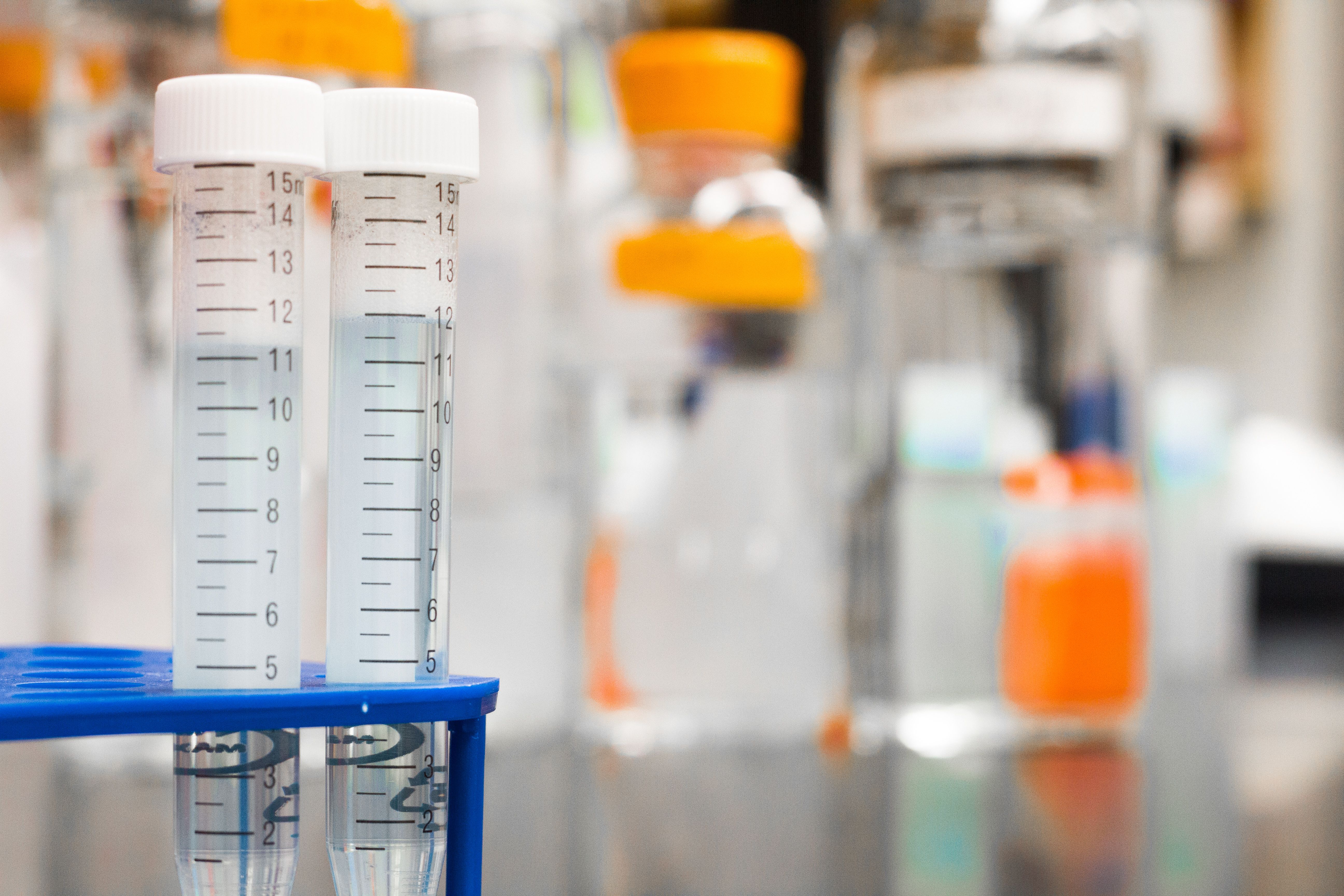
Chemical and enzymatic recycling has become the frontier of the circular economy for plastics, and its patent landscape is distinctive because molecular recycling is not one technology but a set of competing routes, each with its own chemistry, feedstocks, and process engineering. Where mechanical recycling melts and reforms plastic, losing quality with each cycle and struggling with colored, mixed, or contaminated waste, molecular recycling breaks polymers back down to their building blocks, monomers or feedstock chemicals, that can be repurified and repolymerized to a quality equivalent to virgin material. The routes divide by polymer and mechanism: engineered enzymes depolymerize polyester and PET even when colored or contaminated, with machine-learning-aided enzyme engineering producing fast, robust variants;¹ chemical routes such as methanolysis, glycolysis, and hydrolysis cleave PET into its monomers; and pyrolysis and gasification convert polyolefins such as polyethylene and polypropylene into oils and feedstocks. A persistent constraint on the enzymatic route is that highly crystalline PET resists depolymerization, so pretreatment and reaction-medium engineering matter as much as the enzyme itself,³ and thermostable, efficient enzymes remain difficult to engineer.⁴,⁵ Because each route is a distinct region of patenting, freedom-to-operate and white space analysis must treat plastic recycling as several landscapes at once, spanning enzymes and catalysts, reactor and process design, feedstock pretreatment, and monomer purification.
The field is being pulled forward by regulation and by the arrival of commercial-scale plants. In the European Union, the Packaging and Packaging Waste Regulation sets binding minimum-recycled-content targets for plastic packaging for 2030 and 2040 and requires packaging to be recyclable by 2030, creating durable demand for high-quality recycled material that mechanical recycling cannot fully supply.⁶ At the same time, enzyme discovery is industrializing: a systematic profiling of PET-depolymerizing enzymes mapped roughly 1,894 candidate hydrolases across about 170 natural sequence lineages, vastly expanding the toolbox beyond the handful of enzymes studied a few years ago.² Commercial facilities are moving from demonstration to build-out, with a first industrial enzymatic PET plant designed for about 50,000 tonnes per year of prepared post-consumer waste, on a revised commissioning schedule.⁷ The patent record reflects both the biology and the chemistry: across the Cypris corpus of more than 500 million patents and scientific papers, the PET-depolymerization and molecular-recycling set holds on the order of 1,266 families and grew from about 26 in 2020 to roughly 171 in 2024, with the most active assignees mixing chemical-route incumbents such as IFP Energies Nouvelles and Eastman with enzymatic and brand-side players such as Jeplan and Coca-Cola, and the United States, France, and China leading on geography; 2025 and 2026 counts are partial because of the publication lag.
The strategic question is which route and polymer to back, and the white space sits where the chemistry is hardest. Engineered enzymes have advanced furthest for PET and polyester, so the open, high-value ground is increasingly in enzymes and processes for other polymers, in the machine-learning-guided discovery and engineering of new depolymerizing enzymes,²,⁵ and in handling mixed and contaminated feedstocks. Chemical routes for PET are maturing, while the chemical recycling of polyolefins, the largest share of plastic waste, remains harder and less crowded, particularly in upgrading pyrolysis oils to usable feedstocks. Textile-to-textile recycling of polyester is a further emerging layer. Reading the landscape by route, polymer, and process, and tracking both the patents and the underlying enzyme and catalysis research, is what separates a crowded region from an open one.
Where the plastic-recycling white space is
Enzymes for non-PET polymers. Engineered enzymes that depolymerize polyolefins, nylons, and polyurethanes, rather than only polyester, are an early, high-value target as enzymatic PET matures.
Machine-learning enzyme discovery. Computational discovery and engineering of new, more thermostable and efficient depolymerases is a fast-moving layer that compresses development time.²,⁵
Polyolefin chemical recycling. Pyrolysis and its upgrading to usable feedstocks for the largest category of plastic waste remain harder and less crowded than PET routes.
Mixed and contaminated feedstocks. Processes that handle colored, multilayer, and mixed waste, which mechanical recycling cannot, are a differentiating capability.
Monomer purification and textile recycling. High-purity monomer recovery and textile-to-textile polyester recycling are distinct, emerging layers where quality and economics are decided.
How AI-powered landscape and white space analysis helps
Resolving a landscape that spans enzymatic and chemical routes across several polymers, under a regulatory recycled-content pull, requires more than keyword search. AI-powered analysis addresses this with semantic search that clusters activity by route, polymer, and process across varied terminology, attribution that normalizes filers to canonical entities and tracks new entrants, and continuous monitoring that keeps pace with a fast-commercializing field. Because recycling advances appear in scientific and enzyme-engineering literature before they are patented, reading both patents and literature gives the earliest signal of where scalable routes are emerging.
Where Cypris fits
Cypris runs patent landscape and white space analysis for multi-route fields such as chemical and enzymatic plastic recycling across a corpus of more than 500 million patents and scientific papers, organized through a proprietary R&D ontology. The ontology clusters activity by route, enzymatic, methanolysis, glycolysis, hydrolysis, and pyrolysis, and by polymer and process layer, and normalizes filers to canonical entities, so a team can resolve which routes and polymers are crowded and which remain open as white space, and can track new entrants as the field scales. Semantic search across patents and scientific literature connects filings to the underlying enzyme-engineering and catalysis research, which is where recycling advances appear first. Cypris Q, the platform's agentic layer, lets teams run landscape and white space analysis conversationally and chain the clustering, attribution, and gap analysis, and Agentic Monitoring tracks a defined route over time and flags new patents and papers as they publish. Cypris provides enterprise API partnerships with OpenAI, Anthropic, and Google, and is built with enterprise-grade security. Cypris serves hundreds of enterprise customers across pharmaceuticals, chemicals, advanced materials, energy, and other regulated industries.
FAQ
What is chemical and enzymatic plastic recycling? Chemical and enzymatic plastic recycling, also called molecular recycling, breaks plastics back down to monomers or feedstock chemicals that can be repolymerized to virgin quality, unlike mechanical recycling, which degrades quality. Routes include engineered-enzyme depolymerization, methanolysis, glycolysis, and hydrolysis for PET, and pyrolysis and gasification for polyolefins. Each is a distinct region of patenting.
Why is molecular recycling a patenting hotspot? Molecular recycling is a patenting hotspot because recycled-content rules and packaging regulations are creating durable demand for high-quality recycled material, and the first commercial plants are coming online. It can process colored, mixed, and contaminated waste that mechanical recycling cannot. That combination is driving filings across enzymes, catalysts, and processes.
What routes does the plastic-recycling landscape cover? The landscape covers engineered-enzyme depolymerization of polyester and PET, chemical depolymerization of PET by methanolysis, glycolysis, and hydrolysis, and pyrolysis and gasification of polyolefins. Each route has distinct enzymes or catalysts, reactors, and purification steps. Freedom-to-operate and white space analysis must treat them separately.
Where is the white space in plastic recycling? The white space includes engineered enzymes for non-PET polymers, machine-learning-guided enzyme discovery, polyolefin chemical recycling and pyrolysis-oil upgrading, processes for mixed and contaminated feedstocks, and monomer purification and textile-to-textile recycling. Enzymatic PET is comparatively advanced. The most open, high-value opportunities are in other polymers and in polyolefin routes.
Why is polyolefin recycling harder than PET recycling? Polyolefin recycling is harder because polyethylene and polypropylene lack the cleavable bonds that make PET amenable to enzymatic and chemical depolymerization, so they are typically broken down by pyrolysis into mixed oils that must then be upgraded. Polyolefins are also the largest share of plastic waste. That difficulty leaves the layer less crowded and high in value.
Why does plastic-recycling analysis need scientific literature? Plastic-recycling analysis needs scientific literature because enzyme-engineering and catalysis advances appear in research before they are patented, so the literature gives the earliest signal. Analyzing patents alone gives a lagging view. Cypris analyzes both across more than 500 million patents and scientific papers.
What software helps analyze the plastic-recycling patent landscape? Software for the plastic-recycling landscape should cluster activity by route, polymer, and process, resolve filers to canonical owners, search patents and scientific literature semantically, and monitor a fast-commercializing field continuously. Cypris does this across more than 500 million patents and scientific papers using a proprietary R&D ontology, semantic search, Cypris Q, and Agentic Monitoring.
Which teams use plastic-recycling patent landscape analysis? Plastic-recycling patent landscape analysis is used by R&D, innovation, IP, and strategy teams at chemicals, materials, packaging, and waste-management companies, enzyme and catalysis developers, and their partners, as well as investors and policymakers. It informs which route to back, where to file, and where competitors are concentrated. Cypris serves hundreds of enterprise customers across chemicals, advanced materials, energy, and other regulated industries.
Endnotes
- Lu, H., Diaz, D. J., Shroff, P., Alper, H. S., et al. (2022). Machine learning-aided engineering of hydrolases for PET depolymerization. Nature, 604. https://doi.org/10.1038/s41586-022-04599-z
- Park, S. Y., Ki, D., Sagong, H.-Y., Seo, H., et al. (2025). Landscape profiling of PET depolymerases using a natural sequence cluster framework. Science, 387(6729). https://doi.org/10.1126/science.adp5637
- Kaabel, S., Therien, J. P. D., Auclair, K., et al. (2021). Enzymatic depolymerization of highly crystalline PET enabled in moist-solid reaction mixtures. Proceedings of the National Academy of Sciences, 118(29). https://doi.org/10.1073/pnas.2026452118
- Kawabata, T., Iizuka, R., & Kawai, F. (2024). Engineered polyethylene terephthalate hydrolases: perspectives and limits. Applied Microbiology and Biotechnology, 108. https://doi.org/10.1007/s00253-024-13222-2
- Li, Q., Su, L., Dian, L., et al. (2024). Dynamic docking-assisted engineering of hydrolases for efficient PET depolymerization. ACS Catalysis, 14(9). https://doi.org/10.1021/acscatal.4c00400
- European Commission, Directorate-General for Environment. Packaging and packaging waste. https://environment.ec.europa.eu/topics/waste-and-recycling/packaging-waste_en
- Carbios. PET biorecycling technology. https://www.carbios.com/en/pet-biorecycling-technology/