
The Harness Problem - Foundation AI is getting more powerful every quarter, but better models alone won’t produce better R&D decisions.
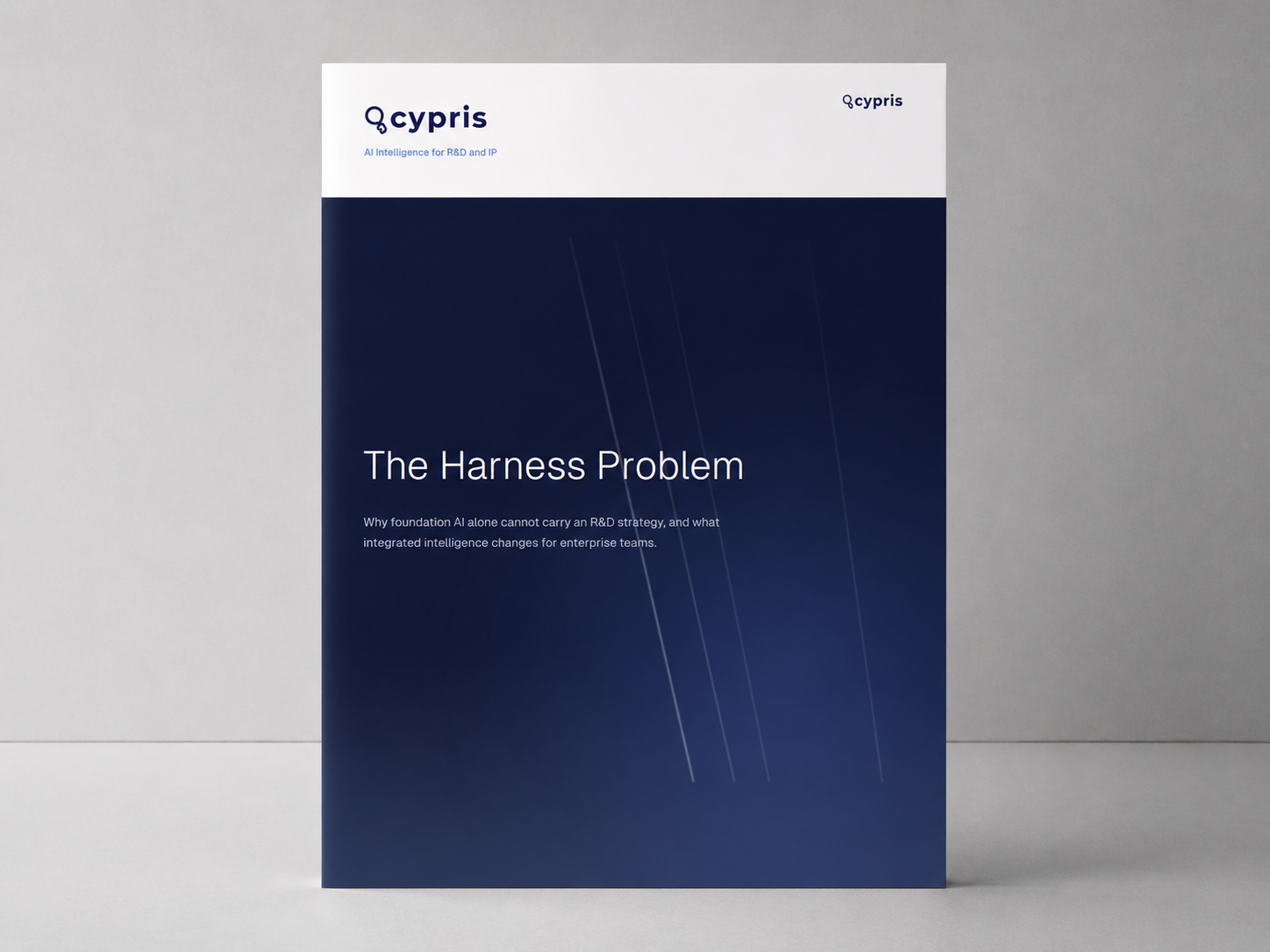
Foundation AI is getting more powerful every quarter, but better models alone won’t produce better R&D decisions. The real gap is the “harness”: the evidence, ontologies, domain context, and workflows the model is given to reason over. As access to frontier models becomes commoditized, competitive advantage will come from the intelligence layered on top of them. In our latest report, The Harness Problem, we break down why this matters for R&D and IP teams, what a serious enterprise deployment requires, and how to tell if your organization has this gap.
What You'll Find in the Report

Why stronger AI models still produce weak R&D decisions.
The limitation is often not the model itself, but the evidence, context, and domain structure it is given to reason over. Without a purpose-built harness, sophisticated models can still produce incomplete answers that appear authoritative.
.svg)
Why proprietary intelligence matters more as models commoditize.
As enterprises gain access to the same frontier models, differentiation shifts to the layer around them: connected technical data, curated ontologies, entity resolution, and workflows designed around real R&D and IP questions.
.svg)
What separates serious enterprise AI deployments from generic ones.
Decision-grade systems require defined data coverage and provenance, domain-specific structure, workflows that reflect how experts actually work, and evaluation based on the quality of the final decision rather than the fluency of the response.

Powering world-leading R&D & IP teams

.svg)

.svg)

.svg)

.svg)




.avif)