Smarter scientific literature search. More insightful research with Q.
Scientific research rarely follows a single vocabulary. Similar materials can be described with different terminology, specialized techniques cross disciplinary boundaries, and important papers are not always the most obvious results for a given question.
We have enhanced how Q connects technical context across scientific publications, enabling it to identify more of the relevant work already represented in the scientific literature. Better matching across concepts, methods, compounds, and disciplines gives Q a stronger evidence base for its research responses.
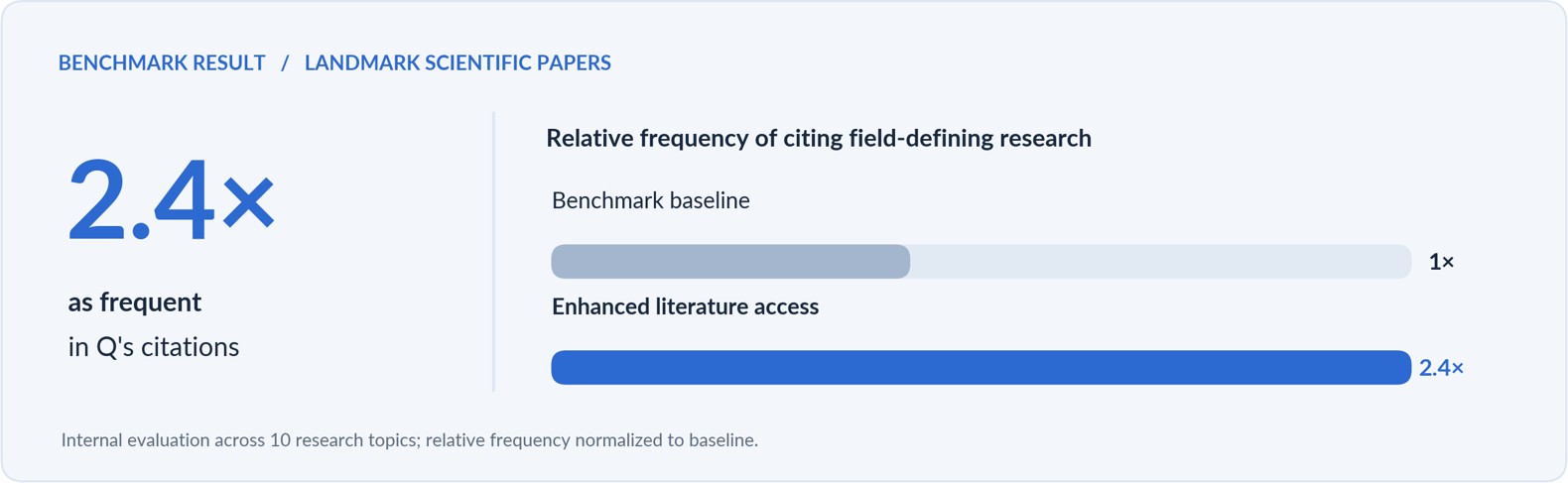
2.4× more frequent citations of landmark research
In a controlled evaluation across 10 research topics, Q cited highly influential papers that were independently judged directly relevant to the topic 2.4× as frequently. The improvement reflects stronger identification of the studies researchers most need to know, not simply a larger bibliography.
From better discovery to stronger research
The quality of a literature review depends on the scientific evidence behind it. More consistent identification of foundational and technically relevant studies gives Q a richer set of findings to connect, compare, and reference, supporting more complete and useful research.
Find the right paper, even from an unlikely clue
Broader coverage is especially useful when a researcher knows the technical detail, but not the exact paper or conventional search terminology.
A distinctive phrase, an unfamiliar acronym, a particular measurement, or a description of an experimental method can be enough to start. Enhanced scientific literature access helps Q connect these specific clues to relevant publications, including work that may be difficult to locate through more obvious queries.
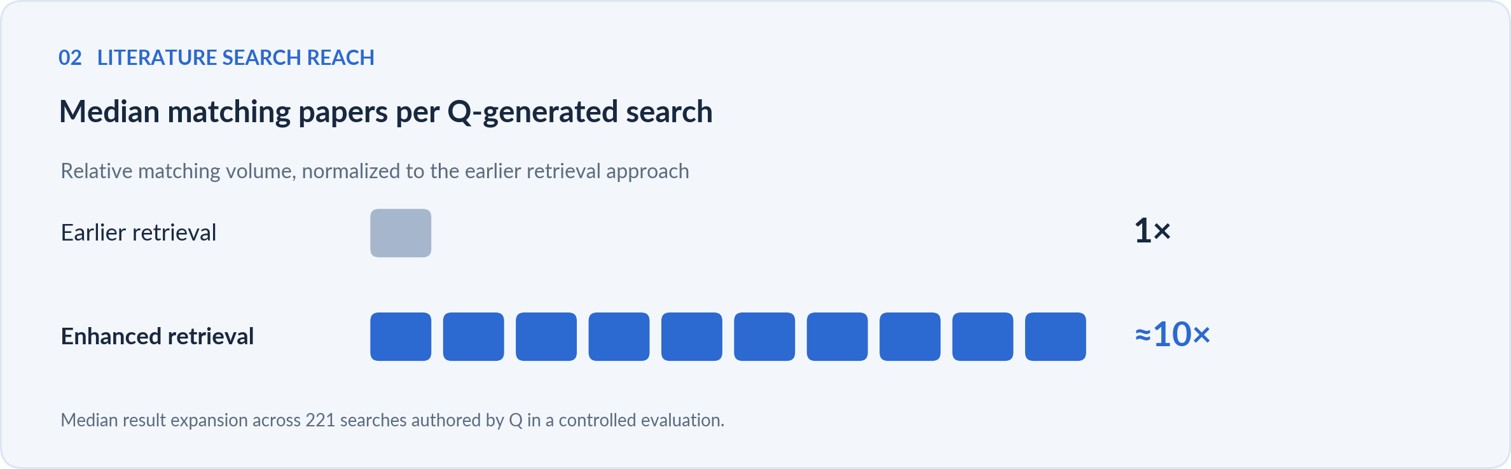
Approximately 10× more matching studies per search
Across 221 Q-generated searches in a controlled evaluation, the median number of matching scientific papers increased by about 10×. The improvement helps Q surface studies connected to highly specific questions, including less obvious scientific terminology.
Richer evidence helps Q deliver more informed research
By surfacing a more complete, relevant set of scientific studies, Q has a stronger basis for connecting findings and citing supporting evidence, particularly for niche questions, unfamiliar terminology, and interdisciplinary research.
In 100 phrase-based tests, the associated publication was located every time. For example, “hyBRET” identified a biosensors study and “halving oxygen concentration” led to a paper on activated-carbon chemistry, both ranked first.
Broader coverage, consistent source relevance
In blinded evaluations, roughly nine in ten papers cited by Q were judged directly relevant, in line with the earlier approach. Q can identify a wider range of supporting studies without diluting citation relevance, reinforcing the quality of evidence behind its research.
The enhancement also applies to scientific paper search and monitoring across Cypris.


Register here
Subscribe to receive the latest blog posts to your inbox every week.