

Insights on Innovation, R&D, and IP
Perspectives on patents, scientific research, emerging technologies, and the strategies shaping modern R&D

Executive Summary
In 2024, US patent infringement jury verdicts totaled $4.19 billion across 72 cases. Twelve individual verdicts exceeded $100million. The largest single award—$857 million in General Access Solutions v.Cellco Partnership (Verizon)—exceeded the annual R&D budget of many mid-market technology companies. In the first half of 2025 alone, total damages reached an additional $1.91 billion.
The consequences of incomplete patent intelligence are not abstract. In what has become one of the most instructive IP disputes in recent history, Masimo’s pulse oximetry patents triggered a US import ban on certain Apple Watch models, forcing Apple to disable its blood oxygen feature across an entire product line, halt domestic sales of affected models, invest in a hardware redesign, and ultimately face a $634 million jury verdict in November 2025. Apple—a company with one of the most sophisticated intellectual property organizations on earth—spent years in litigation over technology it might have designed around during development.
For organizations with fewer resources than Apple, the risk calculus is starker. A mid-size materials company, a university spinout, or a defense contractor developing next-generation battery technology cannot absorb a nine-figure verdict or a multi-year injunction. For these organizations, the patent landscape analysis conducted during the development phase is the primary risk mitigation mechanism. The quality of that analysis is not a matter of convenience. It is a matter of survival.
And yet, a growing number of R&D and IP teams are conducting that analysis using general-purpose AI tools—ChatGPT, Claude, Microsoft Co-Pilot—that were never designed for patent intelligence and are structurally incapable of delivering it.
This report presents the findings of a controlled comparison study in which identical patent landscape queries were submitted to four AI-powered tools: Cypris (a purpose-built R&D intelligence platform),ChatGPT (OpenAI), Claude (Anthropic), and Microsoft Co-Pilot. Two technology domains were tested: solid-state lithium-sulfur battery electrolytes using garnet-type LLZO ceramic materials (freedom-to-operate analysis), and bio-based polyamide synthesis from castor oil derivatives (competitive intelligence).
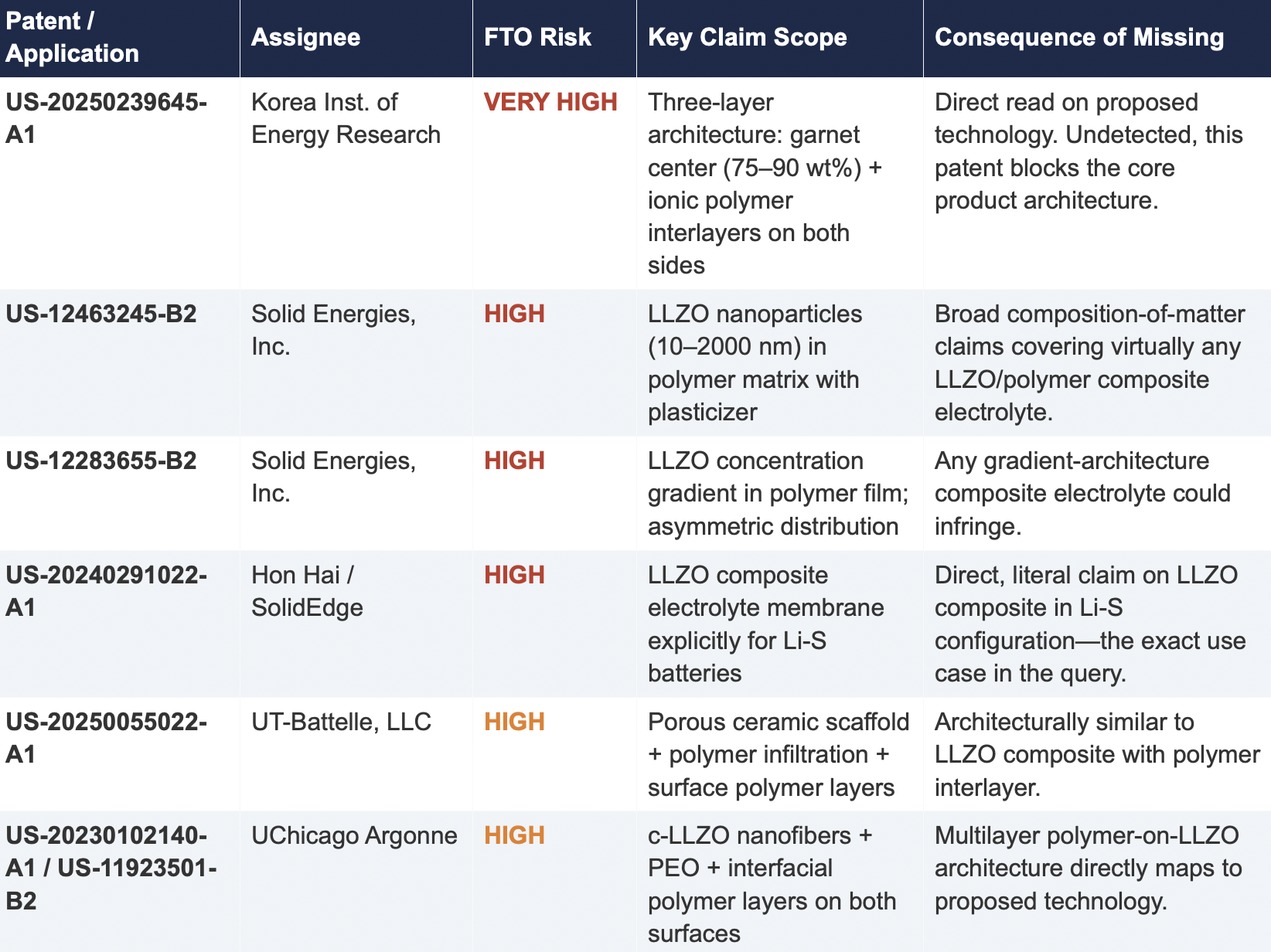
The results reveal a significant and structurally persistent gap. In Test 1, Cypris identified over 40 active US patents and published applications with granular FTO risk assessments. Claude identified 12. ChatGPT identified 7, several with fabricated attribution. Co-Pilot identified 4. Among the patents surfaced exclusively by Cypris were filings rated as “Very High” FTO risk that directly claim the technology architecture described in the query. In Test 2, Cypris cited over 100 individual patent filings with full attribution to substantiate its competitive landscape rankings. No general-purpose model cited a single patent number.
The most active sectors for patent enforcement—semiconductors, AI, biopharma, and advanced materials—are the same sectors where R&D teams are most likely to adopt AI tools for intelligence workflows. The findings of this report have direct implications for any organization using general-purpose AI to inform patent strategy, competitive intelligence, or R&D investment decisions.

1. Methodology
A controlled comparative evaluation was conducted on March 27, 2026. An identical patent landscape query was submitted verbatim to each platform under standardized testing conditions. No follow-up prompts, clarifications, or iterative refinements were permitted, ensuring that each platform was evaluated based solely on its initial response.
The outputs were preserved in their original form and evaluated against predefined criteria using publicly verifiable patent records.
1.1 Query
Identify all active US patents and published applications filed in the last 5 years related to solid-state lithium-sulfur battery electrolytes using garnet-type ceramic materials. For each, provide the assignee, filing date, key claims, and current legal status. Highlight any patents that could pose freedom-to-operate risks for a company developing a Li₇La₃Zr₂O₁₂(LLZO)-based composite electrolyte with a polymer interlayer.
1.2 Tools Evaluated

1.3 Evaluation Criteria
Each response was evaluated using a consistent six-part scoring framework: patent coverage, assignee accuracy, filing metadata completeness, depth of claim analysis, quality of FTO risk stratification, and the presence of actionable strategic guidance.
Patent numbers, assignees, filing information, and legal status were independently checked against publicly available USPTO and WIPO records. The evaluation focused on the completeness, accuracy, and practical utility of each platform’s output rather than writing quality or presentation.
2. Findings
2.1 Coverage Gap
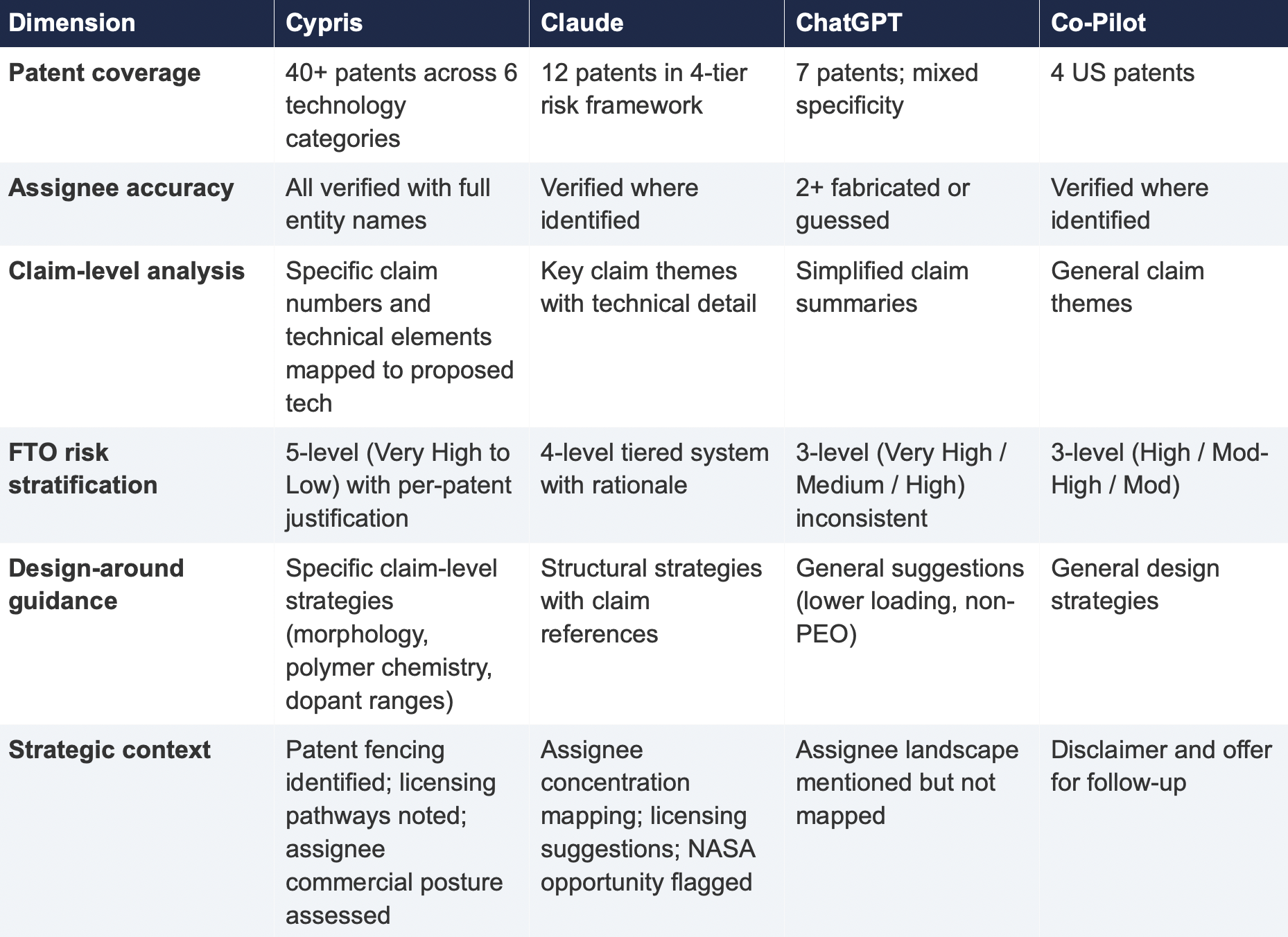
The most significant finding is the scale of the coverage differential. Cypris identified over 40 active US patents and published applications spanning LLZO-polymer composite electrolytes, garnet interface modification, polymer interlayer architectures, lithium-sulfur specific filings, and adjacent ceramic composite patents. The results were organized by technology category with per-patent FTO risk ratings.
Claude identified 12 patents organized in a four-tier risk framework. Its analysis was structurally sound and correctly flagged the two highest-risk filings (Solid Energies US 11,967,678 and the LLZO nanofiber multilayer US 11,923,501). It also identified the University ofMaryland/ Wachsman portfolio as a concentration risk and noted the NASA SABERS portfolio as a licensing opportunity. However, it missed the majority of the landscape, including the entire Corning portfolio, GM's interlayer patents, theKorea Institute of Energy Research three-layer architecture, and the HonHai/SolidEdge lithium-sulfur specific filing.
ChatGPT identified 7 patents, but the quality of attribution was inconsistent. It listed assignees as "Likely DOE /national lab ecosystem" and "Likely startup / defense contractor cluster" for two filings—language that indicates the model was inferring rather than retrieving assignee data. In a freedom-to-operate context, an unverified assignee attribution is functionally equivalent to no attribution, as it cannot support a licensing inquiry or risk assessment.
Co-Pilot identified 4 US patents. Its output was the most limited in scope, missing the Solid Energies portfolio entirely, theUMD/ Wachsman portfolio, Gelion/ Johnson Matthey, NASA SABERS, and all Li-S specific LLZO filings.
2.2 Critical Patents Missed by Public Models
The following table presents patents identified exclusively by Cypris that were rated as High or Very High FTO risk for the proposed technology architecture. None were surfaced by any general-purpose model.
2.3 Patent Fencing: The Solid Energies Portfolio
Cypris identified a coordinated patent fencing strategy by Solid Energies, Inc. that no general-purpose model detected at scale. Solid Energies holds at least four granted US patents and one published application covering LLZO-polymer composite electrolytes across compositions(US-12463245-B2), gradient architectures (US-12283655-B2), electrode integration (US-12463249-B2), and manufacturing processes (US-20230035720-A1). Claude identified one Solid Energies patent (US 11,967,678) and correctly rated it as the highest-priority FTO concern but did not surface the broader portfolio. ChatGPT and Co-Pilot identified zero Solid Energies filings.
The practical significance is that a company relying on any individual patent hit would underestimate the scope of Solid Energies' IP position. The fencing strategy—covering the composition, the architecture, the electrode integration, and the manufacturing method—means that identifying a single design-around for one patent does not resolve the FTO exposure from the portfolio as a whole. This is the kind of strategic insight that requires seeing the full picture, which no general-purpose model delivered
2.4 Assignee Attribution Quality
ChatGPT's response included at least two instances of fabricated or unverifiable assignee attributions. For US 11,367,895 B1, the listed assignee was "Likely startup / defense contractor cluster." For US 2021/0202983 A1, the assignee was described as "Likely DOE / national lab ecosystem." In both cases, the model appears to have inferred the assignee from contextual patterns in its training data rather than retrieving the information from patent records.
In any operational IP workflow, assignee identity is foundational. It determines licensing strategy, litigation risk, and competitive positioning. A fabricated assignee is more dangerous than a missing one because it creates an illusion of completeness that discourages further investigation. An R&D team receiving this output might reasonably conclude that the landscape analysis is finished when it is not.
3. Structural Limitations of General-Purpose Models for Patent Intelligence
3.1 Training Data Is Not Patent Data
Large language models are trained on web-scraped text. Their knowledge of the patent record is derived from whatever fragments appeared in their training corpus: blog posts mentioning filings, news articles about litigation, snippets of Google Patents pages that were crawlable at the time of data collection. They do not have systematic, structured access to the USPTO database. They cannot query patent classification codes, parse claim language against a specific technology architecture, or verify whether a patent has been assigned, abandoned, or subjected to terminal disclaimer since their training data was collected.
This is not a limitation that improves with scale. A larger training corpus does not produce systematic patent coverage; it produces a larger but still arbitrary sampling of the patent record. The result is that general-purpose models will consistently surface well-known patents from heavily discussed assignees (QuantumScape, for example, appeared in most responses) while missing commercially significant filings from less publicly visible entities (Solid Energies, Korea Institute of EnergyResearch, Shenzhen Solid Advanced Materials).
3.2 The Web Is Closing to Model Scrapers
The data access problem is structural and worsening. As of mid-2025, Cloudflare reported that among the top 10,000 web domains, the majority now fully disallow AI crawlers such as GPTBot andClaudeBot via robots.txt. The trend has accelerated from partial restrictions to outright blocks, and the crawl-to-referral ratios reveal the underlying tension: OpenAI's crawlers access approximately1,700 pages for every referral they return to publishers; Anthropic's ratio exceeds 73,000 to 1.
Patent databases, scientific publishers, and IP analytics platforms are among the most restrictive content categories. A Duke University study in 2025 found that several categories of AI-related crawlers never request robots.txt files at all. The practical consequence is that the knowledge gap between what a general-purpose model "knows" about the patent landscape and what actually exists in the patent record is widening with each training cycle. A landscape query that a general-purpose model partially answered in 2023 may return less useful information in 2026.
3.3 General-Purpose Models Lack Ontological Frameworks for Patent Analysis
A freedom-to-operate analysis is not a summarization task. It requires understanding claim scope, prosecution history, continuation and divisional chains, assignee normalization (a single company may appear under multiple entity names across patent records), priority dates versus filing dates versus publication dates, and the relationship between dependent and independent claims. It requires mapping the specific technical features of a proposed product against independent claim language—not keyword matching.
General-purpose models do not have these frameworks. They pattern-match against training data and produce outputs that adopt the format and tone of patent analysis without the underlying data infrastructure. The format is correct. The confidence is high. The coverage is incomplete in ways that are not visible to the user.
4. Comparative Output Quality
The following table summarizes the qualitative characteristics of each tool's response across the dimensions most relevant to an operational IP workflow.
5. Implications for R&D and IP Organizations
5.1 The Confidence Problem
The central risk identified by this study is not that general-purpose models produce bad outputs—it is that they produce incomplete outputs with high confidence. Each model delivered its results in a professional format with structured analysis, risk ratings, and strategic recommendations. At no point did any model indicate the boundaries of its knowledge or flag that its results represented a fraction of the available patent record. A practitioner receiving one of these outputs would have no signal that the analysis was incomplete unless they independently validated it against a comprehensive datasource.
This creates an asymmetric risk profile: the better the format and tone of the output, the less likely the user is to question its completeness. In a corporate environment where AI outputs are increasingly treated as first-pass analysis, this dynamic incentivizes under-investigation at precisely the moment when thoroughness is most critical.
5.2 The Diversification Illusion
It might be assumed that running the same query through multiple general-purpose models provides validation through diversity of sources. This study suggests otherwise. While the four tools returned different subsets of patents, all operated under the same structural constraints: training data rather than live patent databases, web-scraped content rather than structured IP records, and general-purpose reasoning rather than patent-specific ontological frameworks. Running the same query through three constrained tools does not produce triangulation; it produces three partial views of the same incomplete picture.
5.3 The Appropriate Use Boundary
General-purpose language models are effective tools for a wide range of tasks: drafting communications, summarizing documents, generating code, and exploratory research. The finding of this study is not that these tools lack value but that their value boundary does not extend to decisions that carry existential commercial risk.
Patent landscape analysis, freedom-to-operate assessment, and competitive intelligence that informs R&D investment decisions fall outside that boundary. These are workflows where the completeness and verifiability of the underlying data are not merely desirable but are the primary determinant of whether the analysis has value. A patent landscape that captures 10% of the relevant filings, regardless of how well-formatted or confidently presented, is a liability rather than an asset.
6. Test 2: Competitive Intelligence — Bio-Based Polyamide Patent Landscape
To assess whether the findings from Test 1 were specific to a single technology domain or reflected a broader structural pattern, a second query was submitted to all four tools. This query shifted from freedom-to-operate analysis to competitive intelligence, asking each tool to identify the top 10organizations by patent filing volume in bio-based polyamide synthesis from castor oil derivatives over the past three years, with summaries of technical approach, co-assignee relationships, and portfolio trajectory.
6.1 Query

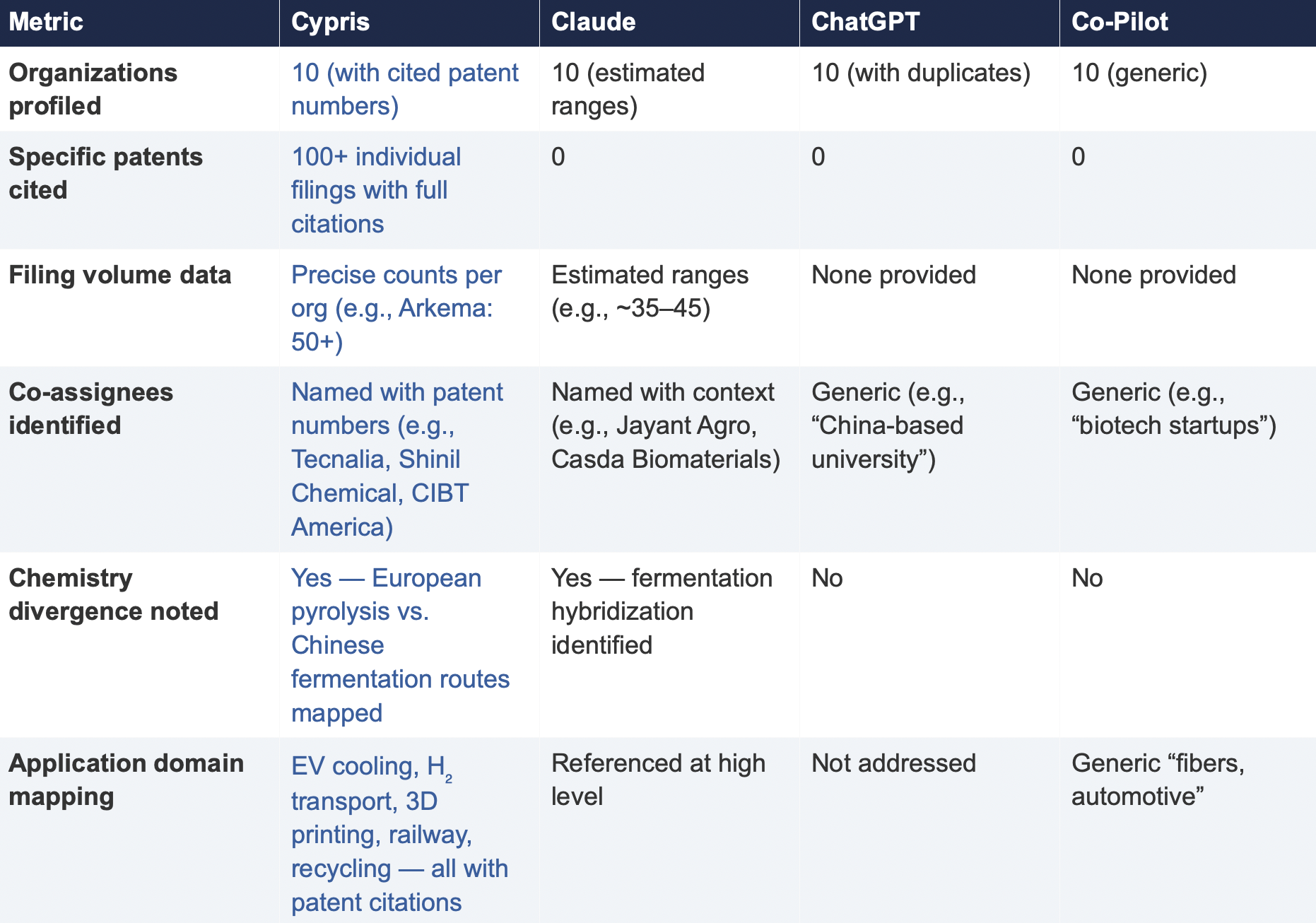
6.2 Summary of Results
6.3 Key Differentiators
Verifiability
The most consequential difference in Test 2 was the presence or absence of verifiable evidence. Cypris cited over 100 individual patent filings with full patent numbers, assignee names, and publication dates. Every claim about an organization’s technical focus, co-assignee relationships, and filing trajectory was anchored to specific documents that a practitioner could independently verify in USPTO, Espacenet, or WIPO PATENT SCOPE. No general-purpose model cited a single patent number. Claude produced the most structured and analytically useful output among the public models, with estimated filing ranges, product names, and strategic observations that were directionally plausible. However, without underlying patent citations, every claim in the response requires independent verification before it can inform a business decision. ChatGPT and Co-Pilot offered thinner profiles with no filing counts and no patent-level specificity.
Data Integrity
ChatGPT’s response contained a structural error that would mislead a practitioner: it listed CathayBiotech as organization #5 and then listed “Cathay Affiliate Cluster” as a separate organization at #9, effectively double-counting a single entity. It repeated this pattern with Toray at #4 and “Toray(Additional Programs)” at #10. In a competitive intelligence context where the ranking itself is the deliverable, this kind of error distorts the landscape and could lead to misallocation of competitive monitoring resources.
Organizations Missed
Cypris identified Kingfa Sci. & Tech. (8–10 filings with a differentiated furan diacid-based polyamide platform) and Zhejiang NHU (4–6 filings focused on continuous polymerization process technology)as emerging players that no general-purpose model surfaced. Both represent potential competitive threats or partnership opportunities that would be invisible to a team relying on public AI tools.Conversely, ChatGPT included organizations such as ANTA and Jiangsu Taiji that appear to be downstream users rather than significant patent filers in synthesis, suggesting the model was conflating commercial activity with IP activity.
Strategic Depth
Cypris’s cross-cutting observations identified a fundamental chemistry divergence in the landscape:European incumbents (Arkema, Evonik, EMS) rely on traditional castor oil pyrolysis to 11-aminoundecanoic acid or sebacic acid, while Chinese entrants (Cathay Biotech, Kingfa) are developing alternative bio-based routes through fermentation and furandicarboxylic acid chemistry.This represents a potential long-term disruption to the castor oil supply chain dependency thatWestern players have built their IP strategies around. Claude identified a similar theme at a higher level of abstraction. Neither ChatGPT nor Co-Pilot noted the divergence.
6.4 Test 2 Conclusion
Test 2 confirms that the coverage and verifiability gaps observed in Test 1 are not domain-specific.In a competitive intelligence context—where the deliverable is a ranked landscape of organizationalIP activity—the same structural limitations apply. General-purpose models can produce plausible-looking top-10 lists with reasonable organizational names, but they cannot anchor those lists to verifiable patent data, they cannot provide precise filing volumes, and they cannot identify emerging players whose patent activity is visible in structured databases but absent from the web-scraped content that general-purpose models rely on.
7. Conclusion
This comparative analysis, spanning two distinct technology domains and two distinct analytical workflows—freedom-to-operate assessment and competitive intelligence—demonstrates that the gap between purpose-built R&D intelligence platforms and general-purpose language models is not marginal, not domain-specific, and not transient. It is structural and consequential.
In Test 1 (LLZO garnet electrolytes for Li-S batteries), the purpose-built platform identified more than three times as many patents as the best-performing general-purpose model and ten times as many as the lowest-performing one. Among the patents identified exclusively by the purpose-built platform were filings rated as Very High FTO risk that directly claim the proposed technology architecture. InTest 2 (bio-based polyamide competitive landscape), the purpose-built platform cited over 100individual patent filings to substantiate its organizational rankings; no general-purpose model cited as ingle patent number.
The structural drivers of this gap—reliance on training data rather than live patent feeds, the accelerating closure of web content to AI scrapers, and the absence of patent-specific analytical frameworks—are not transient. They are inherent to the architecture of general-purpose models and will persist regardless of increases in model capability or training data volume.
For R&D and IP leaders, the practical implication is clear: general-purpose AI tools should be used for general-purpose tasks. Patent intelligence, competitive landscaping, and freedom-to-operate analysis require purpose-built systems with direct access to structured patent data, domain-specific analytical frameworks, and the ability to surface what a general-purpose model cannot—not because it chooses not to, but because it structurally cannot access the data.
The question for every organization making R&D investment decisions today is whether the tools informing those decisions have access to the evidence base those decisions require. This study suggests that for the majority of general-purpose AI tools currently in use, the answer is no.
Study Disclosure
This comparative evaluation was commissioned and published by Cypris. The testing methodology, prompts, evaluation criteria, and underlying outputs have been documented to support independent review and replication.
All platform outputs were preserved in their original form. Patent data and material factual claims were cross-checked against USPTO Patent Center and WIPO PATENTSCOPE records as of March 27, 2026. Cypris was one of the platforms evaluated and therefore has a commercial interest in the findings.
The Patent Intelligence Gap - A Comparative Analysis of Verticalized AI-Patent Tools vs. General-Purpose Language Models for R&D Decision-Making
All Blogs

Carbon dioxide (Co2) is one of the atmospheric "greenhouse gases" that absorbs and radiates heat gradually over time and contributes to the natural warming of the Earth known as the greenhouse effect. Notably, increases in atmospheric CO2 are responsible for about 2/3 of the total energy imbalance that is causing Earth's temperature to rise.
The built environment generates nearly 50% of annual global CO2 emissions. Of those total emissions, building operations are responsible for 27% annually, while building materials and construction are responsible for an additional 20% annually.
As a result, measures are being taken to create structures and building materials that are carbon-neutral, and even carbon negative, to reduce the amount of CO2 in the atmosphere. One such project was announced this week by the U.S. Department of Energy.
About the project
The U.S. Department of Energy (DOE) announced Monday that it is awarding $39 million in grants, primarily to universities, for 18 projects seeking to develop technologies that can transform buildings into net carbon storage structures.
The awards are part of DOE’s Harnessing Emissions into Structures Taking Inputs from the Atmosphere (HESTIA) program, and will prioritize overcoming barriers associated with carbon-storing buildings, including scarce, expensive, and geographically limited building materials. The overarching goal is to increase the amount of carbon that can be stored in buildings so they become “carbon sinks”— materials or processes that absorb more carbon from the atmosphere than they release. The decarbonization goals for this program fall in line with President Jo Biden’s call for the federal government to reach net-zero emissions by 2050.
Why it's significant
Of the greenhouse gases, carbon dioxide is known to absorb less heat per molecule than the greenhouse gases methane or nitrous oxide, be more abundant, and stay in the atmosphere much longer. When it comes to how CO2 factors into buildings, the DOE reports that greenhouse gas emissions associated with material manufacturing and construction, renovation and disposal of buildings at the end of their service life are concentrated at the start of a building's lifetime. As a result, it's important to address greenhouse gas emissions when it comes to materials, design, and building techniques.
According to U.S. Secretary of Energy Jennifer M. Granholm, “There’s huge, untapped potential in reimagining building materials and construction techniques as carbon sinks that support a cleaner atmosphere and advance President Biden’s national climate goals. This is a unique opportunity for researchers to advance clean energy materials to tackle one of the hardest to decarbonize sectors that is responsible for roughly 10% of total annual emissions in the United States.”
Who’s working on the project
The teams are comprised of universities, private companies, and national laboratories, and will develop and demonstrate building materials and net carbon negative whole-building designs. HESTIA project titles, locations, and award amounts are listed below. For more detailed information on each project, visit HESTIA project descriptions.
- National Renewable Energy Laboratory – Golden, CO; High-Performing Carbon-Negative Concrete Using Low Value Byproducts from Biofuels Production - $1,749,935
- Texas A&M University – College Station, TX; Hempcrete 3D Printed Buildings for Sustainability and Resilience - $3,742,496
- University of Colorado Boulder – Boulder, CO; A Photosynthetic Route to Carbon-Negative Portland Limestone Cement Production - $3,193,063
- University at Buffalo – Buffalo, NY; Modular Design and Additive Manufacturing of Interlocking Superinsulation Panel from Bio-based Feedstock for Autonomous Construction - $2,179,852
- University of Pennsylvania – Philadelphia, PA; High-Performance Building Structure with 3D-Printed Carbon Absorbing Funicular Systems – $2,407,390
- National Renewable Energy Laboratory – Fairbanks, AK; Celium: Cellulose-Mycelium Composites for Carbon Negative Buildings/Construction - $2,476,145
- Pacific Northwest National Laboratory – Richland, WA; The Circular Home: Development and Demonstration of a Net-Negative-Carbon, Reusable Residence - $2,627,466
- Oregon State University – Corvallis, OR; Cellulose Cement Composite (C3) for Residential and Commercial Construction - $2,500,000
- Oak Ridge National Laboratory – Oak Ridge, TN; Renewable, Carbon-negative Adhesives for OSB and Other Engineered Woods - $1,098,000
- University of Wisconsin-Madison – Madison, WI; Carbon-Negative Ready-Mix Concrete Building Components Through Direct Air Capture - $2,256,250
- Northeastern University – Boston, MA; 4C2B: Century-scale Carbon-sequestration in Cross-laminated Timber Composite Bolted-steel Buildings - $3,150,000
- Purdue University – West Lafayette, IN; Strong and CO2 Consuming Living Wood for Buildings - $958,245
- University of Tennessee-Knoxville – Knoxville, TN; Lignin-derived Carbon Storing Foams for High Performance Insulation - $2,557,383
- Clemson University – Clemson, SC; An Entirely Wood Floor System Designed for Carbon Negativity, Future Adaptability, and End of Life De/re/Construction - $1,042,934
- Aspen Products Group – Marlborough, MA; High Performance, Carbon Negative Building Insulation - $1,152,476
- BamCore – Ocala, FL; Maximizing Carbon Negativity in Next Generation Bamboo Framing Materials - $2,230,060
- SkyNano – Knoxville, TN; CO2mposite: Recycling of CO2, Carbon Fiber Waste, and Biomaterials into Composite Panels for Lower Embodied Carbon Building Materials - $2,000,000
- Biomason – Durham, NC; Soteria - Carbon Negative Bioconcrete Unit Production Concept - $1,812,118
Given the funding the DOE is devoting to decarbonization technologies, it's safe to say that research and investment into the area is on the rise. According to our data, there are 1584 players in the market operating across 3723 technologies. To learn more about innovation activity in the decarbonization space, visit cypris.ai and get started with access to the innovation dashboard.
Sources:

We are in the midst of the biggest wave of urbanism in human history. Today, more than 4.3 billion people or 55% of the world’s population live in urban settings. By 2050, the share of the world’s population living in cities is expected to rise to 80% (World Economic Forum).
With more people concentrated in urban areas, cities must adapt to new challenges when it comes to infrastructure, housing, material consumption, accessibility, sustainability, and much more. In this blog, we’ll look at new innovations that have emerged to combat new challenges cities are facing.
Market Overview
Using the Cypris innovation dashboard, we identified innovation activity in the urban development market has grown over the past 5 years, with a 62.5% average growth rate. Within the vertical, there are 392 technologies being applied within 38 different categories. The fastest growing category is Signaling with an 125.0% increase in new patents filed over the last 5 years.
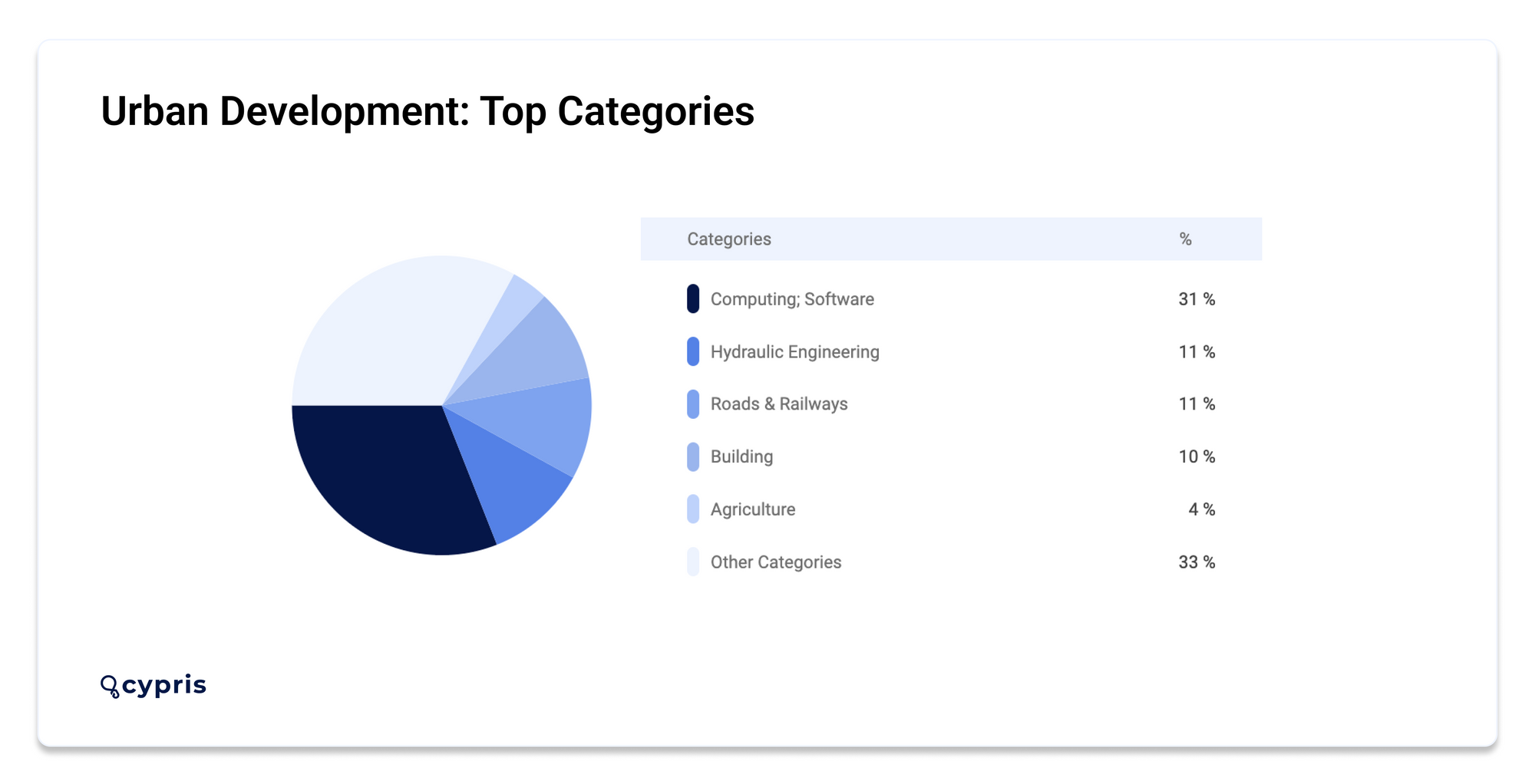
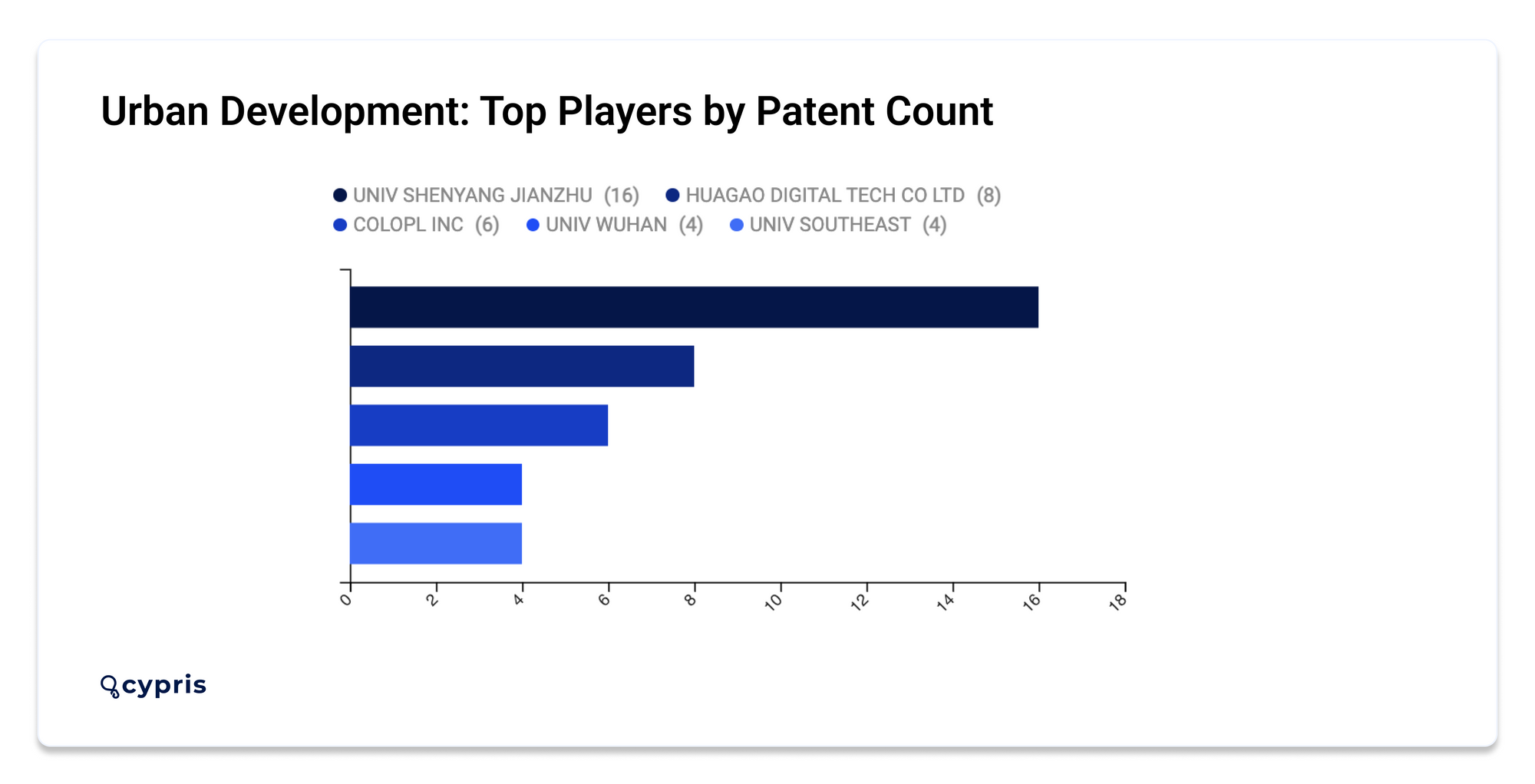
The most active top players in Urban Development by patent number include UNIV SHENYANG JIANZHU (16), HUAGAO DIGITAL TECH CO LTD (8), and COLOPL INC (6).
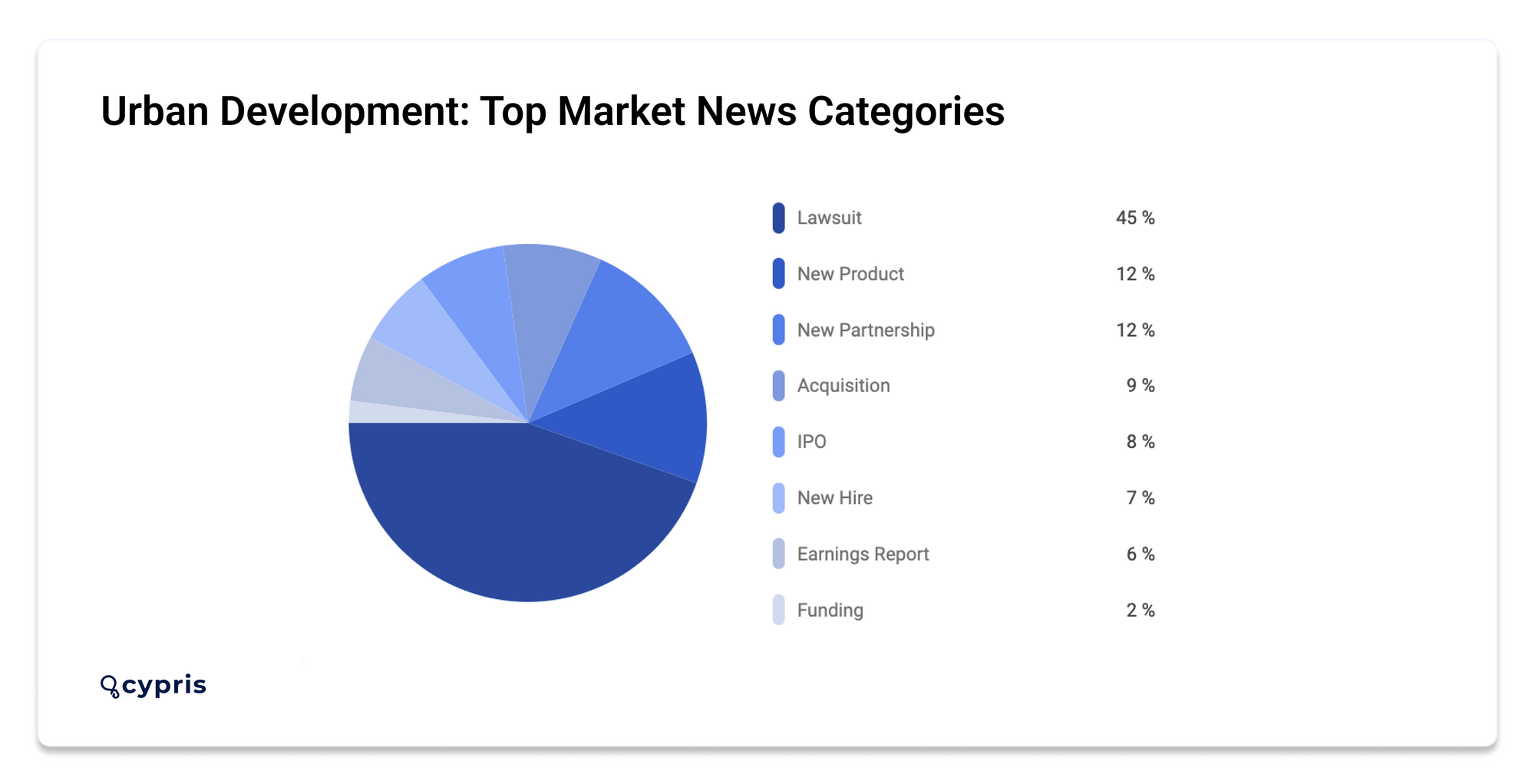
Market news in the space is dominated primarily by lawsuits (45%), followed by new products (12%) and new partnerships (12%).
Notably, while diving into urban development market news, we discovered that Google released a new tool that provides real-time land cover data called Dynamic World, created in partnership with global nonprofit organization World Resources Institute (WRI). Prior to its creation, it was difficult to access detailed and up-to-date land cover, across land and water types. Dynamic World reveals how the earth’s surface is changing from various activities, and allows viewers to track land cover changes from environmental factors, like floods and snowstorms, and changes induced by human activity like urban development and deforestation. The tool will help generate awareness around issues facing the planet, and equip scientists, environmental researchers, policymakers, and the general public with the information to better understand environmental disturbances and plan for future disasters.
Innovative Patents in Urban Development
Here are 5 of the most fascinating patents within the urban development space:
Method for constructing artificial islands with reefs from urban construction waste: This invention provides a 5-step method for constructing artificial islands with reefs from urban construction waste. The method includes 1) recycling the urban construction waste; 2) bonding and pouring the urban construction waste by the aid of cement to obtain large cement brick specimens; 3) transporting the cement specimens to coastal regions by the aid of unidirectional logistics empty materials; 4) transporting the cement specimens to the reefs; and 5) constructing the islands by the aid of cement bricks in falling tide periods.
Inventors: WANG XIAOJIN, & LAI BINGHONG; Patent #: CN103882831A
Roadside dedicated to people with reduced mobility: This invention is a curb specially designed to facilitate movement on the sidewalk for people using wheelchairs and the blind or visually impaired. The invention makes it possible to guide the wheels of a wheelchair, and protect pedestrians from cars. The regularly spaced outfalls in the invention contain a slight slope in order to evacuate rainwater as well. This invention can be precast in concrete and is particularly intended for road and urban development projects in the building and public works industry.
Inventor: GILLET ENGUERRAN; Patent #: FR3115300A1
Underwater Two-Level Tunnel in the Zone of Dense Urban Development: This patent is an underwater two-level tunnel designed for a dense urban area. The tunnel consists of a main two-tier tunnel with separate traffic lanes located inside and additional branches connecting the main tunnel with its terminals located on road sections of the road network adjacent to the tunnel. A second level in the main tunnel and the presence of at least one lane of free movement helps to eliminates the intersection of additional branches and the need to build traffic interchanges.
Inventor: Unlisted; Patent #: RU196900U1
Container House: This invention is a prefabricated transportable container house with a foundation of stainless steel pipe bodies that helps with earthquake and hurricane resistance. Mega structures with numerous container homes can be used when stacking of two or more container homes is insufficient and large-scale urban development is required, and they'll be able to withstand earthquakes and hurricanes due to a net-cladding system of wire.
Inventor: KANGNA NELSON SHEN; Patent #: BR112012010096A2
Solar pedestrian overpass: This patent is a solar pedestrian overpass which comprises a connecting column, a sliding groove formed in the outer wall of the connecting column, four solar panels arranged in the sliding groove, and an output port formed in the end face of the upper end of the connecting column. The bottom surface of the connecting column and the solar panel at the lowermost layer are positioned on the same horizontal plane.
Inventor: LING JIEYONG; Patent #: CN211815496U
Whether through sustainability initiatives, mobility and accessibility efforts, or structures made more resistant to natural disasters, new innovations are changing how we plan and create cities. To learn more about patents and new innovations in the urban development space, visit cypris.ai and get started with access to the innovation dashboard.
Sources:
Cypris Innovation Dashboard, Query: Urban Development
https://cypris.ai/patents/detail/roadside-dedicated-to-people-with-reduced-mobility/FR3115300A1
https://cypris.ai/patents/detail/solar-pedestrian-overpass/CN211815496U
https://www2.deloitte.com/xe/en/insights/industry/public-sector/future-of-cities.html
https://www.futuresplatform.com/blog/3-trends-driving-future-cities-and-urban-living
https://www.weforum.org/agenda/2022/04/global-urbanization-material-consumption/
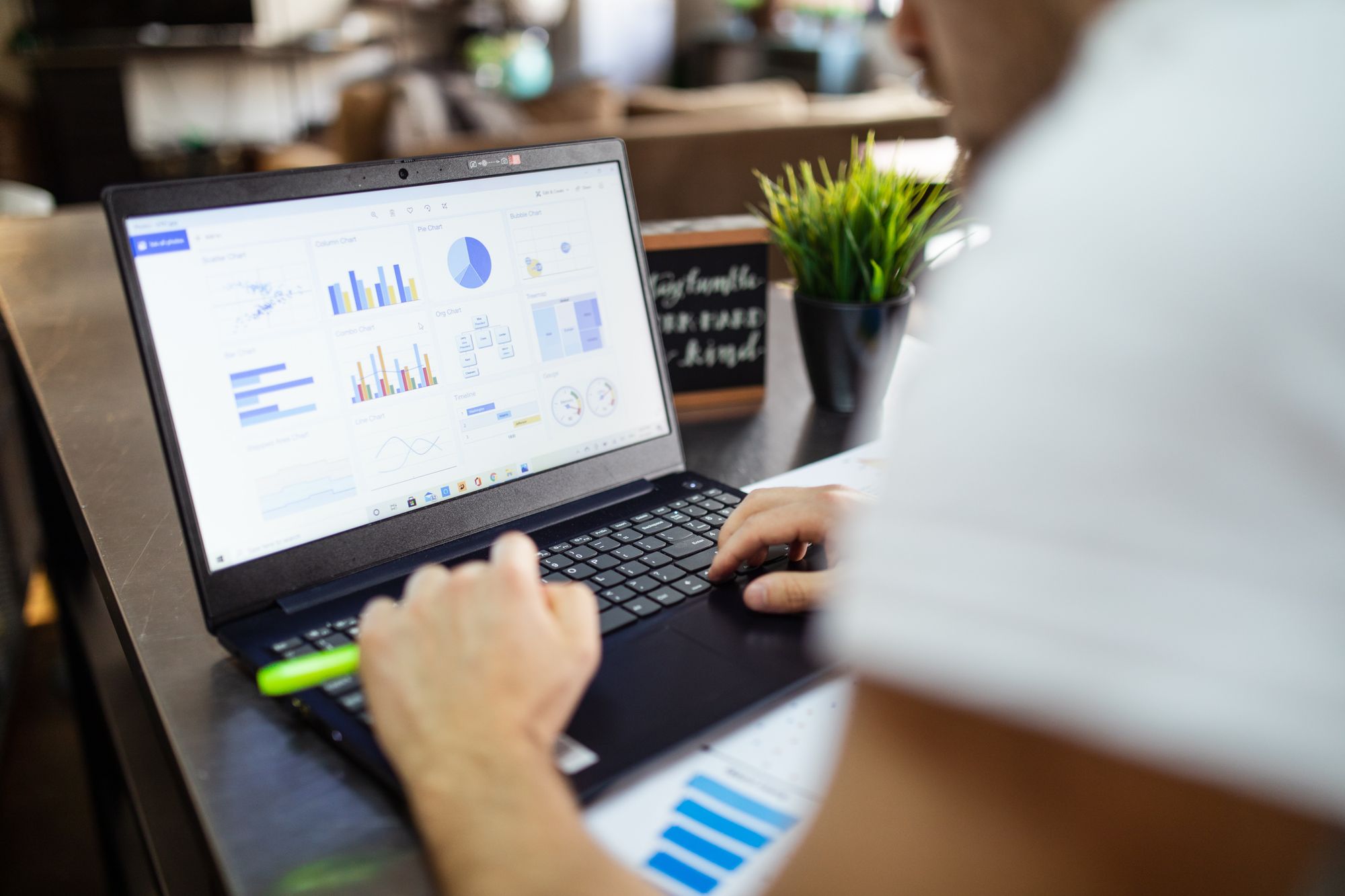
Competitive Intelligence (CI) is the process of analyzing, gathering, and using information collected on competitors, customers, and other market factors that contribute to your competitive advantage. Companies rely on CI data to develop effective and efficient business practices.
CI consists of two types of intelligence: tactical and strategic. Tactical is shorter-term intelligence, which seeks to provide input into issues like capturing market share or increasing revenues, while strategic focuses on longer-term issues, like key risks and opportunities facing the organization, and emerging trends and patterns.
Why competitive intelligence matters, particularly real-time CI.
Understanding competitor motivations and behaviors is critical to driving innovation, shaping product development, establishing pricing and brand positioning, and so much more. Companies must collect proper CI in order to identify challenges, advantages, and white spaces and build a competitive strategy equipped to compete and thrive.
Technology has transformed the CI industry, making it possible for organizations to compile data from multiple sources in a timely manner to facilitate rapid decision-making. Through actionable insights, companies can respond to changes in their markets quickly to keep up with competition. At the core of actionable insights is real-time CI. With real-time CI, companies deliver timely intelligence to the right people, increasing organizational agility.
When looking to collect CI, it’s important to plan out which insights are of value to you, how to identify your competitors, and which markets to spend time on. Take time to narrow in on your direct competitors, research objectives, and areas of interest.
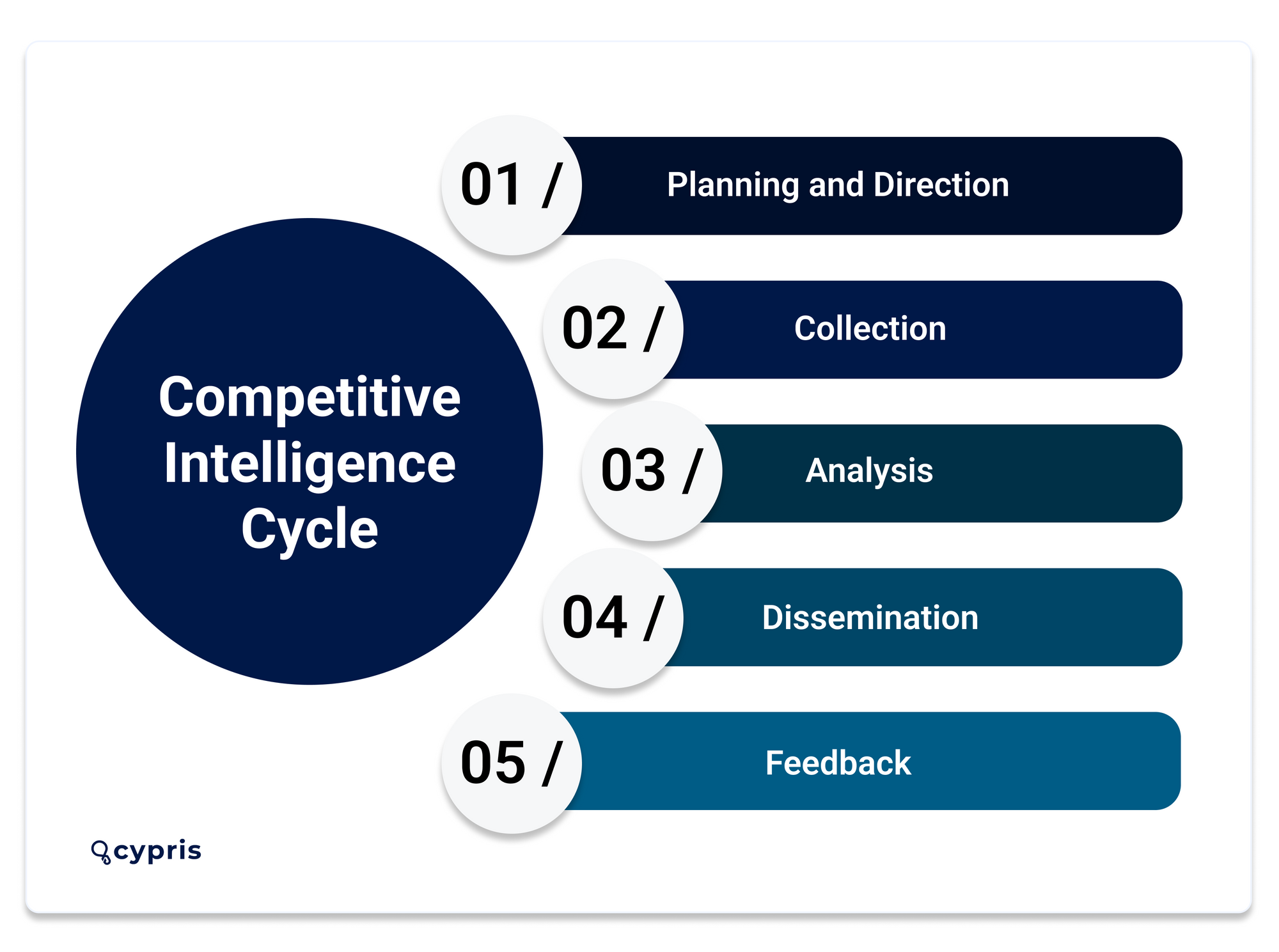
Are companies focusing on CI? These metrics might surprise you.
90% of Fortune 500 companies practice competitive intelligence. (Source: Emerald Insight)
Over 73% of businesses are investing more than 20% of overall technology budgets on intelligence and data analytics. (Source: Forbes)
61% of executives view rapid decision-making and execution as essential factors for a company’s success, and 34% consider the ability to access the right information at the right time as key factors for a company’s success. (Source: The Economist)
69% of organizations that have used an external partner to gain better data insight report positive results from that decision. (Source: The Economist)
57% of companies state that gaining a competitive advantage is one of the top 3 priorities in their industry. (Source: Forbes)
The 6 ways CI benefits your organization.

CI empowers everyone on teams, from product managers and marketers, to sales and executive teams. With the right CI, you can:
Uncover Key Data Points: Through examining new data points like significant acquisitions, new patent filings, startup investments, technology transfer agreements, research papers, etc., you can uncover pivotal data points that have the potential to influence major decisions.
Plan Strategic Moves: CI facilitates building your long-term business strategy and finding market gaps, allowing you to make the right business decisions for your organization.
Track industry Trends: Live-data CI lets you watch for new technologies, track new movement, stay on top of industry innovation trends, and predict future movement.
Drive Innovation: CI helps you to identify new market opportunities and spaces to innovate, accelerate your new product development, design better products, and improve market positioning.
Outsmart Competition: Think of CI as competitive insurance to ensure you stay on top of competitor strengths and weaknesses, anticipate what they’re planning, and identify competitor position and messaging. With CI you can uncover new product launches and services your competitors are adding, and benchmark your company against others.
Minimize Risk: Making the wrong move is costly. CI helps you prevent unsuccessful projects from taking off, save on costs, and improve decision-making ROI. With CI data, you can identify and prioritize any gaps within your business, and feel comfortable knowing you're making data-backed decisions.
Where to go from here: Actionable intelligence platforms are here to help.
Manually collecting CI takes time, and is costly. Not to mention doing your own research digging on the Internet for low-hanging fruit means you'll likely miss key data points that don't provide you with the whole picture. In the time it takes traditional market intelligence or research analysts to gather data to build into basic and applied research reports, you can receive data automatically through a platform like Cypris.
Designed specifically to deliver actionable innovation intelligence to R&D teams, Cypris improves the efficiency of data collation and interpretation. By aggregating your desired data, Cypris enables users to answer critical questions that influence the brand, margin, and profitability of your organization. Users have identified new entrants, significant IP, groundbreaking research papers, and more that have ultimately swayed the course of major projects.
Ready for real-time data on your competitors? Visit cypris.ai to get started by booking a demo.
Sources:
https://www.jimmynewson.com/10-important-competitive-intelligence-statistics/
https://www.gartner.com/en/information-technology/glossary/ci-competitive-intelligence
https://www.antara.ws/en/blog/competitive-intelligence-benefits-for-the-company

In honor of mental health awareness month, we’re diving into one of the pressing issues that individuals struggle with in today’s world—sleep. In particular, we’re looking at how technology is transforming how we measure our sleep.
Sleep plays a key role in mental health and overall bodily health and most people aren’t getting enough of it. According to a joint study conducted by Casper and Gallup, only one-third of Americans report their sleep as “excellent” or “very good”. Those who rate their general mental health as “excellent” or “very good” are also 6x more likely to get high-quality sleep (Casper-Gallup, 2022).
Thankfully, technology is helping to change the sleep game. Sleep apps, wearable trackers, smart beds, and external monitors are transforming how humans recharge. For those who don’t get enough sleep or experience poor quality sleep, trackers can help offer insight into your habits and lead you to optimize your sleep experience. Using the market news, research papers, and technologies sections of the Cypris platform, we were able to source a handful of fascinating consumer sleep trackers available and explore how they work.
Market overview
There are currently 98,136 sleep technologies being applied within 131 different categories. The fastest-growing category is ‘IT computing and data processing’ with a 1283.55 % increase in new patents filed over the last 5 years. ‘Medical’ is also seeing a lot of filings by new entrants.
When it comes to recent news on the sleep industry, a large chunk of articles have focused on new products (38%) and earnings reports (28%), followed by lawsuits, acquisitions, and new hires.
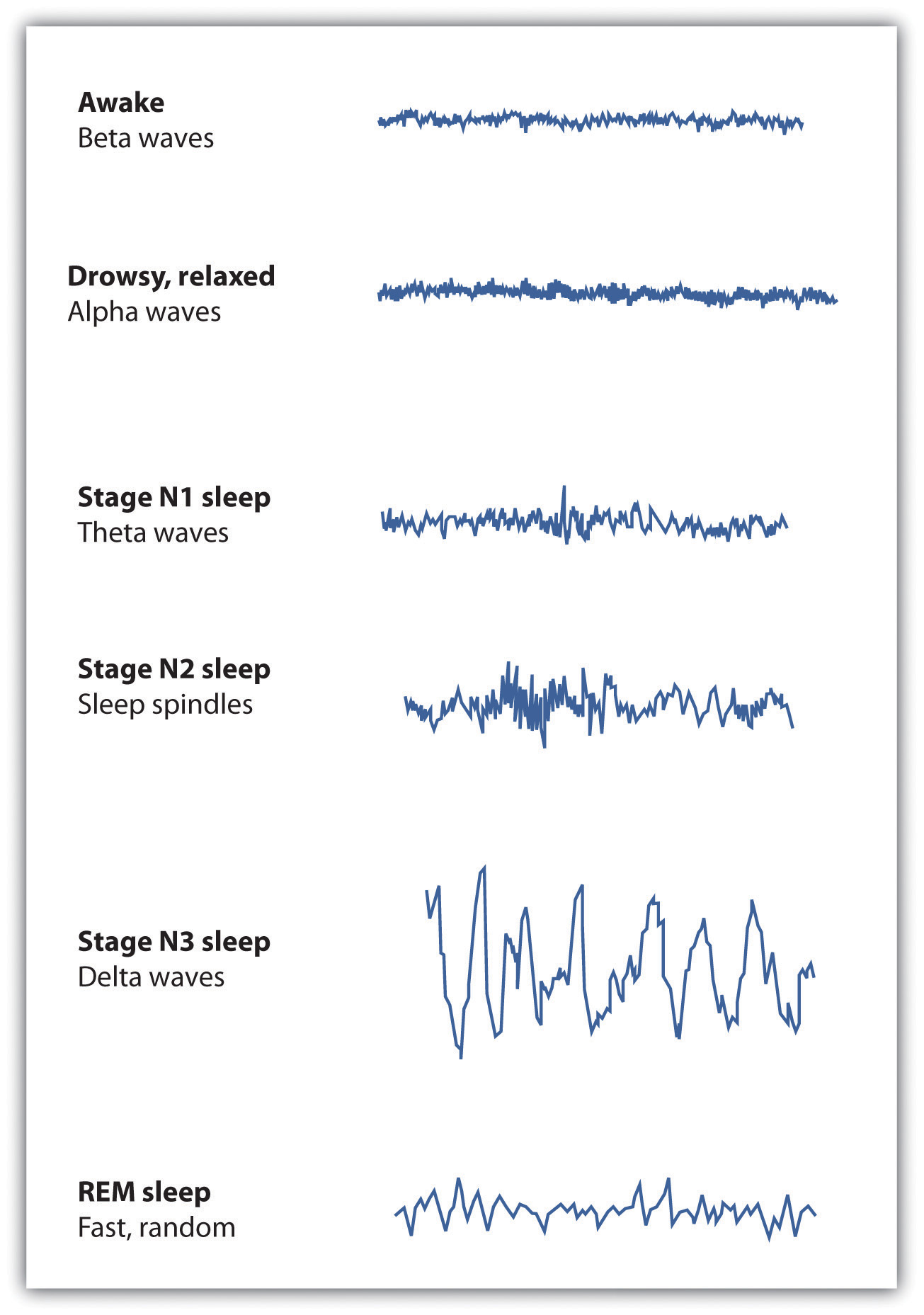
For this article, we’re focused specifically on sleep trackers since they’re such a hot topic these days. Let’s take a look at how these technologies work.
How sleep trackers work
Depending on the type of device, sleep technologies track different bodily responses. However, there are some general metrics most cover: heart rate, oxygen consumption, body movement, sleep duration, sleep quality, sleep phases, time awake and time spent sleeping, snoring, body temperature, room temperature and humidity, light and noise levels, environmental factors, and various lifestyle factors (like number of steps, exercise, etc.).
Many sleep tracker apps rely on an accelerometer, a device built into most smartphones that senses movement. These devices measure how much movement you make during your sleep and this data is then used in an algorithm to estimate sleep time and quality.
Trackers that are placed below your mattress use sensors to gauge movement to determine when you’re asleep, while wearable devices use direct skin contact to discern your heart rate and motion, getting a sense of your sleep and wake patterns accordingly.
Additionally, there are sonar trackers which rely on an app to send silent signals into your sleep environment. When these sound waves reflect into your microphone, some apps or devices can interpret their shape and movement—measuring your breathing rate, tracking your body movement, and turning those insights into a record of your nightly sleep patterns.
Tracker apps and other technologies available:
Available trackers range from apps that charge per month to pricier wearables or devices that often tie into an app as well. Here’s how a few of the most popular ones work:
- Sleep Cycle: (app) SleepCycle relies on sound-sensing technology to assess your sleep, using the microphone to detect the sounds you make when you move. The app identifies a variety of different sounds, including coughing, talking, and snoring, and shows an overlay of audio recordings on the sleep cycle graph for better interpretation. The app wakes you up within a 30-minute time frame of your choosing, based on when your sleep is the lightest.
- SleepScore: (app) SleepScore uses sonar sensor technology, called echolocation, to track your breathing and body movement as you travel through each sleep stage. After each night’s sleep, the app gives you a score based on its analysis of your sleep duration, the amount of time it took for you to fall asleep, light sleep, deep sleep, REM sleep, and wake time, with the units expressed in simple hours and minutes. It also reports how many times you woke up during the night and when you were experiencing each phase of sleep.
- Pillow: (app) Pillow is an app that tracks your sleep health from your Apple Watch, iPhone, or iPad. To calculate sleep quality, Pillow monitors movements and sounds. Pillow takes into account body motions during sleep using the device’s accelerometer and gyroscope, and monitors noise level using your device’s microphone. The audio recording feature records when you snore, cough, or talk in your sleep, and you can also use Pillow as a smart alarm clock to wake up at the lightest possible sleep stage.
- Oura Ring 3: (ring) The Oura Ring 3 collects data on time spent in light, deep, and REM sleep, resting heart rate, heart rate variability, number of breaths per minute (respiratory rate), body temperature, and nighttime movement. It calculates your sleep score based on factors such as total sleep, REM sleep, and deep sleep, and provides you with a readiness score (how much your body can take on for the day), and an activity score. The rings works using 15 advanced sensors. The green and red LEDs and infrared (IR) LEDs are used to measure daytime and workout heart rate, while extra negative temperature coefficient (NTC) sensors and an advanced calibrated sensor measure differences in skin temperature. The ring’s seven temperature sensors also help predict your period each month and visualize your menstrual cycle, and can even help you discover you are getting sick before symptoms appear. There is also an extra IR sensor that allows the ring to detect when the ring is not optimally aligned and compensate for more accurate results.
- Whoop Strap 4.0: (wristband) Primarily used by fitness fanatics due to its robust recovery data, this device contains five LEDs, four photodiodes, and a body temperature sensor. This wrist or bicep band measures blood oxygen levels, skin temperature readings, heart rate metrics, sleep cycles, performance, quality, and training activities to provide insight into your overall health behaviors and goals.
- Kookoon Nightbuds: (earbuds) These earbuds contain an in-ear optical heart rate sensor to track your sleep, which is located on the right earpiece. The Nightbuds are equipped with sensors that track sleep data such as time spent asleep and awake, position changes, and overall sleep efficiency.
- Withings Sleep Analyzer: (mattress pad) The Withings Sleep Analyzer is a thin mat you slip under your mattress that records changes in pressure and noise during the night. It provides you with an overall sleep score, which is then broken down into duration, time to sleep, depth, time to get up, interruptions, and regularity (measured over a period of several nights). With a Pneumatic sensor it measures respiratory rate, heartbeats (via ballistocardiography), and body movements across the mattress. With the sound sensor it identifies audio signals specific to snoring and cessation of breathing episodes.
- SleepScore Max: (external device) This device sits on your nightstand and uses a bio-motion sensor technology to track your breathing and body movement during sleep. It measures sleep duration, all the different sleep stages, and the time it takes you to fall asleep, and delivers an overall sleep score that’s provided through the accompanying app.
- Muse Headband: (headband) Known for its meditation capabilities, the Muse Headband is a wearable brain sensing headband that measures brain activity via 4 electroencephalography sensors. Sensors are strategically placed to connect to your forehead, and to the skin behind and above your ears on the inside of the headband. The device provides EEG-powered meditation and sleep support through sleep-focused voice guides and soundscapes that get you in a sleeping mood, and measures and analyzes your level of brain activity, heart rate, and breath much like other wearable trackers.
Sleep technology and trackers have transformed how we measure sleep, and continue to evolve and generate adoption. If you’re like the majority of the population and suffer from poor quality and quantity of sleep, chances are you could benefit from incorporating a tracking technology into your routine to provide clarity on your sleep patterns and improve overall health.
For deeper insights into innovative technologies that are changing your industry, visit https://ipcypris.com/ and get started using the Innovation Dashboard.
If you’d like to explore recent patents filed, you can search through our global patent search engine for free here: https://ipcypris.com/patents/allrecords
Sources:
Cypris Innovation Dashboard; queries for sleep, and sleep + technology
https://www.thensf.org/wp-content/uploads/2022/03/NSF-2022-Sleep-in-America-Poll-Report.pdf
https://www.tomsguide.com/round-up/best-sleep-apps
https://www.nature.com/articles/s41746-020-0244-4
https://finance.yahoo.com/news/ar-medical-disrupting-digital-health-150000081.html
https://www.gq-magazine.co.uk/lifestyle/article/best-sleep-tech
https://www.theverge.com/23013600/best-sleep-tracker-wearables
https://www.hopkinsmedicine.org/health/wellness-and-prevention/do-sleep-trackers-really-work
https://news.gallup.com/poll/390734/sleep-struggles-common-among-younger-adults-women.aspx
https://www.techradar.com/reviews/withings-sleep-analyzer
https://www.sleephealthfoundation.org.au/pdfs/SleepTracker-0215.pdf
https://www.theverge.com/22957195/whoop-review-fitness-tracker-wearables
https://www.healthline.com/health/fitness/oura-ring#the-sensors
https://www.forbes.com/sites/forbes-personal-shopper/2022/01/26/muse-s-review/?sh=13ca06b81e04

COVID-19 altered workplace dynamics, forcing companies to rapidly transition to remote work. For many individuals, remote work is here to stay in some form, whether through a hybrid in-office/work-from-home model or fully remote. In this blog, we explore how COVID-19-induced remote work changed workplace behaviors, and more importantly, how it impacted employee well-being for the better and worse.
Using the Cypris innovation dashboard, we explored innovation activity in the field of remote work, conducting a literature review among the 17,272 available research papers. Take a look at what we found.
The good
For companies, remote work comes with its savings—organizations save around $11,000 per employee per year if they allow their employees to work remotely at least 50% of the time (Global Workplace Analytics, 2021). More importantly, data shows that remote workers tend to be more satisfied with their work/life balance (Sundin, 2010). Remote work is also associated with higher organizational commitment, job satisfaction, and job-related well-being (Felstead & Henseke, 2017), as well as decreased turnover intention (Kroll & Neusch 2017). While many studies report individuals have a positive view of remote work, the key to happy employees, satisfaction, and reduced burnout when working from home is employee engagement.
Gallup (2021) defines employee engagement (EE) as individuals who are enthusiastic about, committed to, and involved in their work and workplace. According to Saks and Gruman (2014), factors proven to positively affect levels of EE within an organization include: “autonomy, feedback, development opportunities, positive workplace climate, recovery, rewards, recognition, and support”. When employees are engaged, loyalty, productivity, and their desire to go above and beyond in their organizations increase (Schaufeli & Bakker, 2004; Lemon & Palenchar, 2018; Weideman & Hofmeyr, 2020). COVID-19, in particular, affected EE rates—Gallup reported that EE in 2020 “fluctuated more than ever before”, and that the level of EE among U.S. workers reached a new high with 40% reporting to be “very engaged” in July 2020 compared to 33% in July 2019.
The bad
Despite the extensive benefits of remote work, it’s important to acknowledge that there are some downfalls. One source found that remote work comes at the cost of work-intensification and a greater inability to switch off (Felstead & Henseke, 2017). Generally, the biggest risk of flexible work comes when no clear boundaries are in place, leading employees to feel the need to be constantly online. Depending on factors like personality type and gender, remote work can also have a negative impact.
For some, remote work increases performance and job satisfaction, while others are left feeling isolated and less productive. A 2020 study assessed how different personality types experience remote work, assessing traits like conscientiousness (being organized and thoughtful), introversion (being quiet and reserved), neuroticism (being moody and easily frustrated), openness to experience (being curious and eager to try new things), and agreeableness (being friendly and kind to others) (Ogbonnaya, 2020). Those who scored high on openness to experience felt less worried, depressed, or miserable when working remotely, while agreeable people and introverts also reported feeling less worried and depressed. Neurotic people were at a greater risk of reporting poor mental health when working remotely. Those who scored low on conscientiousness, or found it hard to plan things carefully, reported feeling worried and gloomy (Ogbonnaya, 2020).
Gender also plays a key role in how people experience remote work, which several studies conducted during COVID-19 uncovered. A 2021 study on women in IT found that women were negatively affected by remote work resulting from the pandemic, due to the struggle to balance occupational stress and family life (Subha B. et al., 2021). Other data, including reports by McKinsey, uphold this trend.
McKinsey asserts that decades of research indicate that women take on more housework and childcare than men in addition to their professional careers, leading to what sociologists deem the “second shift”. In fact, mothers were over 3x more likely to be responsible for most of the housework and caregiving during the pandemic, and 1.5x more likely to spend an additional 3 or more hours per day on housework and children (McKinsey, 2020). As a result, many mothers, particularly those with young children, considered leaving the workforce or downshifting their careers during COVID-19, primarily due to childcare responsibilities. Despite the risk of burnout, women still report a higher preference for remote work post-pandemic than men—since women feel disproportionately responsible for household chores and parenting obligations, the flexible of remote work is ideal.
Where we go from here
While remote work offers more flexibility and increases well-being for most employees, it’s important to address the risk it poses for workers across the board—burnout. Companies should take measures to increase employee engagement, mental health benefits, support for parents and caregivers, and offer more paid leave to help mitigate burnout risk. Additionally, establishing clear boundaries that protect downtime, measuring performance based on results, and encouraging employees to take time for themselves can go a long way to reduce burnout and lessen the risk of losing talent, particularly women.
To learn more about remote work research, visit cypris.ai and get started with access to the innovation dashboard for more insights.
Sources:
B., Subha, R., Madhusudhanan, and Thomas, A., 2021. An Investigation of the Impact of Occupational Stress on Mental health of remote working women IT Professionals in Urban health of remote working women IT Professionals in Urban Bangalore, India Bangalore, India. Journal of International Women's Studies, 22(6).
Felstead, A., & Henseke, G. (2017). Assessing the growth of remote working and its consequences for effort, well-being and work-life balance. New Technology, Work and Employment, 32 (3). https://onlinelibrary.wiley.com/doi/full/10.1111/ntwe.12097
Gallup, I., 2021. How to Improve Employee Engagement in the Workplace. [online] Gallup.com. Available at: https://www.gallup.com/workplace/285674/improve-employee-engagement-workplace.aspx [Accessed 17 May 2022].
Global Workplace Analytics. 2022. Latest Work-at-Home/Telecommuting/Remote Work Statistics. [online] Available at: https://globalworkplaceanalytics.com/telecommuting-statistics [Accessed 17 May 2022].
Kroll, C., & Nuesch, S. (2017, 2019). The effects of flexible work practices on employee attitudes: Evidence from a large-scale panel study in Germany. International Journal of Human Resource Management, 30(9), 1505-1525. doi:10.1080/09585192.2017.1289548
Lemon, L. L., & Palenchar, M. J. (2018). Public relations and zones of engagement: Employees’ lived experiences and the fundamental nature of employee engagement. Public Relations Review, 44(1), 142-155. doi:10.1016/j.pubrev.2018.01.002
Ogbonnaya, C., 2020. Remote working is good for mental health… but for whom and at what cost?. [online] LSE Business Review. Available at https://blogs.lse.ac.uk/businessreview/2020/04/24/remote-working-is-good-for-mental-health-but-for-whom-and-at-what-cost/ [Accessed 17 May 2022].
Pernefors, O. and Bjurenvall, S., 2021. EMPLOYEE ENGAGEMENT IN A COVID-19 CONTEXT Exploring communicative displays of employee engagement among enforced remote workers. University of Gothenburg.
Saks, A. and Gruman, J., 2014. What Do We Really Know About Employee Engagement?. Human Resource Development Quarterly, 25(2), pp.155-182.
Sundin, K., 2010. Virtual Teams: Work/Life Challenges - Keeping Remote Employees Engaged. CAHRS White Papers.
FlexJobs Job Search Tips and Blog. 2022. Survey: Men & Women Experience Remote Work Differently | FlexJobs. [online] Available at: <https://www.flexjobs.com/blog/post/men-women-experience-remote-work-survey/> [Accessed 17 May 2022].
Weideman, M., & Hofmeyr, K. B. (2020). The influence of flexible work arrangements on employee engagement: An exploratory study. SA Journal of Human Resource Management, 18(2), e1-e18. doi:10.4102/sajhrm.v18i0.1209
“Women in the Workplace 2021.” McKinsey & Company, McKinsey & Company, 13 Apr. 2022, https://www.mckinsey.com/featured-insights/diversity-and-inclusion/women-in-the-workplace.
Wrycza, S. and Maślankowski, J., 2020. Social Media Users’ Opinions on Remote Work during the COVID-19 Pandemic. Thematic and Sentiment Analysis. Information Systems Management, 37(4), pp.288-297.

Virtual reality (VR) allows us to simulate real-world surroundings, and build environments that are impossible to visit in the real world—leading to endless applications for education. Research has shown VR can help engage students, improve retention, and gamify the traditional didactic teaching experience. In this blog post, we explore the research industry of VR in education at a glance, and then dive into research applications being explored today.
Market Overview
Using the Cypris innovation dashboard, we identified innovation activity in the VR market has grown over the last 5 years, with a 23.2% average growth rate. Within the vertical, there are over 625 technologies being applied within 22 different categories. The fastest-growing category is optical, specifically optical elements, systems or apparatuses, which saw a 213.33% increase in new patents filed over the past 5 years. Additionally, the industry currently has 130,917 investors, 974 research papers, and 332 organizations.

The most active top players in VR education by patent number include Samsung Electronics (20), Lincoln Global Inc. (14), Hunan Hankun Ind Co Inc. (6), Univ Korea Res & Bus Found (5), and the State Grid Corp China (5).
Research Applications
Below, we’ve rounded up some of the most fascinating recent research applications of VR for educational purposes:
- Environmental education: Taiwan recently incorporated environmental education into its curriculum guidelines, but needed a more effective way of engaging students with the material. They used VR to increase students’ immersion in order to generate empathy toward the natural environment and encourage behaviors to protect it. When compared with students who received conventional didactic teaching and viewed an ordinary video, the students who experienced the 3D VR teaching approach presented a significant difference in terms of learning absorption. Students who took a VR-based course also exhibited greater empathy toward the survival of protected species, which generated their desire to help the animals, protect global environments, and increase their awareness of the importance of global environmental conservation. (Chiang 2021)
- Bioscience virtual laboratory: VR approaches help train students in scientific methods and techniques that are difficult, dangerous, or expensive to perform in person. Due to the COVID-19 pandemic, no laboratory practicals could be performed, which brought to light an increased need for effective online teaching for laboratory courses. In this study, undergraduate students enrolled in a laboratory course used VR for their module on tissue culture techniques. The results revealed that the VR approach was highly and enthusiastically accepted by the students, and they reported authentic learning experiences that enabled them to better achieve the learning objectives. (Kaltsidis, et al. 2021)
- Vocational education: VR technologies have been implemented to teach vocational skills, enabling participants to learn by doing and use the appropriate equipment and tools needed. One recent study proposed using a VR simulation developed for participants to learn the two-stroke engine, which is relatively uncommon in the real world. The proposed VR system has the potential to reduce the total cost involved for the training institution compared to the conventional training method, and improves safety by protecting participants from any fragile parts and hazardous chemicals. (Sholichin, et al. 2020)
- Road safety: One study tackled teaching children how to properly focus attention in complex traffic situations, using a VR cycling simulator. The study focused on measuring observation ability and three key concepts: risk, orientation, and attention. The results revealed that eye tracking in virtual reality can be successfully utilized to evaluate interactive cognitive systems involved in navigation and the planning of actions in a traffic safety educational setting. The new teaching model was shown to be more effective in helping the children to focus their attention on the right place, orientate themselves, and behave in a safer way when cycling. (Skjermo, et al. 2022)
- Medicinal chemistry: A prototype VR gamification option was used as an educational tool to aid the learning process and to improve the delivery of the medicinal chemistry subject to pharmacy students. Typically, students face challenges caused by difficulty constructing a mental image of the three-dimensional structure of a drug molecule from its two-dimensional presentations. This study alleviated that challenge, and served as an accessible, cost-effective, flexible, and user-friendly alternative to traditional learning. (Abuhammad, et al. 2021)
- Psychiatric treatment: VR offers numerous possibilities of treatment directions for psychiatric patients. Most studies of VR for psychiatry have focused on virtual reality exposure therapy, a form of exposure therapy using virtual reality to create environments that provoke anxiety. Additionally, there are promising studies on using VR to treat depression and psychotic delusions. In areas with personnel shortages, VR treatments could be particularly helpful. Replicating environments to represent the experiences of patients may also offer helpful methods of psycho-education for parents, service providers, and the public. (Homen 2021)
From healthcare and bioscience, to teaching trade skills, VR’s applications for education are endless. To learn more about educational applications of VR, visit ipcypris.com and get started with access to the innovation dashboard for more insights.
If you’d like to explore recent patents filed, you can search through our global patent search engine for free here: https://ipcypris.com/patents/allrecords
Sources Cited:
1. Chiang TH-C (2021) Investigating Effects of Interactive Virtual Reality Games and Gender on Immersion, Empathy and Behavior Into Environmental Education. Front. Psychol. 12:608407
2. Source: Kaltsidis, Christos, et al. “Training Higher Education Bioscience Students with Virtual Reality Simulator.” European Journal of Alternative Education Studies, vol. 6, no. 1, 2021, https://doi.org/10.46827/ejae.v6i1.3748.
3. Sholichin, F., Suaib, N., Irawati, D., Sutiman, Solikin, M., Yudantoko, A., Yudianto, A., Adiyasa, I., Sihes, A. and Sulaiman, H., 2020. Virtual reality learning environments for vocational education: a comparative study with conventional instructional media on two-stroke engine. IOP Conference Series: Materials Science and Engineering, 979(1), p.012015.
4. Skjermo, Jo, et al. “Evaluation of Road Safety Education Program with Virtual Reality Eye Tracking.” SN Computer Science, vol. 3, no. 2, 2022, https://doi.org/10.1007/s42979-022-01036-w.
5. Abuhammad, A., Falah, J., Alfalah, S., Abu-Tarboush, M., Tarawneh, R., Drikakis, D. and Charissis, V., 2021. “MedChemVR”: A Virtual Reality Game to Enhance Medicinal Chemistry Education. Multimodal Technologies and Interaction, 5(3), p.10.
6. Homen, Joel. “Virtual Reality Opens New Frontiers in Psychiatric Treatment and Education.” The Finnish Foundation for Psychiatric Research, 2021.

💡
We identified 330 articles covering NFTs in the past 30 days that fall into 8 unique categories: lawsuits, new hires, funding, acquisitions, new partnerships, new products, earnings reports, and IPOs.
💡
Of the 330 NFT market news articles released in the past 30 days, 73 were related to lawsuits. Additional key coverage included 71 articles focused on new hires, 48 on funding, 35 on acquisitions, and 30 on new partnerships.
💡
Above, is your complete list of articles focused on lawsuits from the past 30 days.
💡
Notably, the majority of articles we flagged came from the U.S. and Great Britain.
For market news on your industry, visit ipcypris.com to get started.
If you’d like to explore recent patents filed, search through our global patent search engine for free here: https://ipcypris.com/patents/allrecords
.avif)